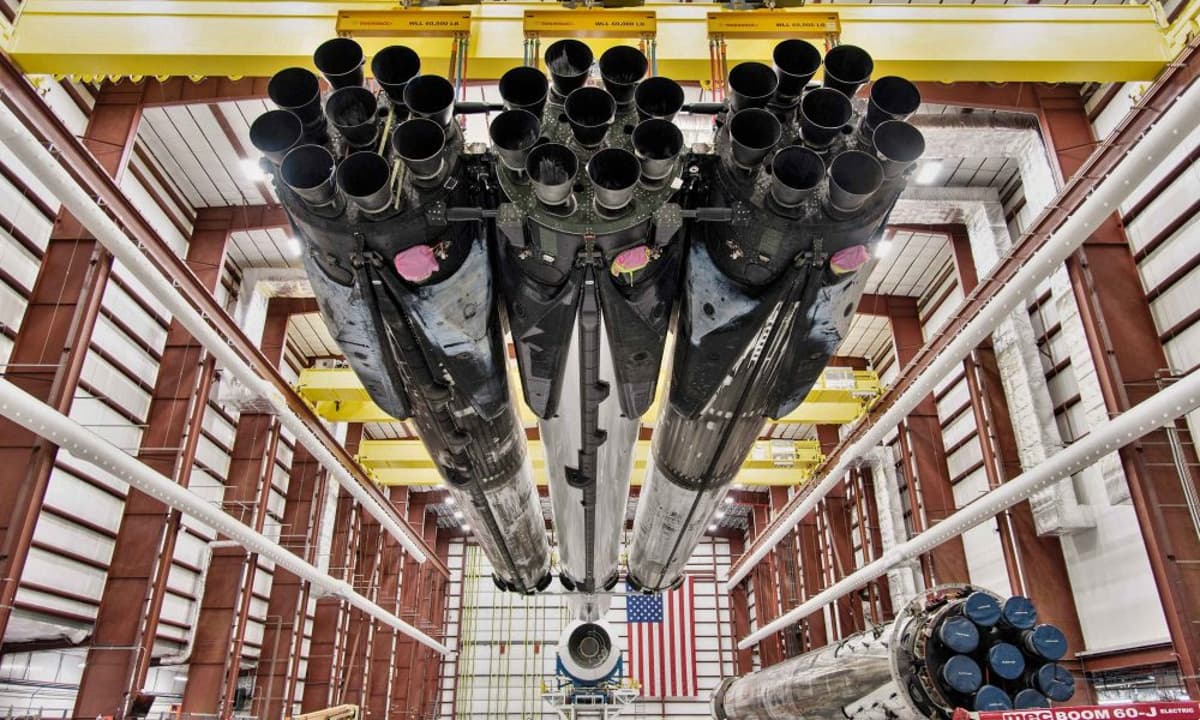
UPDATE: SpaceX’s Falcon Heavy that Launched a Tesla Into Space Is Back on a Mission
Key Takeaways
- •Falcon Heavy's 12th flight carries ViaSat-3 F3 to geostationary orbit
- •Boosters B1072 and B1075 target simultaneous landings at LZ2, LZ40
- •NASA awarded SpaceX a $175.7 million contract for ESA Rosalind Franklin Mars rover
- •SpaceX now handles ~85% of global orbital launches, underscoring market dominance
Pulse Analysis
Falcon Heavy’s upcoming launch marks a pivotal moment for heavy‑lift services, a segment where few competitors can match its payload capacity. The ViaSat-3 F3 satellite, part of a triad delivering broadband connectivity, requires the extra thrust only a three‑core vehicle can provide to reach the 22,236‑mile‑high geostationary belt. By returning after an 18‑month pause, SpaceX signals confidence in its ability to meet growing demand for large communications platforms, while also showcasing the operational flexibility of Launch Complex 39A.
The mission also serves as a live test of SpaceX’s reusable booster strategy. Side boosters B1072 and B1075 are slated for coordinated landings at two distinct zones, a maneuver that, if successful, validates simultaneous recovery logistics and could shave millions off future launch costs. The central core’s planned ocean disposal reflects a pragmatic trade‑off, preserving the side boosters for rapid turnaround. With 165 launches recorded in 2025 and an estimated 85% share of global orbital flights, SpaceX’s cadence and reuse model are reshaping the economics of satellite deployment and national‑security payloads.
Beyond commercial satellites, the $175.7 million NASA award to launch the ESA Rosalind Franklin Mars rover cements SpaceX’s role in deep‑space exploration. Coupled with upcoming commitments for the Roman Space Telescope, Dragonfly Saturn mission, and other high‑profile science payloads, the Falcon Heavy is becoming a workhorse for interplanetary ventures. This diversification not only broadens revenue streams but also positions SpaceX as a critical partner for agencies seeking reliable, cost‑effective access beyond Earth orbit, potentially accelerating timelines for ambitious missions to Mars and beyond.
UPDATE: SpaceX’s Falcon Heavy that launched a Tesla into space is back on a mission
Comments
Want to join the conversation?