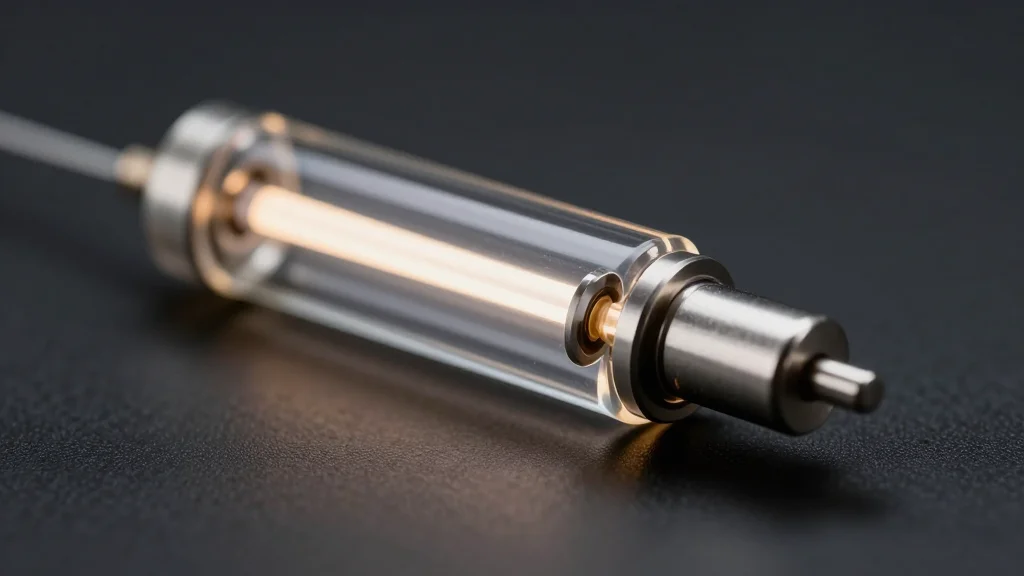
Vacuum Channel Transistor Suppresses Gate Leakage to Enter Chip Circuits
Key Takeaways
- •Gate leakage suppressed below 10⁻¹¹ A, enabling circuit integration.
- •Device fabricated on silicon‑on‑insulator wafers using standard processes.
- •Non‑saturating output current offers higher speed than MOSFETs.
- •Demonstrated amplifiers and NAND/NOR gates at room temperature.
Pulse Analysis
Vacuum‑channel transistors have long tantalized engineers with the prospect of electrons travelling through a vacuum at near‑light speed, a theoretical advantage that could dwarf silicon‑based switching rates. Early prototypes, however, were plagued by gate leakage—electrons striking the control electrode and draining power—making it impossible to embed these tubes in real chips. The recent breakthrough from Shanghai Jiao Tong and Shaoxing universities flips the conventional gate role, using it to modulate electron supply at the cathode. This subtle redesign cuts gate current to sub‑picoamp levels, a threshold previously unattainable, and restores the tube’s intrinsic speed advantage.
The new cathode‑modulated vacuum/air‑channel electron tube (CMVET) is built on silicon‑on‑insulator substrates with deposition, etching, oxidation and ion‑implantation steps familiar to any fab line. Its thin 45 nm silicon cathode, topped by a back‑gate oxide, enables precise field‑emission control while keeping the device compatible with existing manufacturing pipelines. Performance metrics—gain up to 1.6, on‑off ratios near 10⁴, and transconductance of 23 µS—demonstrate that the tube can drive conventional logic families. Moreover, the non‑saturating current characteristic, where output continues to rise with voltage, opens pathways to ultra‑high‑frequency amplifiers that outpace MOSFETs.
The implications extend beyond raw speed. Vacuum and air channels are inherently immune to ionizing radiation and can operate across extreme temperature ranges, positioning CMVETs for satellite, aerospace and defense electronics where silicon falters. While the perpetual rise of output current poses design challenges—particularly in gain control—ongoing research aims to tame this behavior without sacrificing speed. If industry adopts this technology, we could see a new class of chips that blend the manufacturing ease of silicon with the performance envelope of vacuum tubes, reshaping the high‑frequency and rugged‑environment markets.
Vacuum channel transistor suppresses gate leakage to enter chip circuits
Comments
Want to join the conversation?