Key Takeaways
- •PlanetWaves predicts wave height from gravity, atmosphere, liquid properties
- •Titan could host 3‑meter waves in a light breeze
- •Mars waves shrank as atmospheric pressure declined
- •Wave dynamics reveal erosion patterns on other worlds
- •Model validated on Earth before extending to exoplanets
Pulse Analysis
The launch of PlanetWaves marks a milestone in planetary fluid dynamics, offering a unified framework to estimate wave characteristics across diverse worlds. By integrating gravity, atmospheric density, and liquid properties such as viscosity and surface tension, the model bridges Earth‑based oceanography with the exotic conditions of moons like Titan and ancient Martian seas. Researchers first calibrated the algorithm against terrestrial wave data, ensuring that the physics of wind‑driven instabilities translate reliably beyond our planet.
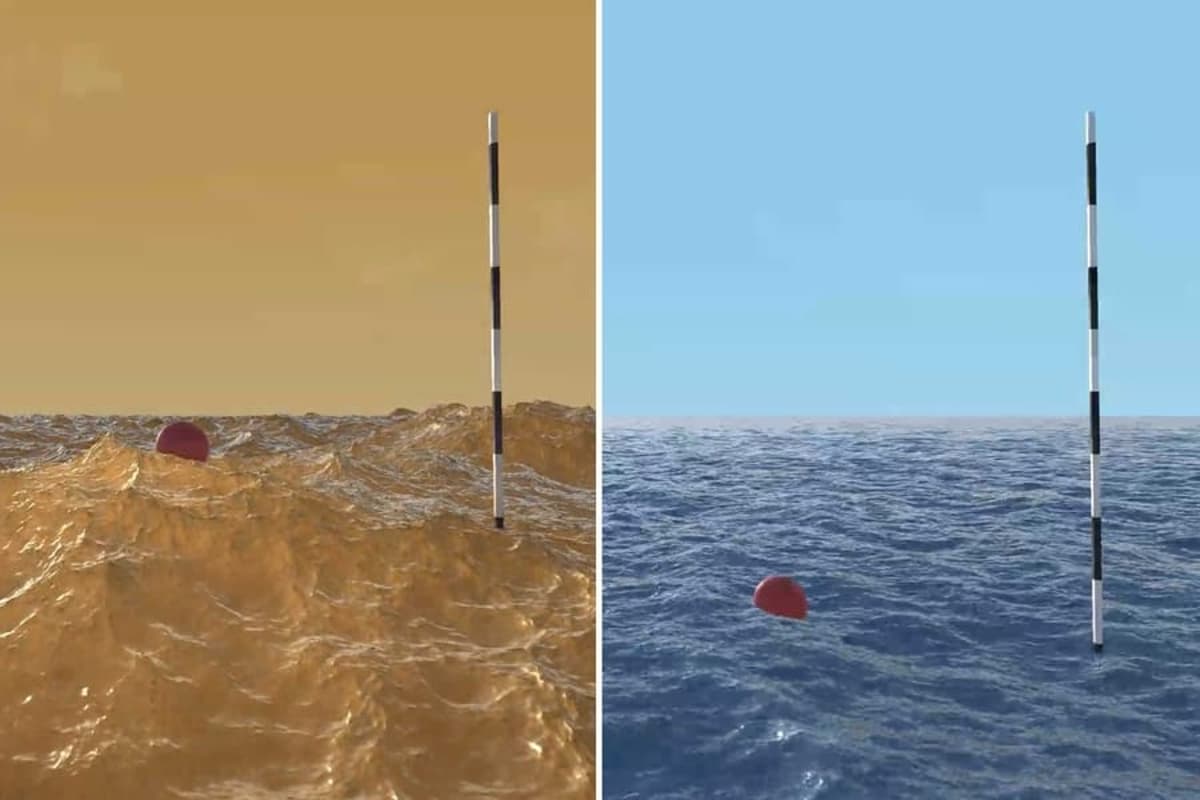
Titan, Saturn’s largest moon, emerges as a prime candidate for spectacular wave activity. Its surface is dominated by liquid ethane and methane, fluids that are less dense than water, while the moon’s surface gravity is about 14% of Earth’s. The model predicts that even a modest wind of 2 m/s could generate waves up to three meters tall—far larger than comparable Earth breezes. Such towering waves could reshape Titan’s shoreline, influence sediment transport, and affect future lander or submarine missions seeking to sample the moon’s hydrocarbon lakes.
On Mars, the story is reversed. As the Red Planet lost its thick early atmosphere, wind‑driven wave energy would have diminished, producing progressively shorter ripples in any primordial lakes or seas. This attenuation offers a proxy for reconstructing Mars’ paleoclimate and assessing how wave‑induced erosion contributed to the planet’s ancient valley networks. Extending PlanetWaves to exoplanets with suspected liquid surfaces opens a new window on habitability, allowing scientists to infer surface conditions from atmospheric measurements alone. The model thus equips planetary geologists with a powerful tool to decode the interplay between wind, liquid, and landscape across the solar system and beyond.
Waves on Other Planets
Comments
Want to join the conversation?