Key Takeaways
- •1D/2D systems localize with any disorder
- •3D systems exhibit a metal‑insulator transition
- •Scaling function β(g) predicts conductance behavior
- •Localization observed for electrons, light, and ultrasound
Pulse Analysis
The concept of Anderson localization reshapes how physicists view disorder in solids. Rather than treating imperfections as minor perturbations, the scaling theory of localization quantifies how conductance evolves with system size. In one‑ and two‑dimensional materials, the beta function remains negative, meaning that even infinitesimal disorder forces electronic wavefunctions to decay exponentially. This insight explains why truly metallic behavior is absent in idealized 1D nanowires or atomically thin films unless interactions or external fields intervene.
In three dimensions the picture becomes richer. When the dimensionless conductance g exceeds a critical threshold, the beta function turns positive, allowing delocalized, metallic states to persist. Below that threshold, the system flows toward strong localization, effectively becoming an insulator. This metal‑insulator transition underpins modern research on disordered semiconductors, topological materials, and quantum devices, where tuning disorder or carrier density can switch transport regimes on demand.
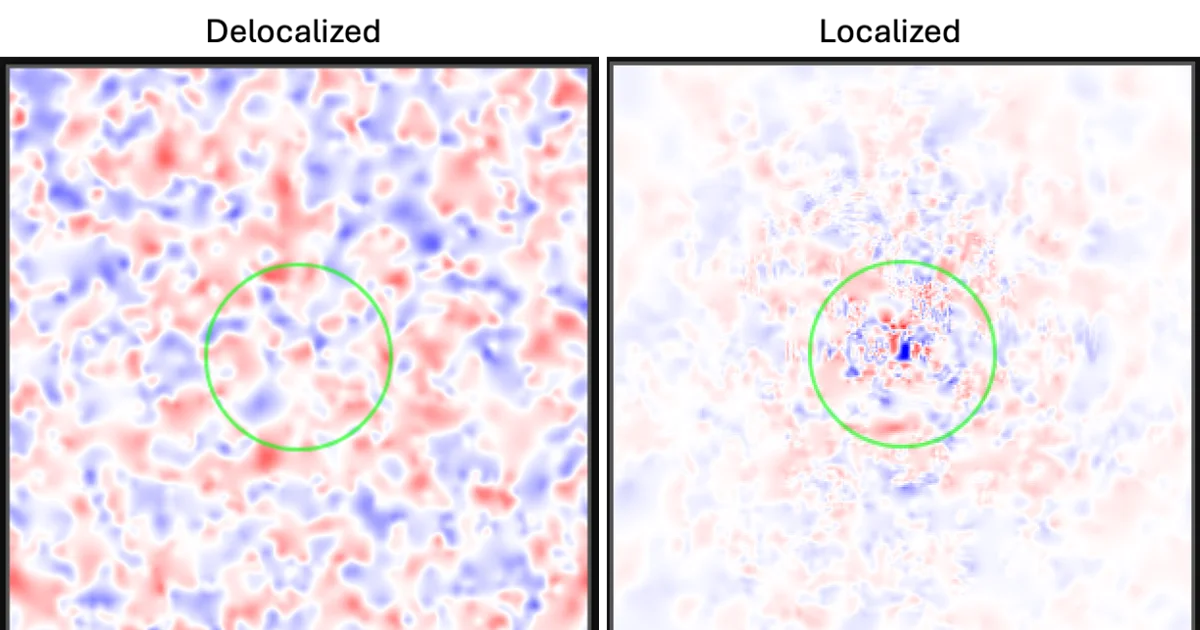
Beyond electrons, the universality of Anderson localization extends to photons and phonons. Experiments have trapped light in disordered dielectric media, enabling random lasers that rely on disorder‑induced cavities. Similarly, ultrasound waves have been localized in three‑dimensional scattering networks, opening avenues for acoustic imaging and sensing. Recent open‑source simulations illustrate how increasing refractive‑index variance drives wave energy from uniform spreading to tight confinement, offering educators and engineers a hands‑on view of the phenomenon. As industries push toward ever‑smaller, multifunctional components, mastering localization effects becomes essential for reliable device design.
What is localization?
Comments
Want to join the conversation?