Why It Matters
If honeybees become vectors for myrtle rust, the fungus could accelerate its invasion of native ecosystems, while beekeepers risk colony health and biosecurity breaches during hive movements.
Key Takeaways
- •Western honeybees carry myrtle rust spores on legs and bodies
- •45% of hive pollen cells contaminated with rust spores
- •Spore diet supports larval growth comparable to natural pollen
- •Spore viability lasts up to nine days, matching hive transport times
- •Bees could create feedback loop spreading invasive fungus across Australia
Pulse Analysis
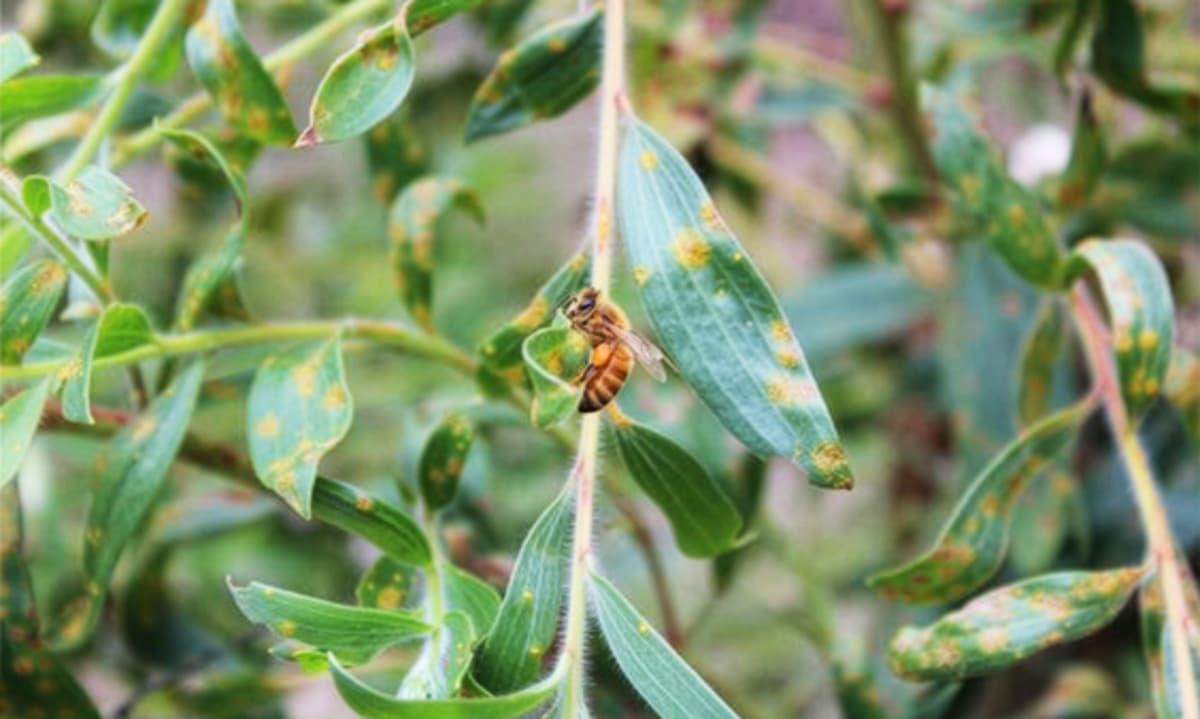
Myrtle rust, first detected in Australia in 2010, has already threatened up to 17% of the continent’s native flora. The fungus spreads via wind‑borne spores that coat leaves and flowers, but recent research published in NeoBiota reveals a second, more insidious pathway: pollinator‑mediated dispersal. Western honeybees, introduced for commercial pollination, have been observed collecting spores alongside pollen, effectively turning the insects into mobile disease vectors. This phenomenon exemplifies "invasional mutualism," where two non‑native species inadvertently boost each other's success, a dynamic rarely documented in temperate ecosystems.
The study quantified the extent of spore carriage, finding that roughly half of the foraging bees returned to their colonies with spores attached, and nearly half of the pollen cells inside hives contained fungal material. Chemical analysis showed that rust spores are rich in protein and all ten essential amino acids, making them a viable food source. When larvae were raised exclusively on a spore diet, their development matched that of peers fed on traditional kiwi and willow pollen, suggesting that bees may adopt this novel foraging strategy without immediate fitness penalties. However, spores remained infectious for up to nine days, a window that aligns with the three‑to‑seven‑day transport cycles of commercial hives across the country.
The implications extend beyond ecology to agricultural biosecurity and hive management. Beekeepers moving colonies could unintentionally disseminate myrtle rust to previously uninfected regions, compounding the fungus’s impact on biodiversity and potentially on crop pollination services. Mitigation may require stricter quarantine protocols, spore‑screening of hives, and targeted research into bee‑fungus interactions. Understanding this feedback loop is crucial for policymakers and industry stakeholders aiming to protect both native plant communities and the health of pollinator populations.
Why These Bees May Be Killing the Plants They Feed From
Comments
Want to join the conversation?
Loading comments...