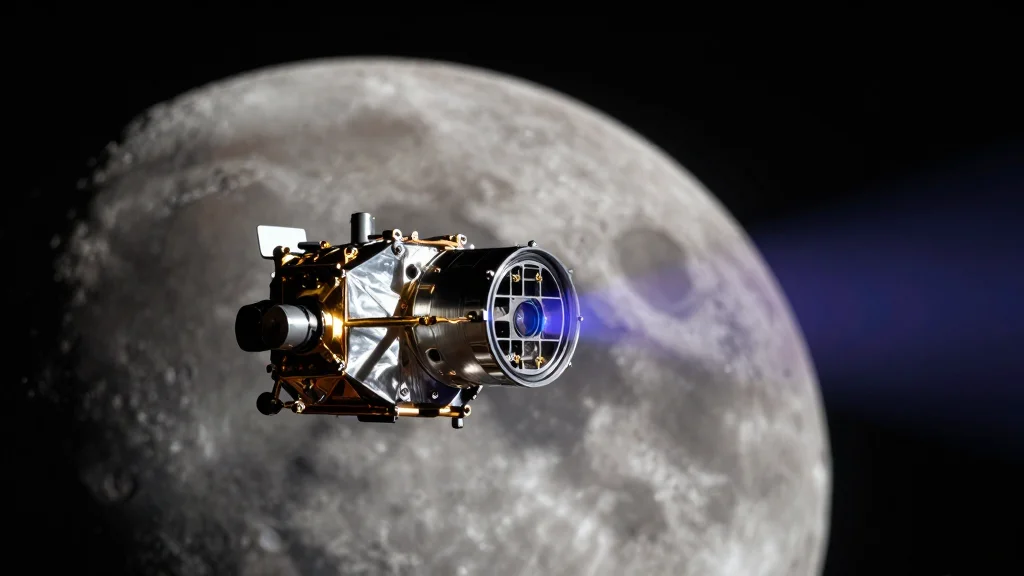
X-Ray Telescopes on a Satellite Can Map the Moon's Surface Chemistry in a Few Years
Key Takeaways
- •<10 kg X‑ray telescope fits on a lunar orbiter.
- •Maps five elements across entire Moon in two years.
- •5×5 detector array cuts mapping time to one year.
- •70 km grid resolution; 30 km possible with sodium mapping.
- •Enables first global lunar geochemistry map for science and industry.
Pulse Analysis
The Moon’s surface chemistry has long been a missing piece in planetary science, with existing datasets offering only fragmented snapshots. Apollo sample returns and orbiters such as Chandrayaan‑1 provided localized X‑ray fluorescence measurements, but a comprehensive, high‑resolution global map remains elusive. Technical hurdles—including limited solar X‑ray illumination, especially at the permanently shadowed poles, and the degradation of bulky detectors over long missions—have constrained previous efforts. Without a full elemental atlas, models of the Moon’s formation, volcanic history, and impact record retain significant uncertainties, hampering both academic research and practical exploration planning.
The breakthrough comes from a compact X‑ray fluorescence (XRF) imaging spectrometer originally designed for Earth’s magnetosphere studies. Weighing under ten kilograms, the instrument can be integrated onto a small lunar satellite, and simulations indicate it can map five key elements—oxygen, iron, magnesium, aluminum and silicon—across the entire lunar surface in roughly two years using a 70 × 70 km grid. By arranging twenty‑five such units in a 5 × 5 array, the mission duration shrinks to about one year, and the system can also capture sodium with a finer 30 km grid. The design has survived radiation tests far exceeding lunar orbit conditions, ensuring durability throughout extended observation periods.
Delivering the first planet‑wide geochemical atlas will have immediate scientific and commercial repercussions. Researchers will be able to refine theories of lunar differentiation, assess the distribution of economically valuable elements, and better predict the presence of volatiles in polar regions—critical data for the Artemis program and private lander concepts. Moreover, the lightweight, modular architecture opens the door for similar deployments on other airless bodies, such as Mercury or Phobos, expanding the toolkit for planetary mapping. As space agencies and private firms race to establish a sustainable lunar presence, a detailed elemental map becomes a strategic asset for site selection, in‑situ resource utilization, and international collaboration.
X-ray telescopes on a satellite can map the Moon's surface chemistry in a few years
Comments
Want to join the conversation?