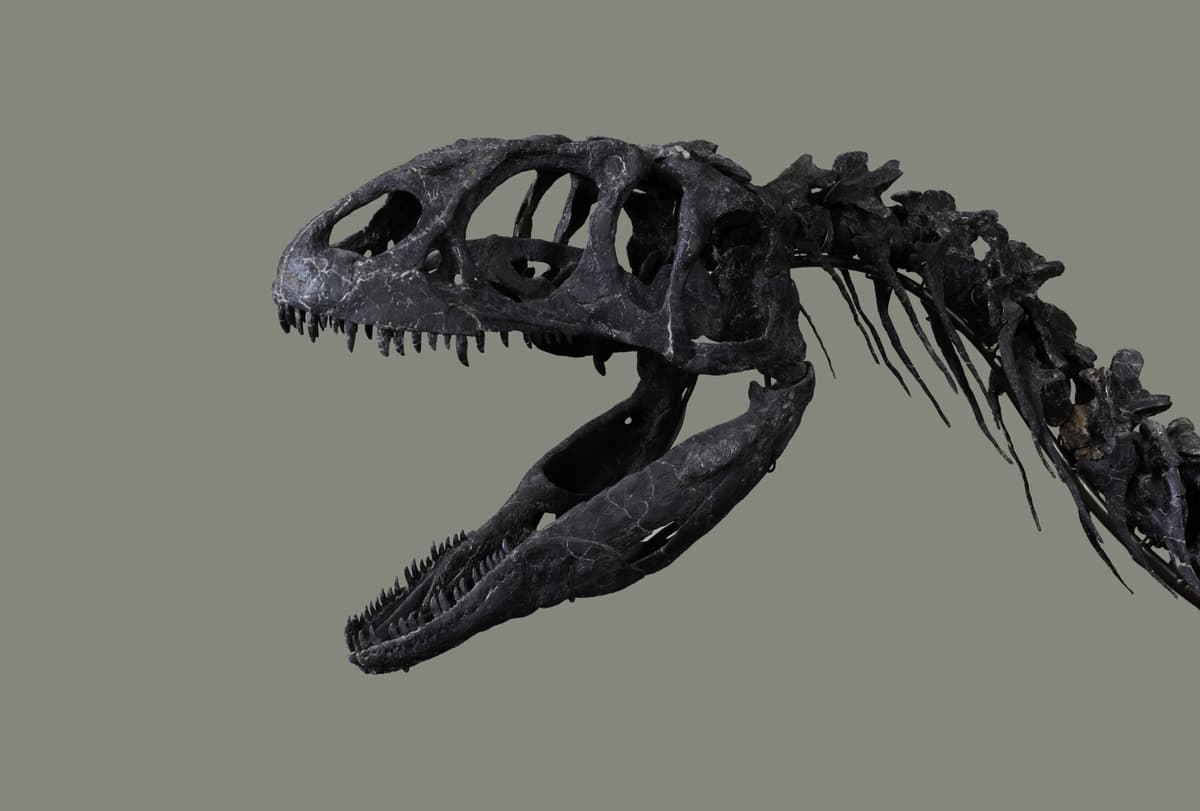
154-Million-Year-Old Dinosaur Fossil Debuts in the U.K.—But Its Species Remains a Mystery
Why It Matters
The specimen underscores how private fossil markets can both showcase rare specimens to the public and impede timely scientific analysis, affecting paleontological knowledge and heritage stewardship.
Key Takeaways
- •Juliasaurus fossil surfaced from Wyoming's Morrison Formation, 154 million years old
- •20‑foot skeleton weighs ~1,300 lb, on loan to Hollytrees Museum until November
- •Species classification remains uncertain, differing from Allosaurus and Marshosaurus
- •Private fossil market fuels public displays but limits scientific access
- •Gallery David Aaron seeks to link dealers with museums for research
Pulse Analysis
The emergence of Juliosaurus in a UK museum illustrates the increasingly visible role of private dealers in the fossil trade. While galleries like David Aaron can bring spectacular specimens to public view, they also act as gatekeepers, determining when—and if—scientists gain access. This dynamic has sparked debate within paleontology circles, as high‑profile sales can divert critical research material into private collections, delaying or even preventing formal description and peer‑reviewed study.
From a scientific standpoint, Juliosaurus presents a tantalizing puzzle. Initial comparisons to Allosaurus and Marshosaurus have been inconclusive, with distinctive skull morphology, pelvic structure, and vertebral air‑sac systems suggesting a potentially novel taxon. If further analysis confirms a new species, it would enrich our understanding of Late Jurassic theropod diversity in North America, offering fresh data on evolutionary pathways that preceded later apex predators like Tyrannosaurus rex.
For the public, the Hollytrees Museum exhibit offers a rare opportunity to engage with a near‑complete dinosaur skeleton outside major institutions. The display, part of a broader effort to integrate local heritage with scientific curiosity, may also serve as a catalyst for policy discussions on fossil provenance and repatriation. As galleries increasingly position themselves as intermediaries, collaborations that balance commercial interests with open scientific inquiry could set a precedent for responsibly sharing Earth’s deep past.
154-Million-Year-Old Dinosaur Fossil Debuts in the U.K.—But Its Species Remains a Mystery
Comments
Want to join the conversation?
Loading comments...