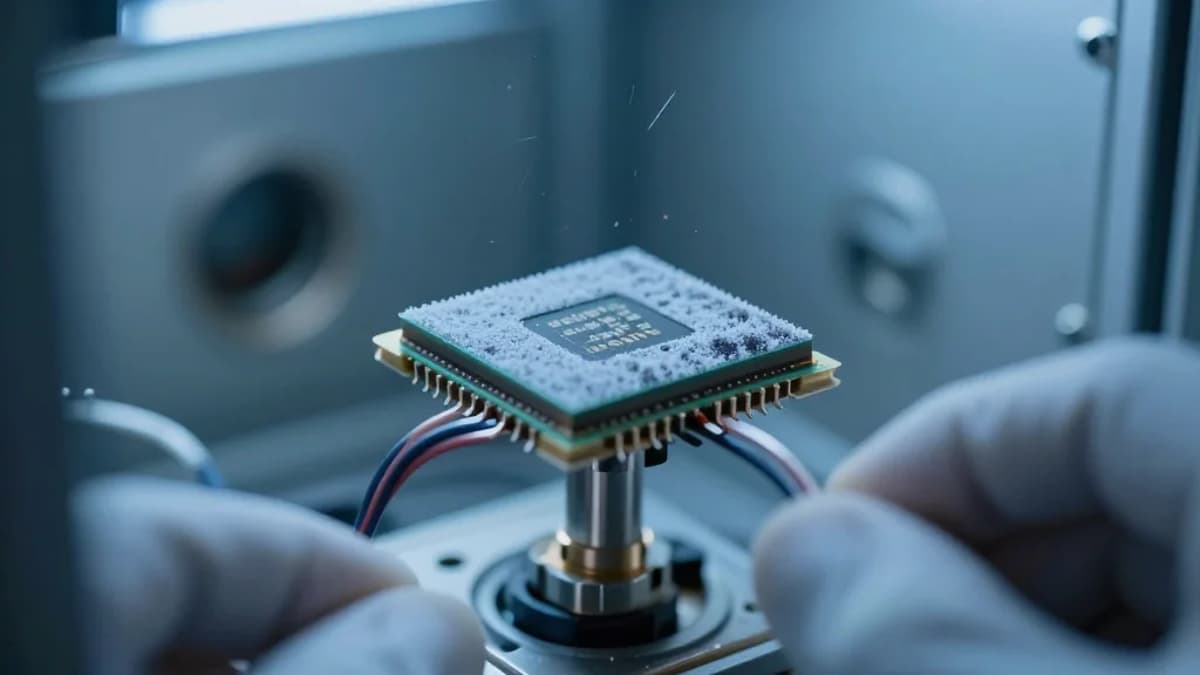
350 Feet Underground US Lab Helps Turn Qubits Into Sensors for Dark Matter Research
•March 11, 2026
0
Why It Matters
Identifying hidden radiation contributors refines error‑correction strategies for scalable quantum processors and positions qubits as a novel platform for probing rare physics phenomena such as dark matter.
Key Takeaways
- •Underground NEXUS lab shields qubits from cosmic rays.
- •Charge bursts persist, indicating unknown gamma sources.
- •Qubits serve as ultra‑sensitive detectors for radiation.
- •Findings guide fault‑tolerant quantum computer design.
- •Future tests will use SLAC’s SQUAT sensor technology.
Pulse Analysis
Quantum computing’s promise hinges on qubits that can maintain fragile superposition states, yet they are notoriously vulnerable to environmental disturbances such as ionizing radiation. Earlier work at the University of Wisconsin‑Madison in 2019 linked sudden charge bursts in superconducting qubits to cosmic and gamma rays, prompting researchers to seek deeper isolation methods. By relocating the experiment to the NEXUS facility—an underground laboratory designed to suppress cosmic ray flux—the team could directly compare qubit behavior with and without additional lead shielding, providing a clearer picture of radiation‑induced decoherence.
The NEXUS measurements revealed a measurable drop in charge‑burst events when the shield was engaged, but the attenuation fell short of theoretical expectations. This discrepancy suggests the presence of local gamma‑ray emitters, possibly arising from the materials surrounding the qubits themselves. Such hidden sources not only compromise quantum gate fidelity but also highlight the dual role of qubits as precise sensors capable of detecting faint radiation signatures. Researchers are now exploring how these devices might be tuned to capture rare events, including those hypothesized for dark‑matter interactions, thereby bridging quantum information science with fundamental physics.
Looking ahead, the collaboration plans a follow‑up run employing SLAC’s superconducting quasiparticle amplifying transmon (SQUAT), a purpose‑built qubit sensor designed for enhanced energy resolution. Comparing SQUAT’s response to the original chip will inform strategies to engineer qubits that either suppress environmental coupling for computation or amplify it for sensing applications. These advancements are critical for building fault‑tolerant quantum architectures while simultaneously opening a new frontier for quantum‑enabled particle detection, a convergence that could accelerate both commercial quantum computing and high‑energy physics research.
350 feet underground US lab helps turn qubits into sensors for dark matter research
0
Comments
Want to join the conversation?
Loading comments...