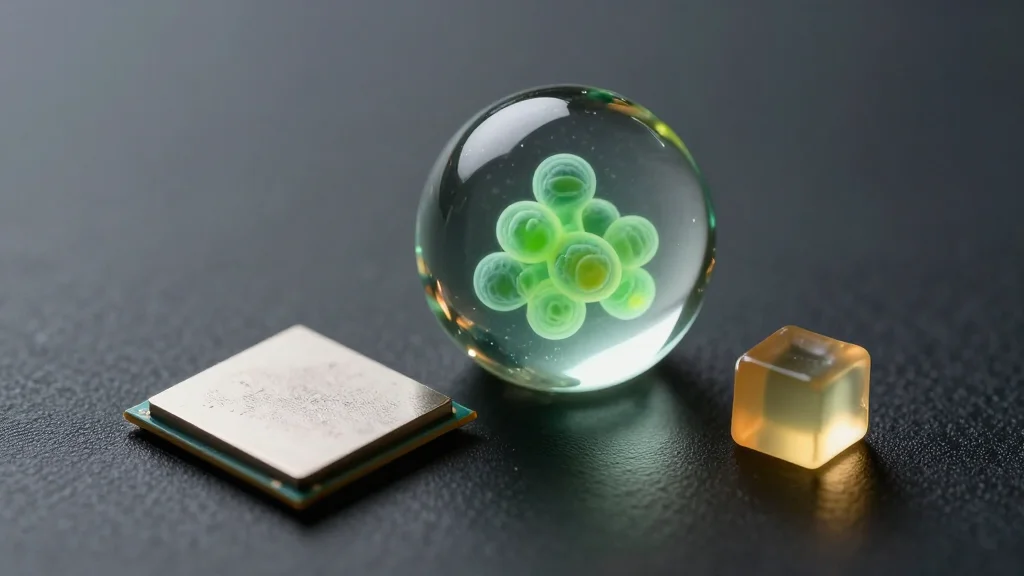
3D Printing Is Now Possible Inside Living Cells
Why It Matters
Cell‑intrinsic 3D printing could accelerate personalized medicine and organ‑on‑chip platforms, while quantum heat‑flow insights may lead to more efficient quantum hardware. The edible power source expands the feasibility of smart, ingestible health monitors.
Key Takeaways
- •AI-optimized resin enables 3D printing within living cells.
- •Quantum computers show reverse heat flow, challenging thermodynamics.
- •Edible thermoelectric hydrogels power ingestible electronic devices.
Pulse Analysis
The emergence of AI‑optimized photopolymer resins marks a pivotal shift for additive manufacturing at the microscale. By tailoring resin chemistry through machine‑learning algorithms, scientists have achieved the precision required to deposit polymeric structures inside living cells without compromising viability. This capability paves the way for constructing intracellular scaffolds, delivering therapeutic agents, and engineering synthetic organelles, potentially shortening the development cycle for personalized tissue therapies.
Meanwhile, quantum computing research has uncovered a counterintuitive heat‑flow phenomenon where energy migrates opposite to the temperature gradient. This observation challenges the conventional second law of thermodynamics and suggests new mechanisms for thermal management in quantum processors. Understanding and harnessing this reverse heat flow could improve qubit stability, lower cooling costs, and accelerate the commercialization of quantum hardware across finance, drug discovery, and logistics.
In the realm of bio‑electronics, researchers have introduced an edible thermoelectric hydrogel that converts body heat into usable electricity for ingestible devices. The hydrogel’s biocompatible composition and flexible form factor enable continuous power for smart pills that monitor biomarkers, deliver drugs, or communicate health data. By eliminating the need for external batteries, this technology could expand the market for remote patient monitoring and open new revenue streams for med‑tech firms targeting the growing digital health sector.
3D printing is now possible inside living cells
Comments
Want to join the conversation?
Loading comments...