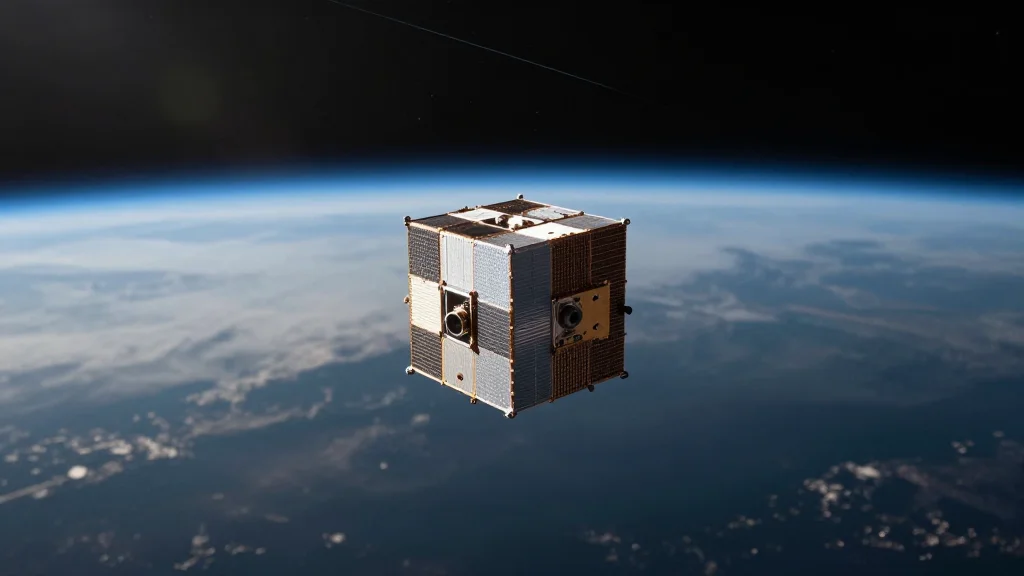
3U Transat Constellation: Performances and Operations Preparation
Why It Matters
By dramatically increasing sky coverage and burst detection rates, 3U Transat could accelerate the discovery of simultaneous gravitational‑wave and electromagnetic signals, reshaping astrophysical research and commercial space services.
Key Takeaways
- •25 nanosatellites in five heliosynchronous orbits provide near‑global coverage
- •Mission simulator shows detection sensitivity comparable to GRB 170817A
- •Ground tools will localize bursts within arcminute precision
- •All‑sky monitoring boosts multi‑messenger event discovery rates
- •CNES and IRAP partnership drives European nanosatellite innovation
Pulse Analysis
Multi‑messenger astronomy has entered a pivotal phase, yet the universe has offered only a single confirmed joint detection of gravitational waves and electromagnetic radiation—GRB 170817A/GW 170817—over the past ten years. This scarcity reflects the limited sky coverage of existing gamma‑ray observatories, which are constrained by narrow fields of view and orbital dynamics. Researchers therefore seek dedicated, wide‑field platforms that can monitor the entire sky continuously, ensuring that fleeting, high‑energy transients are captured the moment they occur.
Enter the 3U Transat constellation, a novel approach leveraging 3‑U nanosatellites to achieve near‑global, near‑continuous coverage. By distributing 25 satellites across five heliosynchronous orbits, the system maintains a stable illumination geometry while sweeping the sky every few minutes. Simulations predict detection thresholds that rival larger, costlier missions, enabling the identification of short gamma‑ray bursts similar to the historic GRB 170817A. The design balances modest payload mass with advanced scintillator detectors and on‑board processing, delivering rapid trigger alerts to ground stations.
The operational framework amplifies scientific return: automated pipelines will localize bursts to arcminute precision, feed data to global networks, and trigger follow‑up observations across the electromagnetic spectrum and gravitational‑wave detectors. For the commercial sector, the constellation showcases a scalable model for high‑value, low‑cost space services, potentially spawning new markets in real‑time space weather monitoring and rapid response astronomy. As the 3U Transat matures, it promises to transform multi‑messenger discovery rates, cementing Europe’s role in next‑generation astrophysics.
3U Transat constellation: Performances and Operations Preparation
Comments
Want to join the conversation?
Loading comments...