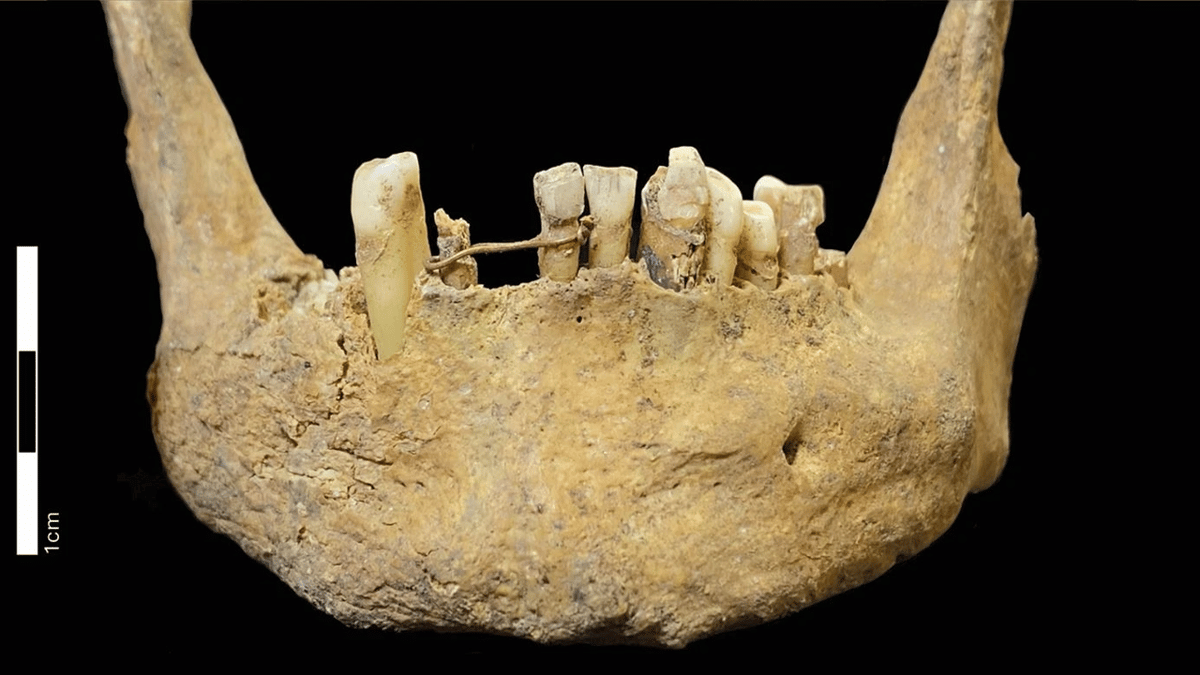
500-Year-Old Gold Dental Bridge Is Earliest Known Oral Care of Its Kind in Scotland — and It Likely Held a Fake Tooth
Why It Matters
The find pushes back the earliest known use of a dental bridge in Scotland, showing that affluent individuals sought advanced oral restoration long before dentistry became a recognized profession. It also reveals how appearance and social status drove early medical innovation in medieval Europe.
Key Takeaways
- •Gold ligature spans missing tooth in 500‑year‑old Scottish jaw
- •Procedure likely used a fake tooth or held natural root
- •Dental care performed by jewelers before dentistry became a profession
- •Gold wire indicates wealth and concern for appearance in medieval Scotland
- •Study expands evidence of early restorative dentistry across Europe
Pulse Analysis
The Aberdeen jaw offers a rare glimpse into medieval oral health, where a 20‑karat gold wire functioned as a primitive bridge. Bioarchaeologists used high‑resolution imaging and metallurgical analysis to confirm the wire’s composition and placement, demonstrating that early practitioners could manipulate precious metals for dental repair. This level of technical skill suggests a sophisticated understanding of tooth anatomy, even as the individual suffered from plaque, cavities, and gum disease.
In the late medieval period, personal appearance was tightly linked to moral standing, prompting wealthy patients to seek cosmetic solutions. The gold ligature likely served both functional and aesthetic purposes, restoring chewing ability while signaling status. Because formal dentistry did not emerge until the 19th century, such procedures fell to artisans—often jewelers or barbers—who applied their metal‑working expertise to dental problems. Comparable finds, like a 17th‑century French aristocrat’s gold‑wired teeth, underscore a broader European tradition of using precious metals for oral care.
This discovery reshapes our timeline of restorative dentistry, showing that complex prosthetic techniques existed centuries earlier than documented in written records. It prompts scholars to re‑examine other archaeological specimens for hidden metalwork, potentially uncovering a network of early dental artisans. For modern dentistry, the find highlights the long‑standing human drive to combine function with status, a motive that continues to influence cosmetic dental markets today.
500-year-old gold dental bridge is earliest known oral care of its kind in Scotland — and it likely held a fake tooth
Comments
Want to join the conversation?
Loading comments...