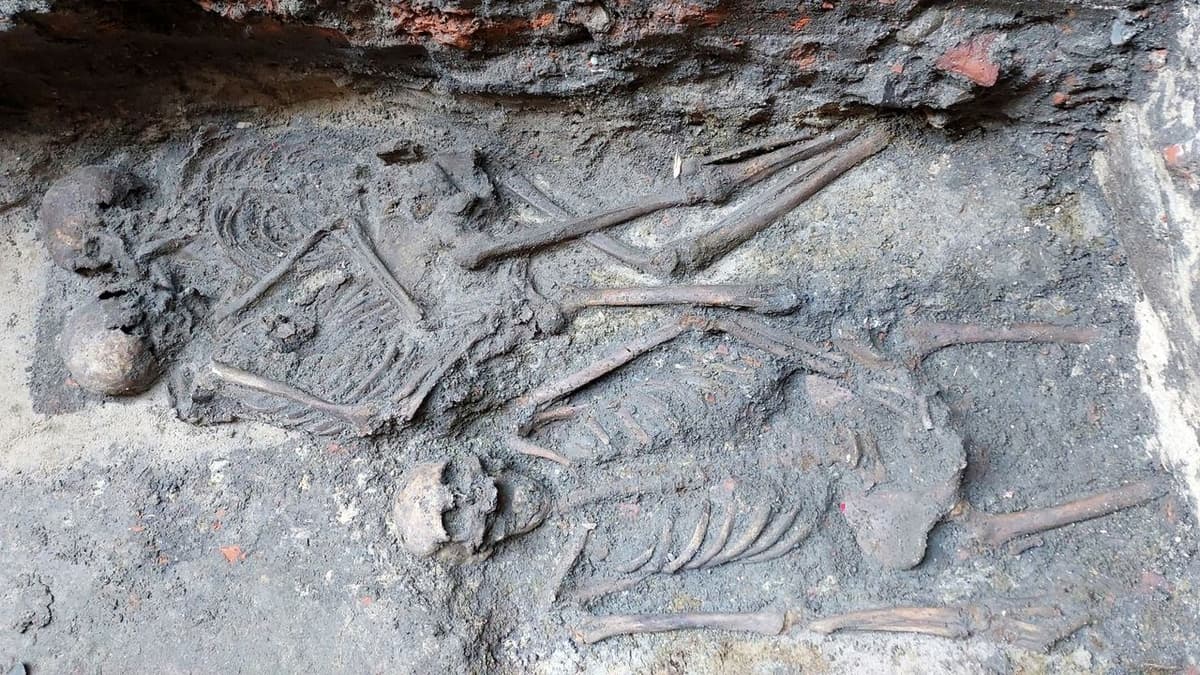
800-Year-Old 'Hugging Skeletons' Are Genetically Confirmed as Poland's only Medieval Same-Sex Double Burial
Why It Matters
The find challenges assumptions about medieval social norms and burial practices, showing that same‑sex relationships could receive honored interments. It also demonstrates how ancient DNA can rewrite historical narratives.
Key Takeaways
- •DNA confirms both individuals were women, not related
- •Burial positions suggest simultaneous interment in a cathedral niche
- •First genetically verified same‑sex double burial in medieval Poland
- •Grave location implies status, not marginalization
- •Study highlights potential “fictive kinship” beyond marriage
Pulse Analysis
The Opole discovery illustrates how cutting‑edge ancient DNA techniques are reshaping our view of the medieval past. By extracting fragmented genetic material from the two skeletons and reconstructing enough of their genomes, researchers could definitively identify both individuals as female and unrelated. This level of biological certainty is rare for remains of this age and provides a concrete anchor for interpreting an otherwise ambiguous burial context.
Medieval Europe is known for strict religious doctrines that condemned same‑sex unions, yet the women were laid to rest in a prestigious cathedral niche—an area usually reserved for elites. Their intertwined pose, coupled with the lack of protective rituals typical of “revenant” burials, suggests they were not outcasts but possibly shared a recognized social bond, such as a religious sisterhood, economic partnership, or other forms of fictive kinship. The find therefore adds nuance to the narrative that medieval societies uniformly ostracized non‑heteronormative relationships.
Beyond its immediate historical intrigue, the study opens new avenues for archaeological inquiry. Systematic DNA screening of other medieval graves could reveal whether such same‑sex interments were isolated curiosities or part of a broader, undocumented pattern. For scholars of gender, sexuality, and cultural heritage, the Opole skeletons underscore the importance of interdisciplinary methods—combining osteology, genetics, and archival research—to uncover hidden dimensions of past societies. As more data emerge, the story of these “hugging skeletons” may help recalibrate our understanding of medieval social structures and the diversity of human relationships.
800-year-old 'hugging skeletons' are genetically confirmed as Poland's only medieval same-sex double burial
Comments
Want to join the conversation?
Loading comments...