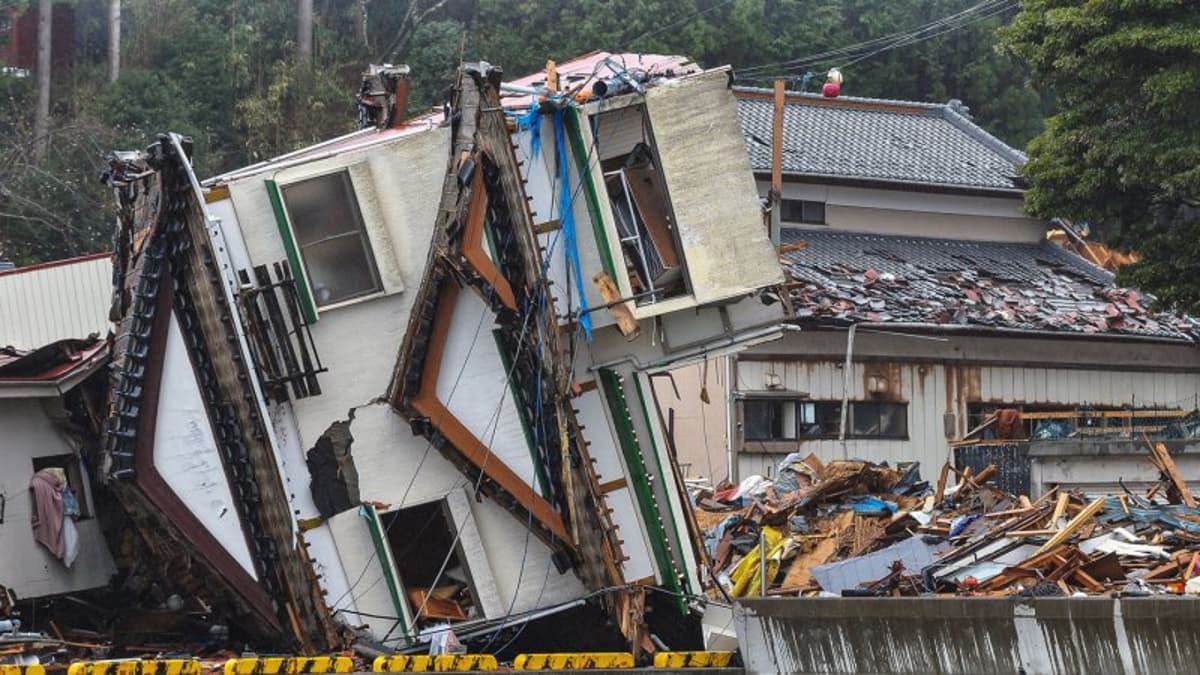
A 2011 Earthquake Bounced a Seismic Wave Off Earth’s Core, Nudging Japan East
Why It Matters
The finding reveals a previously unknown mechanism that can unlock stored tectonic stress, expanding the range of seismic hazards that engineers, insurers, and policymakers must consider. It also underscores the need for global monitoring of deep‑earth wave interactions after major quakes.
Key Takeaways
- •Core‑reflected S wave triggered fault slip across 3,000 km of Japan
- •Whole country shifted a few millimeters east after March 11, 2011 quake
- •First documented case of core‑reflected wave causing permanent ground offset
- •Slip involved two megathrust plate boundaries, twice Sumatra 2004 rupture length
- •Researchers warn future core‑reflected waves could pose new seismic hazards
Pulse Analysis
The 2011 Tohoku earthquake reshaped scientific understanding of how deep Earth processes interact with surface fault systems. While the event’s immediate devastation was well documented, a team led by seismologist Sunyoung Park uncovered a subtle yet profound effect: an S wave that penetrated the mantle, reflected off the liquid outer core, and returned to the crust. By mining archival GPS data, the researchers identified a consistent eastward displacement of a few millimeters across the Japanese archipelago, a permanent offset that directly linked the core‑reflected wave to fault slip on megathrust interfaces. This discovery challenges the conventional view that only near‑surface shaking can trigger large‑scale fault movement.
From a geophysical perspective, the study introduces a new class of seismic hazard—core‑reflected wave‑induced slip. The wave’s energy, though diffused over a three‑minute interval, was sufficient to unpin sections of the subduction zone that had accumulated stress over centuries. The slip spanned roughly 3,000 km, more than double the rupture length of the 2004 Sumatra earthquake, suggesting that deep‑earth wave dynamics can mobilize extensive fault segments. This insight compels a reassessment of seismic risk models, which traditionally exclude core‑reflected phases when estimating aftershock potential and ground deformation.
Practically, the findings have immediate implications for infrastructure resilience, insurance underwriting, and early‑warning systems. Monitoring networks now need to incorporate deep‑wave detection algorithms to flag potential secondary slip events following mega‑quakes. For insurers, the prospect of additional, albeit subtle, ground movement expands the scope of loss exposure, especially for high‑value coastal assets. As the scientific community refines models of core‑reflected wave propagation, policymakers can better anticipate and mitigate the cascading effects of future megathrust events, turning a once‑obscure seismic phenomenon into a critical component of global hazard preparedness.
A 2011 earthquake bounced a seismic wave off Earth’s core, nudging Japan east
Comments
Want to join the conversation?
Loading comments...