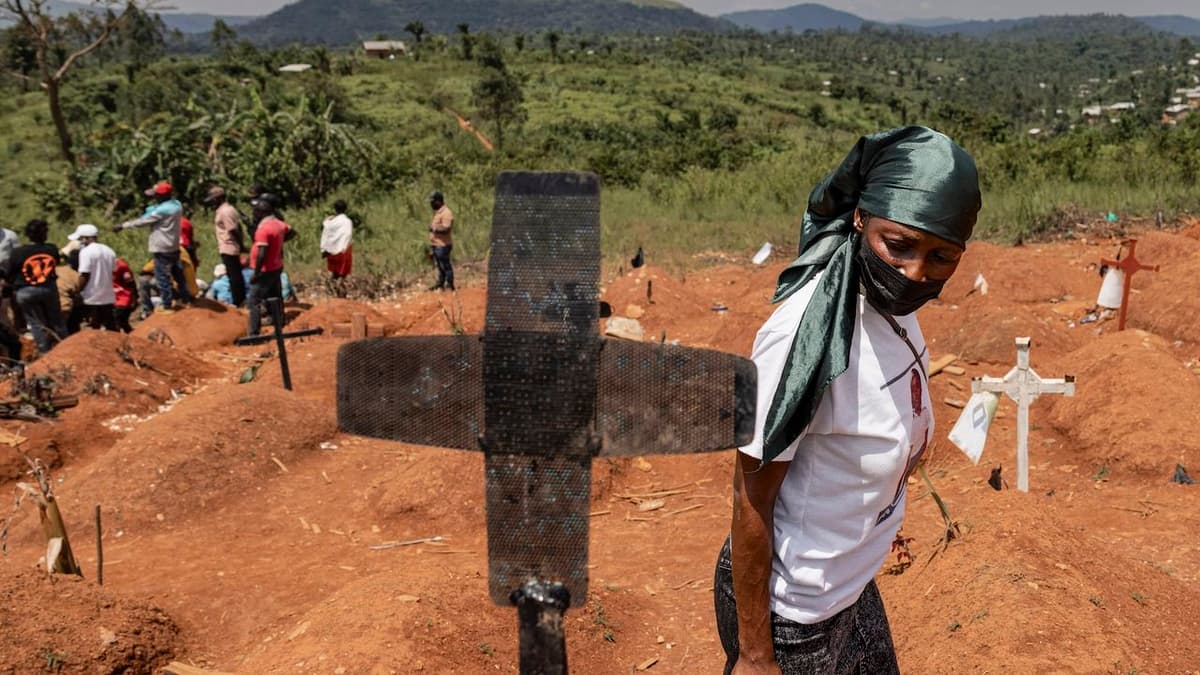
'A Disease Anywhere Can Be a Disease Everywhere Tomorrow Morning': Public Health Expert on Ebola and the Threat of Future Outbreaks
Why It Matters
The outbreak highlights critical gaps in vaccine availability and international response capacity, posing a direct threat to global health security as pathogens can cross borders within hours.
Key Takeaways
- •Bundibugyo Ebola has no licensed vaccine or therapeutic
- •Over 500 cases reported in DRC, 19 in Uganda as of June 6
- •Political violence and delayed diagnostics fueled community transmission
- •USAID funding cuts may weaken on‑ground logistics and coordination
- •mRNA technology could shorten future Ebola vaccine timelines
Pulse Analysis
The current Bundibugyo Ebola flare‑up illustrates how a relatively obscure viral lineage can ignite a large‑scale crisis when health infrastructure is fragile. While the Zaire ebolavirus benefitted from an approved vaccine and monoclonal‑antibody treatments, the Bundibugyo strain remains without a commercial countermeasure, leaving public‑health teams to depend on rapid case identification, strict infection‑control protocols, and safe burial practices. This reliance on non‑pharmaceutical interventions amplifies the importance of early laboratory confirmation, especially in regions where malaria and other febrile illnesses can mask early symptoms.
Compounding the medical challenges are the sociopolitical realities of eastern DRC. Decades of armed conflict have eroded trust in government services, hampered road access, and limited the presence of international NGOs. Dr. Khan notes that the loss of USAID’s on‑the‑ground logistics and personal‑protective‑equipment support has strained coordination, even though CDC and other partners continue to fund the response. Effective contact tracing and community engagement become far more difficult when populations are displaced, skeptical of outsiders, and lack basic health literacy. These conditions create multiple transmission chains before an outbreak is officially recognized, turning isolated cases into community spread.
Looking ahead, the episode underscores the urgency of diversifying vaccine platforms. mRNA technology, proven during the COVID‑19 pandemic, can compress development timelines from years to months, offering a viable path for rapid Bundibugyo vaccine candidates. However, such scientific advances require sustained financing from governments and philanthropic bodies; CEPI’s $10 million seed fund is a start but far from sufficient. Strengthening global surveillance, restoring robust USAID and WHO funding, and integrating climate‑adaptation strategies into disease‑prevention plans are essential to prevent the next "disease anywhere" from becoming a worldwide emergency.
'A disease anywhere can be a disease everywhere tomorrow morning': Public health expert on Ebola and the threat of future outbreaks
Comments
Want to join the conversation?
Loading comments...