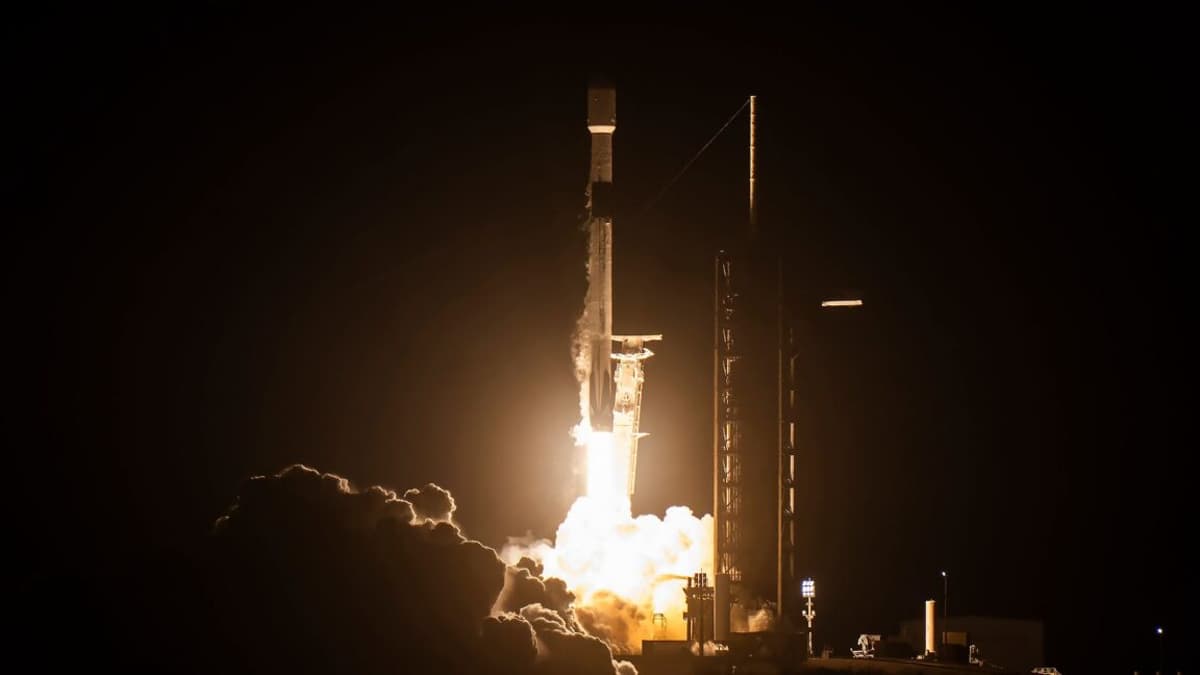
A Falcon 9 Rocket Will Hit the Moon This Summer at Seven Times the Speed of Sound
Companies Mentioned
Why It Matters
The event underscores the growing debris risk as launch cadence to the Moon accelerates, prompting the need for systematic disposal strategies to protect future lunar habitats and operations.
Key Takeaways
- •Falcon 9 upper stage to impact Moon on Aug 5, 2025
- •Impact speed 2.43 km/s, ~5,400 mph, seven times sound
- •Crater will be small; no risk to lunar assets
- •Highlights need for lunar debris mitigation as launch cadence rises
- •Sun‑orbit disposal could prevent future Moon impacts
Pulse Analysis
The upcoming lunar impact of a Falcon 9 upper stage has been tracked for over a year, with more than a thousand observations confirming its trajectory. Launched on Jan. 15, 2025 as part of the Blue Ghost mission, the 13.8‑meter, 3.7‑meter‑diameter stage will strike near the Einstein crater at 2:44 am ET on Aug. 5. Traveling at 2.43 km per second—about five thousand four hundred miles per hour—it will generate a modest crater, but the Moon’s lack of atmosphere means the stage will remain largely intact upon impact. Visibility from Earth will be limited, making the event more of a scientific footnote than a public spectacle.
While the impact poses no immediate threat, it arrives at a pivotal moment for lunar exploration. NASA, China, and private firms are accelerating plans for semi‑permanent outposts near the Moon’s South Pole, and the cadence of Falcon 9 and other launch vehicles is expected to increase tenfold to support rovers, habitats, and supply chains. Each additional launch adds to the population of spent upper stages orbiting Earth‑Moon space, raising the probability of accidental collisions with future infrastructure. As lunar activity intensifies, managing orbital debris becomes a critical safety and cost‑control factor for both governmental and commercial stakeholders.
Industry experts suggest a straightforward mitigation path: diverting spent stages into heliocentric “disposal” orbits using a modest fuel reserve. This maneuver eliminates the risk of future Moon or Earth impacts without significant cost penalties, especially when incorporated into launch planning. Adoption of a standard operating procedure for sun‑orbit disposal could become a regulatory norm, aligning with emerging space sustainability frameworks. By proactively addressing debris now, the space sector can safeguard the next wave of lunar missions and ensure a cleaner, safer environment for humanity’s return to the Moon.
A Falcon 9 rocket will hit the Moon this summer at seven times the speed of sound
Comments
Want to join the conversation?
Loading comments...