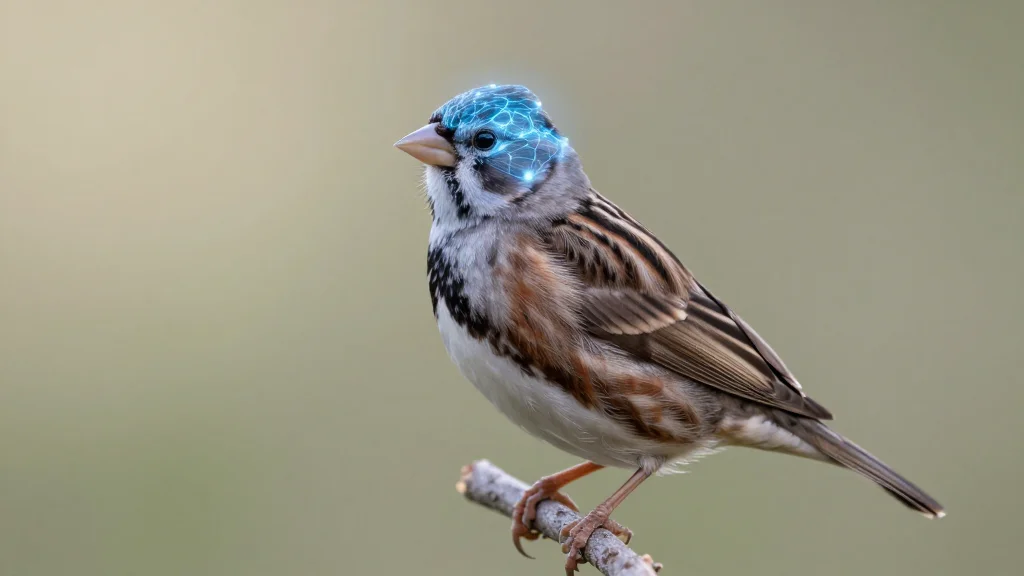
A Familiar Voice Shapes How Zebra Finches Hear and Respond
Why It Matters
The study reveals how social bonds shape neural circuits that control real‑time communication, offering a model for understanding the brain mechanisms underlying conversational timing in humans and other species.
Key Takeaways
- •Over 70% of HVC neurons respond to zebra finch calls
- •Inhibitory interneurons fire stronger for familiar callers
- •Birds reply faster and more consistently to known individuals
- •Neural activity predicts timing of vocal replies
Pulse Analysis
Zebra finches provide a rare window into the interplay between innate vocal behavior and social modulation. While their contact calls are hard‑wired, the timing of replies is remarkably flexible, shifting with the familiarity of the interlocutor. This flexibility mirrors human conversation, where acquaintances often elicit quicker, smoother exchanges. By demonstrating that a basic, species‑specific call can be socially tuned, the research expands the scope of vocal communication studies beyond learned song to include innate acoustic signals.
The core of the discovery lies in the HVC, a brain nucleus traditionally associated with song production. Using electrophysiological recordings, the team showed that more than two‑thirds of HVC neurons fire when a finch hears any call, but a subset of inhibitory interneurons exhibits heightened, prolonged activity for familiar voices. Machine‑learning analyses could even classify callers based solely on this interneuron pattern, linking neural dynamics directly to behavioral latency. These findings suggest that inhibitory circuits act as a timing gate, sharpening the bird’s readiness to respond when social relevance is high.
Beyond avian biology, the work carries implications for broader neuroscience and language research. It highlights how social context can reconfigure neural timing networks that are otherwise considered hard‑wired, offering a potential analogue for human speech turn‑taking mechanisms. Understanding such circuitry could inform models of conversational disorders and guide future studies on how experience shapes rapid vocal exchanges across species. The study thus bridges ethology, neurobiology, and cognitive science, underscoring the value of comparative approaches to deciphering the brain’s communication toolkit.
A familiar voice shapes how zebra finches hear and respond
Comments
Want to join the conversation?
Loading comments...