Why It Matters
The image provides fresh data on barred spiral mechanics, informing both academic research and the design of next‑generation commercial space observatories. Understanding such galaxies helps refine models that underpin satellite navigation and deep‑space mission planning.
Key Takeaways
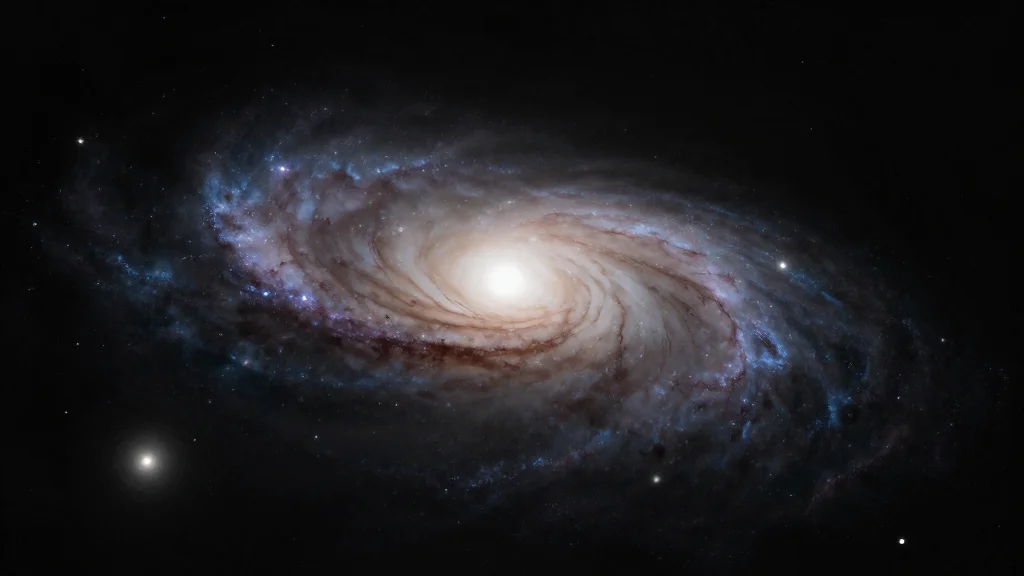
- •IC 486 is a barred spiral galaxy 380 million light‑years away
- •Hubble captured the image on April 13, 2026, revealing soft ethereal glow
- •The galaxy’s central bar and ring‑like arms highlight star‑formation zones
- •Study aids understanding of barred spiral dynamics and cosmic evolution
- •Data supports future commercial space‑telescope ventures and deep‑space navigation
Pulse Analysis
The Hubble Space Telescope continues to deliver unprecedented visual data, and the April 2026 capture of IC 486 exemplifies its enduring scientific value. By employing a suite of wide‑field cameras and spectrographs, Hubble resolved the galaxy’s faint outer arms and highlighted the contrast between luminous star‑forming knots and interstellar dust lanes. This level of detail, once reserved for ground‑based observatories with adaptive optics, now arrives from low‑Earth orbit, reinforcing Hubble’s role as a workhorse for astrophysical imaging.
Barred spiral galaxies like IC 486 are pivotal for decoding the life cycle of stars and the redistribution of angular momentum across cosmic scales. The pronounced central bar acts as a conduit, funneling gas toward the core and igniting bursts of star formation that appear as subtle blue patches in the Hubble image. Researchers can compare these observations with simulations to refine theories on how bars influence galactic evolution, potentially shedding light on the Milky Way’s own barred structure. Moreover, the galaxy’s relatively isolated position offers a clean laboratory for studying spiral density waves without the interference of nearby massive companions.
Beyond pure science, the data carries tangible business implications. Commercial entities developing next‑generation space telescopes can benchmark sensor performance against Hubble’s proven imaging standards, accelerating hardware validation cycles. Precise galactic maps also enhance deep‑space navigation algorithms, a growing market as private firms plan lunar and Martian logistics. Partnerships between NASA, ESA, and commercial partners around such high‑profile releases demonstrate a viable pathway for monetizing astronomical data while advancing humanity’s broader space ambitions.
A Gently Glowing Galaxy
Comments
Want to join the conversation?
Loading comments...