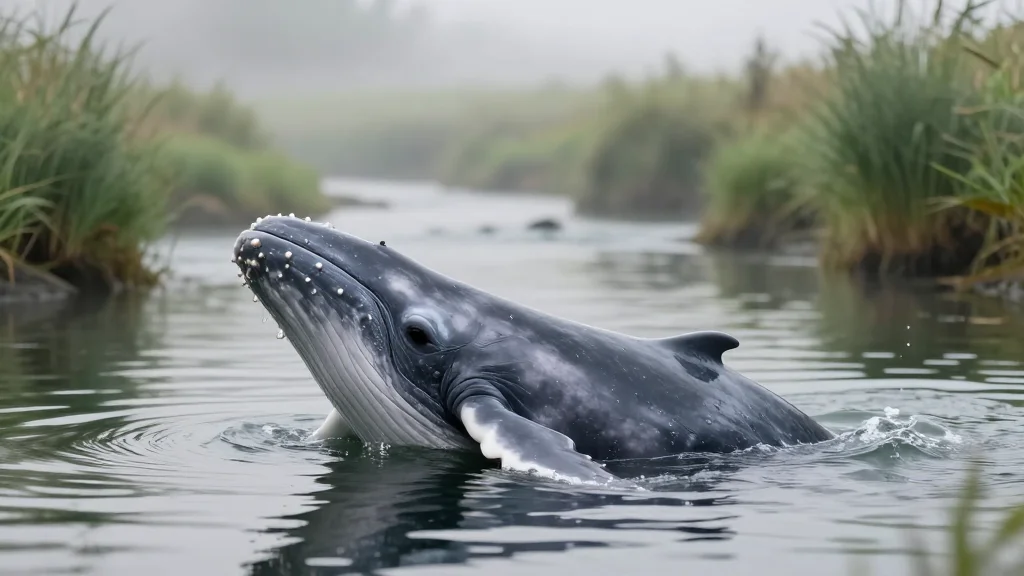
A Gray Whale that Swam 20 Miles up a Washington State River Is Found Dead
Why It Matters
The death highlights a worsening food shortage for eastern gray whales, signaling broader ecosystem stress that could accelerate the species' decline and trigger urgent conservation measures.
Key Takeaways
- •Juvenile gray whale traveled 20 miles up Washington's Willapa River.
- •Whale found dead; hunger likely drove unusual river entry.
- •Eastern gray whale population declined to ~13,000, lowest since 1970s.
- •NOAA reports 690 strandings 2018‑2023, citing food scarcity in Arctic.
- •Researchers plan necropsy to assess health and causes.
Pulse Analysis
The sighting of a gray whale navigating the narrow channels of the Willapa River captured national attention, illustrating how desperate animals will stray far from traditional routes when faced with scarcity. While the public gathered on bridges to watch the massive mammal, scientists monitored its condition, noting a thin profile but normal behavior. Such unusual inland excursions are rare, yet they serve as a stark visual cue of the pressures mounting on marine megafauna during their arduous 5,000‑mile migration from Baja California to Alaskan feeding grounds.
Underlying the river incident is a systemic decline in the eastern Pacific gray whale population. Since 2019, reduced ice‑free feeding zones in the Bering and Chukchi seas have limited access to amphipods, the whales' primary prey. NOAA’s declaration of an unusual mortality event, encompassing 690 strandings over five years, underscores the scale of the crisis. The latest census, estimating roughly 13,000 individuals, marks the lowest numbers recorded since the 1970s, contradicting earlier hopes of recovery and raising alarms about reproductive rates and overall health.
For policymakers and conservationists, the dead whale offers both a warning and an opportunity. A thorough necropsy will provide critical data on nutritional status, disease exposure, and potential contaminants, informing adaptive management strategies. Addressing the root causes—climate‑driven habitat loss and shifting prey distributions—will require coordinated international effort, including Arctic protection measures and fisheries management that safeguards the gray whale’s food web. Immediate action could help reverse the downward trend before the species faces irreversible decline.
A gray whale that swam 20 miles up a Washington state river is found dead
Comments
Want to join the conversation?
Loading comments...