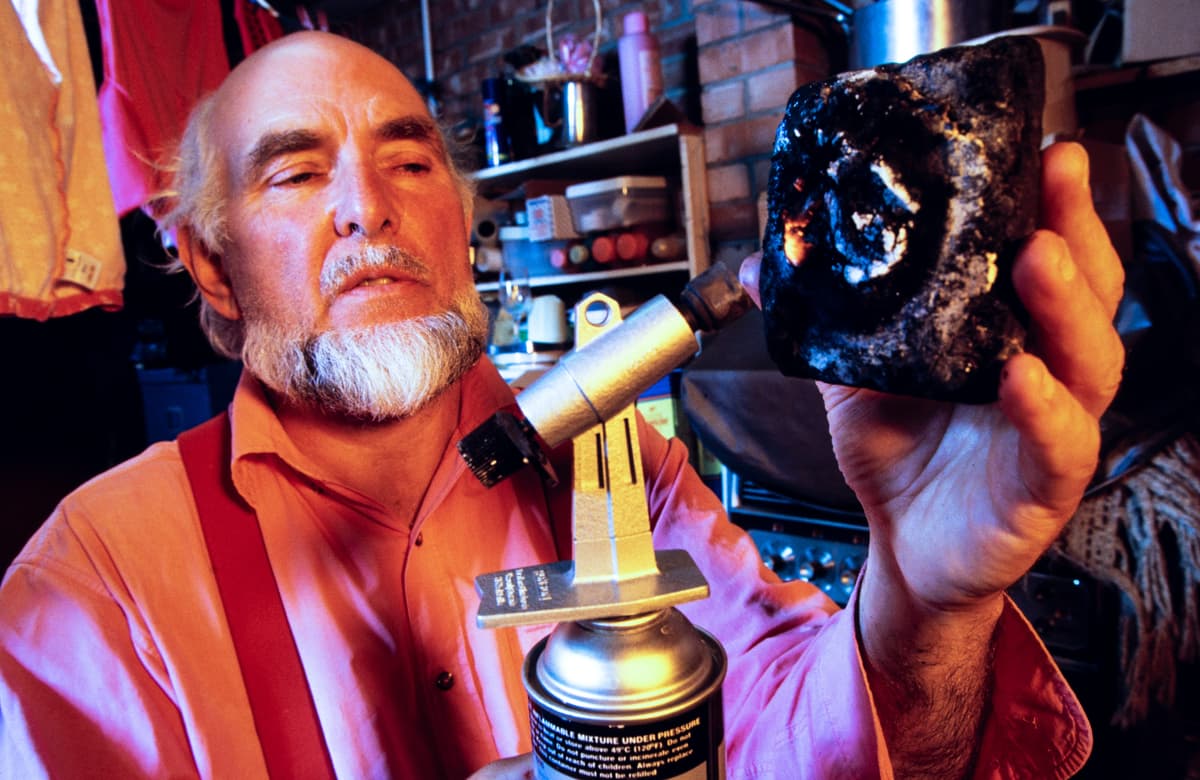
A Hairdresser Made a Revolutionary Heat-Proof Plastic. The Secret Formula Died With Him—Maybe.
Why It Matters
Starlite illustrates how secretive innovation can stall transformative technologies, especially in high‑heat aerospace and safety applications. Its story underscores the value of open research for advancing next‑generation heat‑shield materials.
Key Takeaways
- •Starlite survived 1,200 °C flame for minutes
- •NASA explored Starlite for Space Shuttle heat shields
- •Inventor Maurice Ward kept formula secret, died 2011
- •YouTuber NightHawk recreated similar foam using kitchen ingredients
Pulse Analysis
When *Tomorrow’s World* aired the Starlite demonstration, the visual of a raw egg emerging unscathed from a 1,200 °C blaze captured imaginations worldwide. The material’s secret lay in intumescence—an expanding carbon foam that insulates by creating a protective air barrier. Although the exact chemistry remains unknown, the principle mirrors modern fire‑retardant coatings used in construction and electronics, suggesting Starlite was ahead of its time.
Aerospace agencies, most notably NASA, saw Starlite as a potential breakthrough for shuttle heat shields and missile protection. Traditional ablative tiles require heavy, costly manufacturing, while a lightweight, paint‑on coating could dramatically reduce launch mass and maintenance. However, Ward’s obsessive secrecy, driven by fear of theft, prevented rigorous testing, certification, and scaling. The result was a lost opportunity: a material that could have reshaped thermal protection systems never left the laboratory.
In recent years, the mystery has sparked grassroots experimentation. NightHawkInLight demonstrated that a simple mixture of flour, cornstarch, sugar and baking soda can mimic Starlite’s intumescent behavior, offering a low‑cost entry point for hobbyists and educators. This open‑source approach highlights a broader trend: democratizing advanced materials through DIY science. If a commercial entity can reverse‑engineer a reliable, scalable version, industries from aerospace to consumer electronics could benefit from lighter, more efficient heat‑shield solutions, reigniting interest in the once‑elusive polymer.
A Hairdresser Made a Revolutionary Heat-Proof Plastic. The Secret Formula Died With Him—Maybe.
Comments
Want to join the conversation?
Loading comments...