Why It Matters
PIP‑II’s 650‑MHz cryomodules are critical to boosting Fermilab’s proton beam power, directly enhancing U.S. particle‑physics research capacity. Effective international coordination and engineering leadership ensure the accelerator’s timely, cost‑effective delivery.
Key Takeaways
- •Bernardini manages 13 low‑beta and high‑beta 650 MHz cryomodules.
- •HB650 modules built in U.K., LB650 modules built in France.
- •Project involves partners from Europe and India for component supply.
- •Transition from design to procurement requires vendor specs and quality control.
- •Bernardini began at Fermilab in 2020 despite COVID travel bans.
Pulse Analysis
The Proton Improvement Plan‑II (PIP‑II) represents the most ambitious upgrade to Fermilab’s accelerator complex in decades, aiming to double the proton beam power for neutrino experiments and rare‑process searches. Central to this effort are the 650‑MHz superconducting cryomodules, which house high‑gradient radio‑frequency cavities that accelerate particles with unprecedented efficiency. By delivering 13 low‑beta and high‑beta modules, the project not only expands the lab’s scientific reach but also positions the United States as a leader in next‑generation accelerator technology.
What sets PIP‑II apart is its truly global supply chain. The high‑beta (HB650) cryomodules are fabricated in the United Kingdom, while the low‑beta (LB650) units emerge from French facilities, each receiving superconducting cavities sourced from Italy. Additional components arrive from India, creating a complex matrix of standards, interfaces, and logistics. Engineers like Bernardini must synchronize design specifications, procurement contracts, and quality‑control protocols across continents, ensuring that every module integrates seamlessly into the linear accelerator’s cryogenic environment. This cross‑border collaboration accelerates innovation while distributing risk and cost among partner nations.
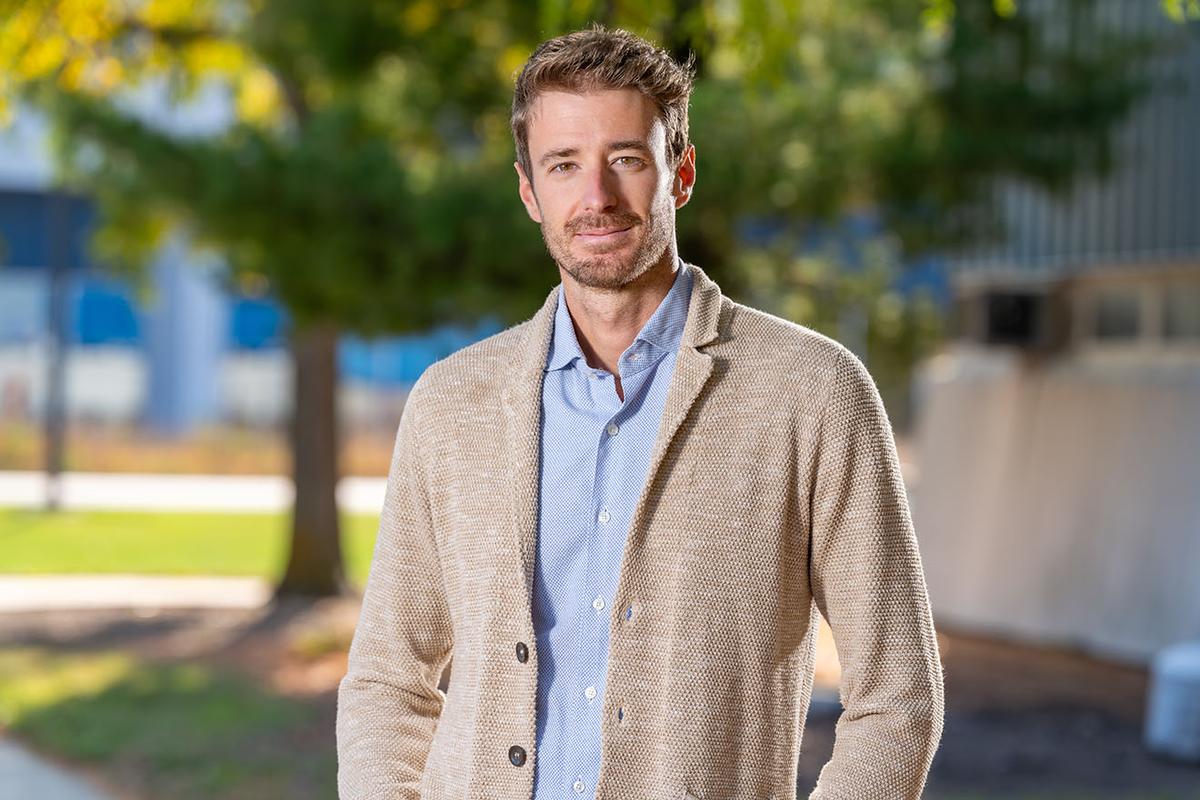
Beyond the technical challenges, PIP‑II highlights the resilience of the scientific workforce. Bernardini’s onboarding during the COVID‑19 pandemic—delayed by international travel bans—underscores how labs adapted hiring, remote onboarding, and safety protocols to retain talent. His dual role as engineer and manager exemplifies the multidisciplinary skill set required for large‑scale projects: from detailed mechanical design to vendor negotiations and on‑site testing. As the accelerator nears completion, the expertise cultivated through such collaborations will feed into future endeavors, from muon‑based facilities to potential collider upgrades, sustaining America’s edge in high‑energy physics.
A minute with Jacopo Bernardini
Comments
Want to join the conversation?
Loading comments...