A Missing Piece in Climate Models: Nature’s Own Emissions
Companies Mentioned
Why It Matters
Accounting for warming‑induced emissions is essential for accurate climate projections and for setting realistic mitigation pathways that affect global policy targets.
Key Takeaways
- •Natural emissions could raise temperatures 0.2‑0.6°C this century
- •Only 5 of 11 IPCC models include wildfire; none cover three sources
- •Ecosystem emissions may equal today’s power‑and‑building CO₂ output by 2100
- •New sensor networks target African wetlands and Amazon to fill data gaps
- •Spark Climate links >20 groups to add feedbacks for 2029 IPCC report
Pulse Analysis
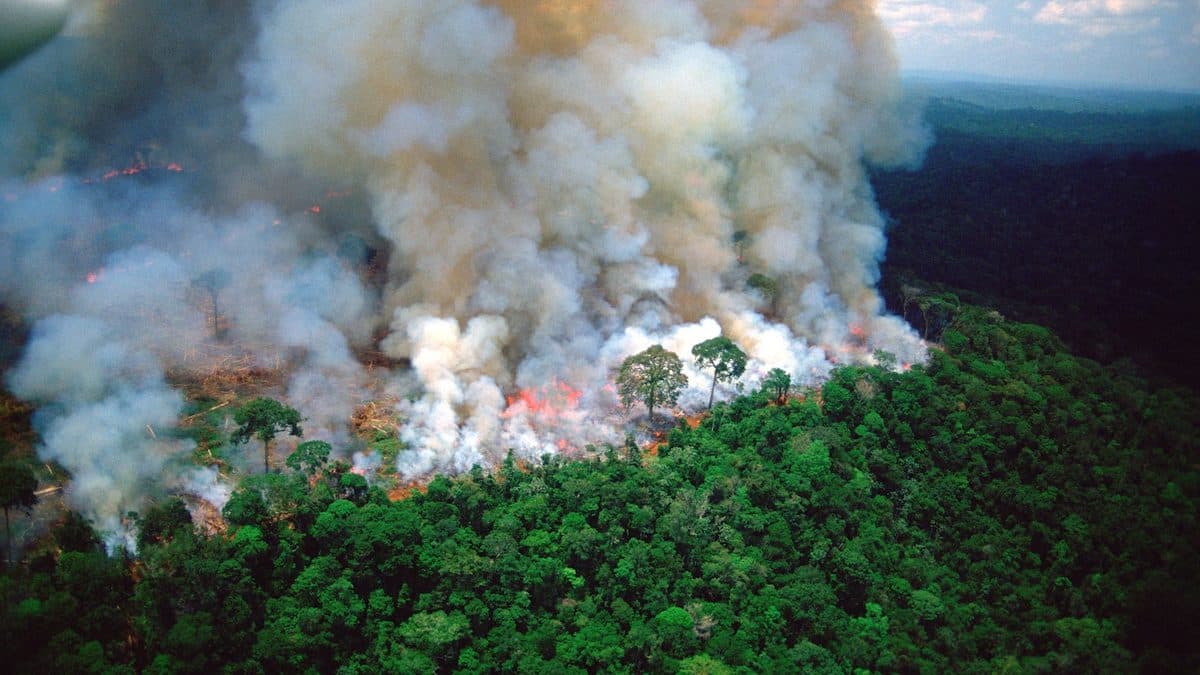
The Earth’s biosphere is turning from a carbon sink into a source as heat fuels wildfires, accelerates wetland methane production, and thaws permafrost. While sea‑ice loss and cloud changes have been woven into the latest generation of Earth‑system models, natural emissions have been treated as a peripheral concern. This omission stems from the sheer complexity of ecosystem processes, sparse observations in remote regions, and the computational cost of simulating nonlinear feedback loops. As a result, the most widely used models that inform IPCC assessments systematically underestimate the total greenhouse‑gas budget.
A recent interdisciplinary study quantified the climate impact of these missing emissions, finding they could contribute up to 0.6°C of warming by 2100—equivalent to roughly half of today’s anthropogenic power‑and‑building CO₂ output. The researchers used a simplified climate framework to overlay projected wildfire, wetland and permafrost emissions onto standard emission pathways, revealing a potential 60% acceleration of human‑driven warming under optimistic scenarios. Crucially, the analysis highlighted that only five of the eleven models used in the latest IPCC report included wildfire emissions, and none captured all three natural sources, leaving a substantial blind spot in policy‑relevant projections.
Policymakers and investors now face a tighter climate budget. If natural feedbacks are omitted, nations may set carbon‑price targets or fossil‑fuel phase‑out schedules that are insufficient to stay below the 2°C threshold. To close the data gap, initiatives like Spark Climate’s program are deploying methane sensors across African wetlands and enhancing permafrost monitoring in the Arctic. By coordinating more than twenty modeling groups, the effort aims to embed warming‑induced emissions into the next IPCC assessment due by 2029, providing a more realistic foundation for climate‑risk assessments, mitigation planning, and carbon‑offset accounting.
A Missing Piece in Climate Models: Nature’s Own Emissions
Comments
Want to join the conversation?
Loading comments...