A Mutation Gave Humans the Gift of Speech. These Mice Have It, Too.
Why It Matters
The discovery reveals a common genetic mechanism behind vocal complexity, offering fresh insight into the neural basis of human speech and potential targets for treating language disorders.
Key Takeaways
- •Mutation expands neural pathways, enabling longer, turn‑taking vocalizations.
- •Singing mice produce 16‑second songs using both sonic and ultrasonic sounds.
- •Study links mouse vocal ability to same mutation driving human language evolution.
- •Findings could guide research on speech disorders and vocal learning in mammals.
Pulse Analysis
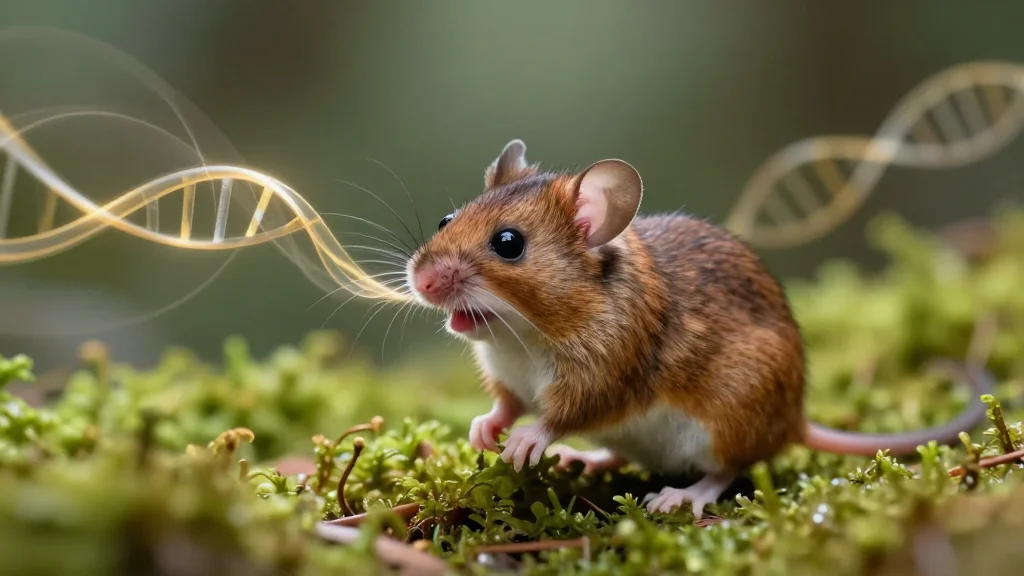
The origin of human speech has long been a puzzle that bridges genetics, neurobiology, and anthropology. Recent work highlights a single genetic mutation that amplified a set of neural pathways, providing the structural scaffolding for complex vocal output. This same mutation, now identified in Alston’s singing mouse—a Central American rodent famed for its courteous, multi‑second duets, suggests that the capacity for turn‑taking and extended vocal sequences may have deep evolutionary roots shared across mammals. Understanding this common thread reshapes how scientists view the biological foundations of language.
In the Nature paper, a team from Cold Spring Harbor Laboratory dissected the brains of the melodious Alston’s mouse and its silent laboratory cousin. Using high‑resolution imaging and gene‑expression profiling, they pinpointed an expansion of the cortico‑brainstem circuitry that governs breath control and phonation. The enlarged pathway allowed the singing mouse to sustain uninterrupted calls for up to 16 seconds, a feat previously thought exclusive to humans and songbirds. By mapping these neural differences, researchers demonstrated that a modest genetic tweak can produce a dramatic leap in vocal repertoire without overhauling the entire brain architecture.
The broader impact of this discovery reaches beyond curiosity about mouse chatter. If a comparable mutation underlies human speech, it becomes a target for investigating developmental language disorders such as apraxia or autism‑related communication deficits. Moreover, the study offers a template for probing vocal learning in other mammals, from bats to primates, potentially accelerating the development of bio‑engineered models for speech therapy. As neuroscientists translate these insights into clinical tools, the humble singing mouse may prove instrumental in decoding the circuitry that makes conversation possible.
A Mutation Gave Humans the Gift of Speech. These Mice Have It, Too.
Comments
Want to join the conversation?
Loading comments...