A New Era of Exploring the Universe in Radio
Companies Mentioned

Why It Matters
First light validates the ngVLA design and demonstrates its potential to fill critical gaps in radio observations, positioning the United States at the forefront of next‑generation astrophysics research.
Key Takeaways
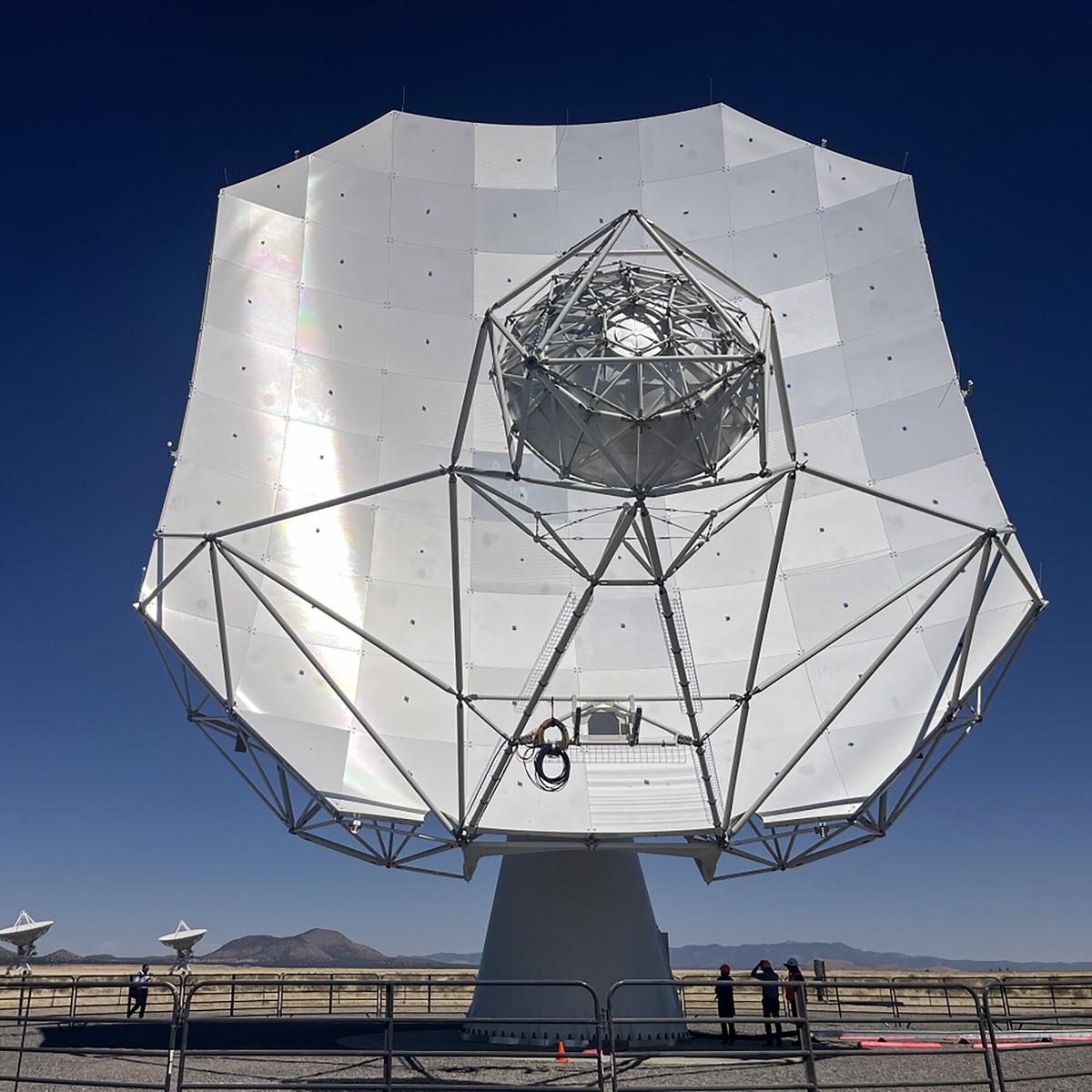
- •ngVLA prototype achieved first light, detecting Sun, supernova, black hole.
- •Project envisions 263 antennas across US Southwest and northern Mexico.
- •Enables detailed study of planet formation, black holes, and gravitational tests.
- •Supports multi-wavelength astronomy by filling radio observation gaps.
- •Funding approval remains critical for full array deployment.
Pulse Analysis
The ngVLA represents a paradigm shift in radio astronomy, leveraging a distributed network of 263 dishes to achieve unprecedented angular resolution at centimeter wavelengths. Unlike single‑dish telescopes, this interferometric array synthesizes a virtual aperture the size of the continent, allowing astronomers to resolve fine structures in star‑forming regions and distant galaxies that were previously blurred. By capturing the faint radio glow of molecular gas, the array will illuminate the chemistry that seeds planetary systems, offering a complementary view to optical and infrared observatories.
Beyond imaging, the ngVLA’s sensitivity opens new frontiers in fundamental physics. Its ability to monitor pulsars with extreme precision will enable stringent tests of general relativity, while high‑frequency observations of supermassive black holes will refine models of accretion and jet formation. The array also fills a critical wavelength gap between existing facilities such as the Atacama Large Millimeter/submillimeter Array and the Square Kilometre Array, creating a seamless spectrum for multi‑messenger astronomy.
Realizing the full ngVLA hinges on sustained federal investment and international partnerships. The prototype’s first light demonstrates technical viability, but the projected $1.5 billion construction budget requires congressional approval. Successful funding would cement U.S. leadership in radio astronomy, stimulate high‑tech manufacturing across the Southwest, and generate a pipeline of skilled scientists and engineers. As the scientific community rallies around the ngVLA’s ambitious science case, the project stands poised to transform our understanding of the cosmos in the coming decade.
A New Era of Exploring the Universe in Radio
Comments
Want to join the conversation?
Loading comments...