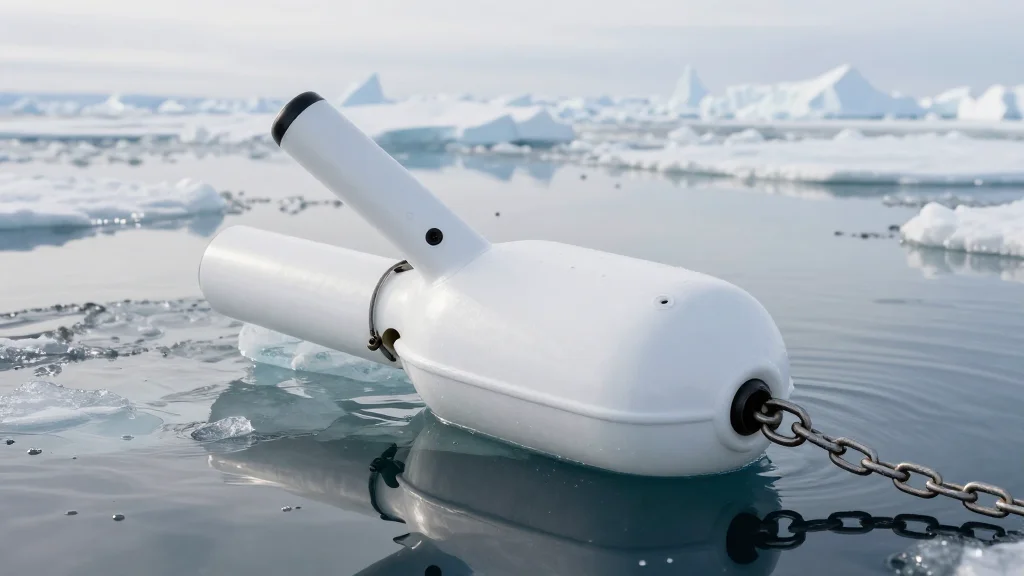
A New Way to Eavesdrop on Ocean Temperature in the Arctic
Why It Matters
Continuous, low‑cost temperature data improve climate models and inform geopolitical decisions about Arctic shipping and resource extraction.
Key Takeaways
- •Acoustic travel time correlates directly with water temperature
- •2,600 km acoustic path captured seasonal temperature variations
- •Thinner, smoother sea ice reduced sound scattering losses
- •Year‑round monitoring possible without satellite or ship access
- •Method supports climate modeling and Arctic policy planning
Pulse Analysis
The resurgence of ocean acoustic thermometry marks a pivotal shift in polar observation strategy. By exploiting the fundamental physics that sound speed increases with water temperature, researchers can now infer subsurface thermal conditions from the time it takes a low‑frequency pulse to traverse the Arctic basin. This technique sidesteps the limitations of satellite remote sensing, which is obstructed by perennial sea ice, and reduces reliance on costly, seasonal ship campaigns. The 2019‑2020 CAATEX deployment proved that modern acoustic sources and improved ice conditions enable reliable signal transmission over distances exceeding 2,500 kilometers.
Beyond the technical triumph, the ability to continuously monitor Arctic Ocean heat content carries profound climate implications. Precise temperature profiles feed directly into coupled ocean‑atmosphere models, sharpening predictions of sea‑ice melt rates, thermohaline circulation shifts, and feedback loops that influence global weather patterns. As the Arctic warms twice as fast as the global average, real‑time data become essential for validating satellite-derived surface observations and for calibrating climate projections that guide mitigation policies.
Geopolitically, the method equips nations with a strategic surveillance tool for a region where melting ice is unlocking new shipping lanes and hydrocarbon prospects. Continuous acoustic monitoring can detect anomalous temperature spikes that may affect ice stability, informing navigation safety and resource management. Moreover, the relatively low deployment cost—anchored moorings and autonomous sound sources—makes the system attractive for international collaborations, fostering shared scientific stewardship of a fragile, rapidly changing environment.
A new way to eavesdrop on ocean temperature in the Arctic
Comments
Want to join the conversation?
Loading comments...