A New Way to Spot Signs of Dark Matter
Why It Matters
By expanding the searchable mass range and boosting sensitivity, the approach could accelerate the first direct detection of dark matter, reshaping particle physics and cosmology.
Key Takeaways
- •MIT team uses atom interferometry to detect dark matter interactions.
- •Sensitivity improves by factor of 100 over existing detectors.
- •Targets low-mass candidates such as axions and hidden photons.
- •Laboratory prototype demonstrated detection of simulated dark matter signals.
- •Scalable design could enable global network of dark matter observatories.
Pulse Analysis
The hunt for dark matter has long been hampered by the weakness of its interactions with ordinary matter, forcing scientists to rely on massive underground detectors that probe only a narrow slice of the particle‑mass spectrum. Traditional approaches, such as liquid xenon time‑projection chambers, excel at spotting heavier candidates but struggle with lighter particles like axions. This gap has motivated researchers to seek quantum‑level measurement tools capable of amplifying the faintest signals, a niche where atom interferometry shines.
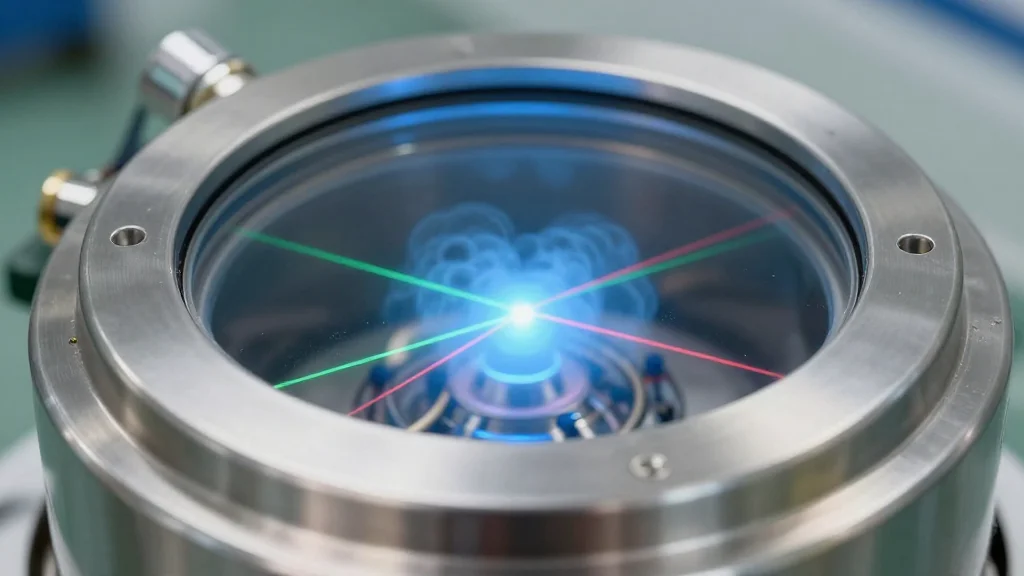
MIT's new platform leverages clouds of ultra‑cold rubidium atoms arranged in an interferometer that acts as an exquisitely sensitive ruler for forces at the zeptonewton scale. By tracking the precession of atomic spins under controlled magnetic fields, the system can register the tiny momentum transfer expected when a dark‑matter particle brushes past. Early experiments introduced synthetic signals mimicking axion‑like interactions, and the interferometer recorded them with a signal‑to‑noise ratio far exceeding that of existing detectors, effectively widening the observable parameter space.
If the prototype scales as envisioned, a distributed array of such sensors could provide continuous, low‑cost monitoring of the cosmos, complementing large‑scale facilities and offering real‑time alerts for transient dark‑matter events. This breakthrough not only promises scientific payoff—potentially confirming the nature of dark matter—but also spurs commercial interest in quantum‑sensor technologies for defense, navigation, and fundamental research. The convergence of high‑precision physics and practical engineering may thus usher in a new era of discovery and market opportunity.
A New Way to Spot Signs of Dark Matter
Comments
Want to join the conversation?
Loading comments...