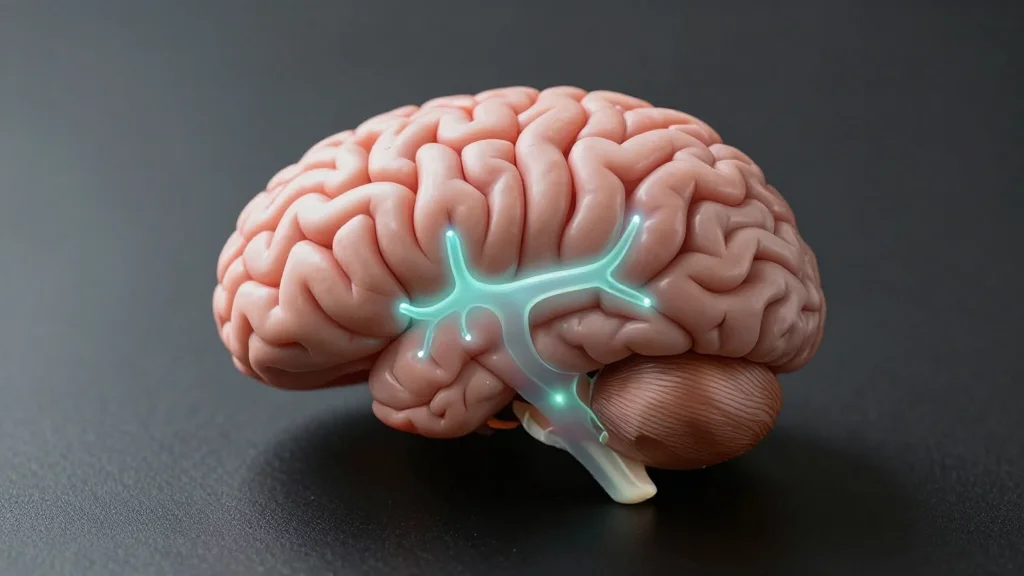
A Prefrontal Cortex-Nucleus Accumbens Circuit Attenuates Cocaine-Conditioned Place Preference Memories
Why It Matters
Restoring IL‑NAcSh excitability offers a mechanistic route to curb relapse‑triggering memories, a major hurdle in treating cocaine addiction. The study highlights Kv7 channels as a druggable target for future therapeutics.
Key Takeaways
- •IL-NAcSh neurons become hypoexcitable after cocaine exposure
- •Hypoexcitability persists at least 15 days post-withdrawal
- •Chemogenetic activation restores excitability, reducing cocaine memory
- •Kv7 channel inhibition in IL weakens cocaine place preference
- •PL-NAcCo circuit unchanged, highlighting circuit specificity
Pulse Analysis
Addiction neuroscience has long recognized the prefrontal cortex as a command center for drug‑seeking behavior, with the infralimbic (IL) region acting as an extinction hub that dampens cue‑induced relapse. By contrast, the prelimbic (PL) area often fuels craving. Recent work clarifies why the IL‑NAcSh pathway is uniquely protective: repeated cocaine exposure drives a sustained drop in membrane excitability of IL‑NAcSh layer 5 pyramidal cells, reflected in higher rheobase, lower input resistance, and amplified afterhyperpolarization. This cellular adaptation persists well beyond acute withdrawal, effectively silencing a circuit that would normally suppress drug‑related memories.
To test whether reactivating this dormant pathway could erase cocaine‑linked memories, the investigators employed chemogenetic tools to selectively boost IL‑NAcSh firing. The intervention sharply reduced both short‑term and long‑term conditioned place preference, confirming that restoring intrinsic excitability directly weakens cue‑driven drug memory. Parallel pharmacological experiments pinpointed Kv7/M‑type potassium channels as the key modulators of this excitability shift; blocking Kv7 in the IL mimicked the chemogenetic effect, while enhancing Kv7 activity deepened hypoexcitability. These results map a clear mechanistic chain from cocaine‑induced ion channel dysregulation to behavioral relapse.
Clinically, the study opens a promising therapeutic avenue. Kv7 channel modulators are already under investigation for epilepsy and neuropathic pain, suggesting a feasible repurposing path for addiction treatment. Targeting the IL‑NAcSh circuit could complement existing behavioral therapies by directly attenuating the neural imprint of drug cues, potentially lowering relapse rates. Future research must translate these rodent findings to human neuroimaging and pharmacology, but the specificity of the IL‑NAcSh pathway offers a compelling target for precision‑focused anti‑addiction strategies.
A prefrontal cortex-nucleus accumbens circuit attenuates cocaine-conditioned place preference memories
Comments
Want to join the conversation?
Loading comments...