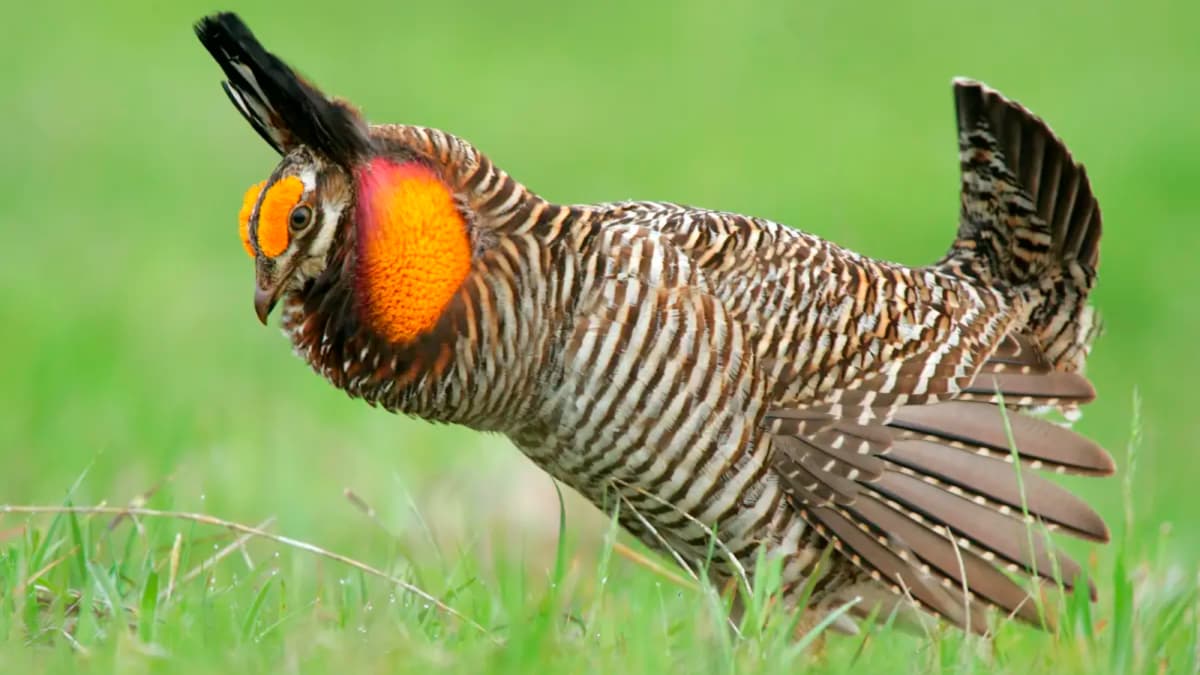
A Rare Prairie Chicken Shakes His Butt All Day to Attract Ladies
Why It Matters
The population rebound demonstrates that targeted land‑conservation can reverse declines of critically endangered wildlife, preserving biodiversity and ecosystem health in the Gulf Coast region.
Key Takeaways
- •Males perform “boom” dances on short‑grass “booming grounds” each spring
- •Only 30% of nests survive predation, limiting recruitment
- •Texas habitat loss reduced range by 98%, endangering the species
- •Population rose from 102 to 138 males, a 20% annual increase
- •Conservation on 660,000‑acre Refugio‑Goliad project drives recovery
Pulse Analysis
The Attwater’s prairie chicken’s springtime spectacle is more than a quirky natural curiosity; it is a high‑stakes mating ritual that hinges on the availability of open, short‑grass areas known as booming grounds. Males establish territories, inflate bright orange facial sacs, and deliver resonant booms while executing rapid foot‑stomps that echo across the marsh. Females evaluate these performances, typically selecting only a handful of the most experienced males, which determines the genetic contribution to the next generation.
Decades of coastal development have erased nearly all of the bird’s historic habitat, compressing the population into two fragmented colonies in Texas. With fewer than 200 individuals remaining, the species was listed as critically endangered. Yet, the Nature Conservancy’s Refugio‑Goliad Prairie Project, encompassing 660,000 acres of protected ranchland, has created a sanctuary where booming grounds are maintained and predators are managed. Recent surveys show a striking increase in male attendance—from 102 in 2025 to 138 this year—reflecting a roughly 20% yearly growth rate that offers a glimmer of hope for the species.
The prairie chicken’s recovery illustrates a broader lesson for conservation: strategic preservation of key habitats, even on privately owned lands, can yield measurable gains for imperiled wildlife. As climate change and urban expansion intensify pressures on Gulf Coast ecosystems, continued investment in land stewardship and collaborative monitoring will be essential to sustain the momentum. Stakeholders—from NGOs to state agencies—must leverage this success story to advocate for policies that safeguard remaining marshes, ensuring that the booming dance continues for generations to come.
A rare prairie chicken shakes his butt all day to attract ladies
Comments
Want to join the conversation?
Loading comments...