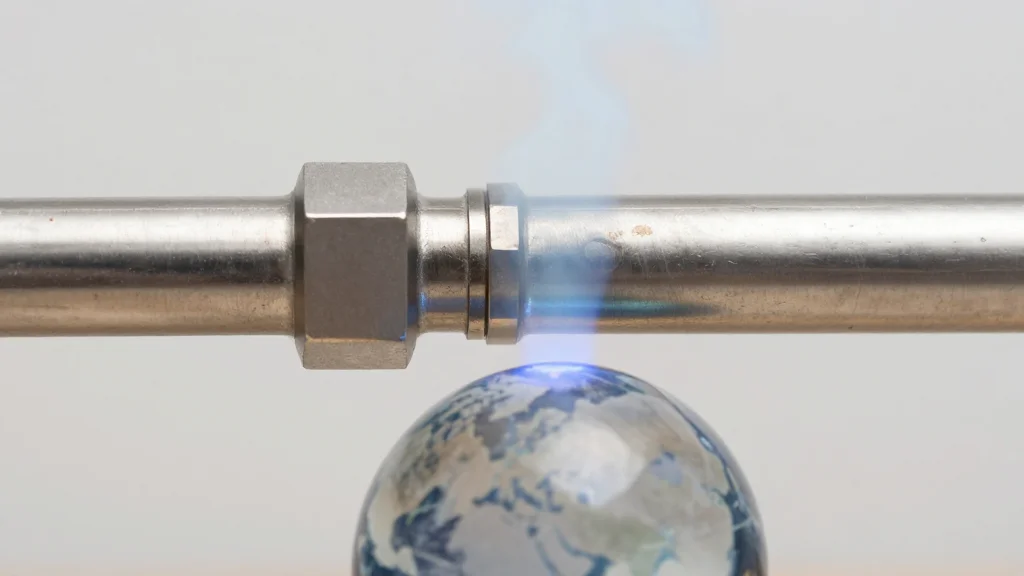
A Regulatory Loophole Could Delay Ozone Recovery by Years
Why It Matters
A delayed ozone recovery means prolonged UV exposure, increasing skin‑cancer risk and eroding the health gains achieved by the Montreal Protocol.
Key Takeaways
- •Feedstock leakage revised to ~3.6%, far above original 0.5% estimate
- •Higher emissions could push ozone recovery from 2065 to 2073
- •Montreal Protocol exemption for feedstocks now identified as a critical loophole
- •Reducing feedstock emissions could shave up to seven years off recovery
- •Growing plastic and non‑stick demand may increase future ozone‑depleting emissions
Pulse Analysis
The 1987 Montreal Protocol is widely celebrated for phasing out chlorofluorocarbons and other ozone‑depleting substances, driving a steady decline in atmospheric concentrations. Yet the treaty left a narrow exemption: the use of these chemicals as feedstocks for producing plastics, non‑stick coatings, and substitute compounds. At the time, industry estimates suggested only about half a percent of feedstock material escaped into the stratosphere, a figure that shaped the protocol’s loophole and was assumed to be negligible for ozone recovery.
A new study led by MIT scientists, published in Nature Communications, challenges that assumption. By analyzing data from the AGAGE monitoring network, the researchers revised the global feedstock leakage rate to roughly 3.6%, with some chemicals leaking even more. Their climate‑chemistry model shows that, if the higher leakage persists, the ozone layer’s return to 1980 levels could be delayed from the mid‑2060s to 2073—a seven‑year setback. The analysis also projects that total ozone‑depleting emissions will plateau around 2045, undermining the protocol’s long‑term trajectory.
The findings place immediate pressure on the Montreal Protocol’s negotiating parties to tighten the feedstock exemption. Options include banning the use of ozone‑depleting substances as feedstocks, mandating tighter containment, or accelerating the shift to alternative chemistries in the booming plastics and non‑stick markets. From a business perspective, early adoption of greener substitutes could avoid future regulatory penalties and reduce liability linked to increased skin‑cancer and cataract cases associated with higher UV exposure. Ultimately, closing this loophole is essential to preserve the protocol’s legacy and safeguard public health.
A Regulatory Loophole Could Delay Ozone Recovery by Years
Comments
Want to join the conversation?
Loading comments...