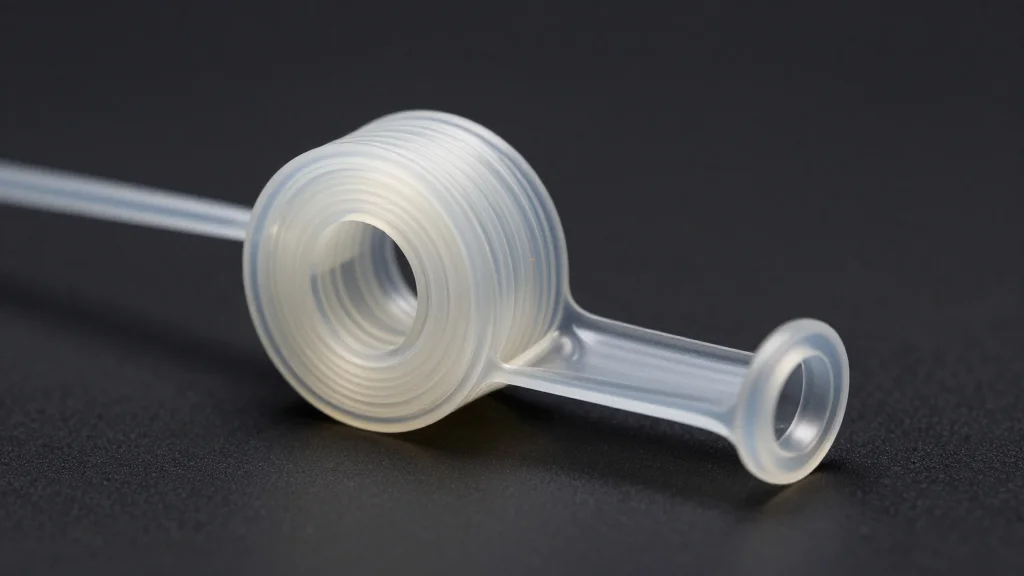
A Review of Fiber‐Shape Rolled Dielectric Elastomer Actuators: A Pivotal Pathway in Advancing Bionic Actuation
Why It Matters
RDEAs promise a new generation of soft, lightweight actuators that can transform robotics, wearable devices, and assistive technologies by delivering muscle‑like performance at low weight and cost.
Key Takeaways
- •RDEAs mimic natural muscle motion via fiber-shaped design
- •Geometric parameters directly affect strain and force output
- •Demonstrated in crawling robots, soft grippers, interactive devices
- •Current challenges include voltage efficiency, manufacturing scalability, integration
- •Future work aims for higher energy density and human‑robot collaboration
Pulse Analysis
Dielectric elastomer actuators have emerged as a leading soft‑actuation technology because they combine high strain, fast response, and low weight. By rolling the elastomer into a fiber form, RDEAs achieve a bionic actuation mode that more closely mirrors the contractile behavior of biological muscles. This geometry not only simplifies integration into slender robotic limbs but also enhances the actuator’s ability to generate axial forces while maintaining flexibility, positioning it as a compelling alternative to traditional pneumatic or motor‑driven systems.
Performance of RDEAs hinges on a handful of geometric variables—such as fiber diameter, layer thickness, and electrode patterning—that dictate electric field distribution and mechanical output. Recent studies report strains exceeding 30% and specific forces comparable to natural muscle, enabling applications that were previously out of reach for soft robotics. Researchers have leveraged these capabilities to build crawling robots that navigate complex terrains, soft grippers that delicately handle fragile objects, and interactive haptic interfaces that provide tactile feedback for virtual reality environments. The versatility of the fiber‑shaped design also facilitates modular assembly, allowing designers to scale actuation length and force without sacrificing compliance.
Despite the promise, RDEAs face critical challenges before widespread adoption. High operating voltages, often in the kilovolt range, raise safety and energy‑efficiency concerns, while current manufacturing techniques struggle to produce uniform, high‑quality fibers at scale. Integration with control electronics and durable encapsulation for real‑world use remain open problems. Future research is directed toward novel dielectric materials with higher permittivity, low‑voltage electrode architectures, and additive‑manufacturing processes that can mass‑produce RDEAs. Overcoming these barriers could unlock a new class of lightweight, muscle‑like actuators for wearable exoskeletons, medical assistive devices, and collaborative robots that work safely alongside humans.
A Review of Fiber‐Shape Rolled Dielectric Elastomer Actuators: A Pivotal Pathway in Advancing Bionic Actuation
Comments
Want to join the conversation?
Loading comments...