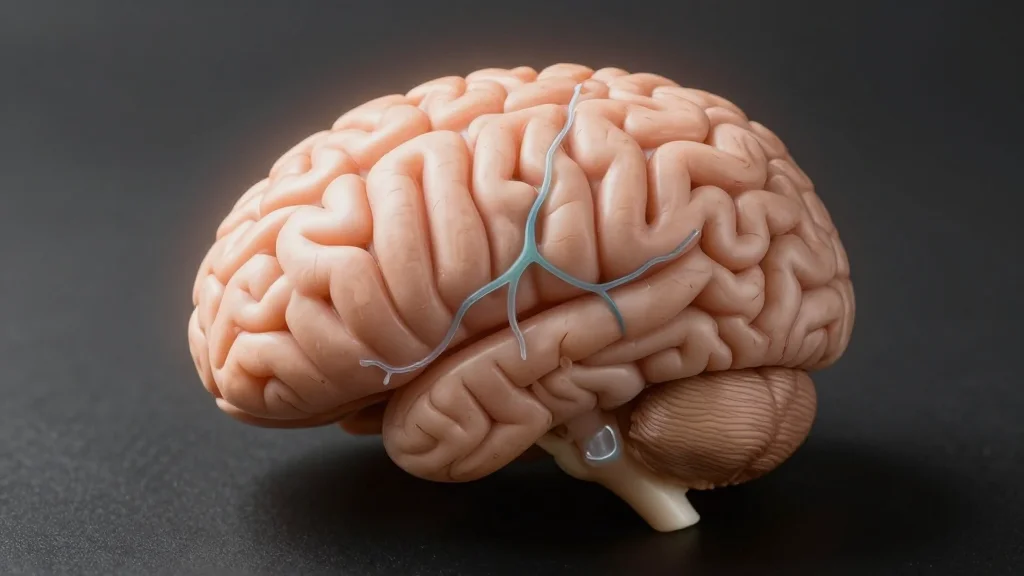
A Septo–Entorhinal GABAergic Pathway that Enables Switching Between Episodic Memories
Why It Matters
The work uncovers a specific neural conduit that enables dynamic memory revision, a process critical for adaptive behavior and potentially targetable in disorders of memory rigidity.
Key Takeaways
- •MS GABA neurons project selectively to MEC, modulating memory updating.
- •Optogenetic silencing during second learning blocks memory switch.
- •First memory retrieval remains intact despite pathway inhibition.
- •Calcium imaging shows synchronized CA1 ensembles only when pathway active.
- •Findings suggest therapeutic target for disorders of memory flexibility.
Pulse Analysis
Episodic memory relies on coordinated activity across hippocampal and cortical networks, yet the circuitry that permits a stored memory to be overwritten has remained elusive. Prior work highlighted the medial septum’s role in theta rhythm generation, but its direct influence on entorhinal processing was unclear. The new study maps a dedicated GABAergic projection from the medial septum to the medial entorhinal cortex (MEC), establishing a structural substrate for top‑down control of memory encoding and revision.
The authors combined Cre‑dependent viral vectors with in vivo calcium imaging to monitor MEC‑bound septal GABA neurons during fear and reward conditioning. Optogenetic inhibition of these axons specifically during a second learning phase abolished the formation of a new memory trace while preserving the original fear memory, indicating that the pathway is essential for updating rather than retrieval. Parallel recordings from CA1 revealed that synchronized neuronal ensembles emerge only when the septo‑entorhinal input is intact, linking circuit activity to the behavioral flexibility observed.
These insights reshape our understanding of how the brain balances stability and plasticity in episodic memory. By pinpointing a modulatory GABAergic route that can be toggled to permit or block memory revision, the work opens avenues for interventions in conditions such as PTSD, Alzheimer’s disease, and other disorders where memory flexibility is compromised. Future research may explore pharmacological or neuromodulatory strategies to fine‑tune this pathway, offering a translational bridge from basic neuroscience to clinical therapy.
A septo–entorhinal GABAergic pathway that enables switching between episodic memories
Comments
Want to join the conversation?
Loading comments...