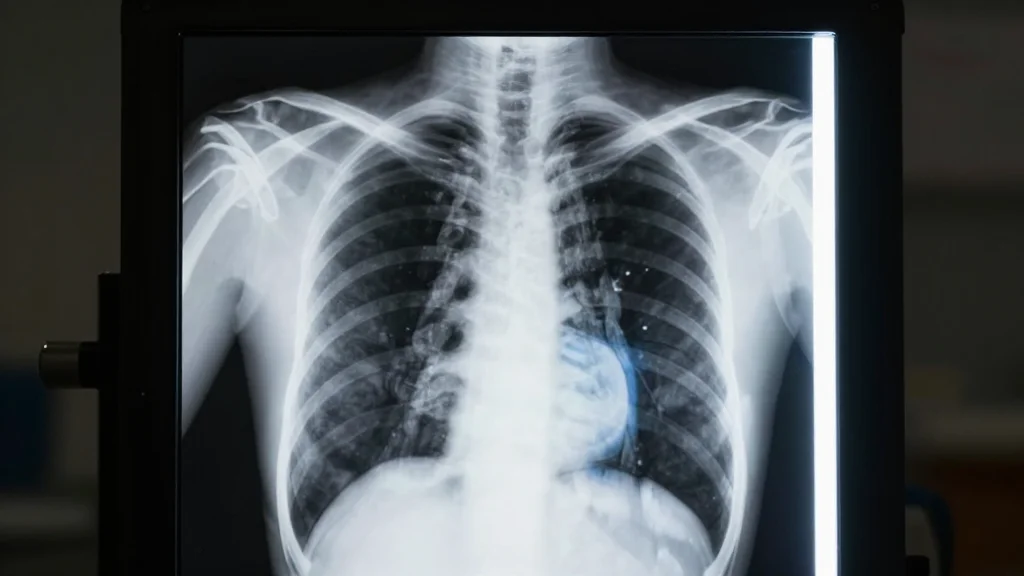
A Simple X-Ray Measure Linked to Survival in Lung Cancer Surgery Patients
Why It Matters
Early identification of high‑risk surgical candidates enables targeted pre‑operative interventions, potentially reducing complications and improving survival in lung‑cancer care.
Key Takeaways
- •Low pre‑operative DDH linked to 15% lower three‑year survival.
- •DDH outperformed conventional pulmonary function tests as survival predictor.
- •Measurement uses standard chest X‑ray, adding no extra cost.
- •Independent prognostic factor after adjusting for tumor stage.
- •Could guide personalized rehab and surgical planning for high‑risk patients.
Pulse Analysis
Lung cancer surgery carries a high stakes balance between curative intent and postoperative risk, especially for patients with obstructive ventilatory disorder (OVD). Traditional pre‑operative assessments rely on spirometry and complex imaging, which can be resource‑intensive and sometimes fail to capture subtle functional deficits. Clinicians have long sought a simple, reproducible marker that can be integrated into existing workflows without adding cost or delay, a need that becomes more acute in community hospitals and low‑resource settings.
The diaphragmatic dome height (DDH) measured on a standard chest radiograph emerged as that marker in a recent International Journal of Clinical Oncology study. Analyzing 302 lobectomy patients from 2017‑2024, researchers demonstrated that lower DDH correlated with a 15‑percentage‑point drop in three‑year overall survival and a higher incidence of respiratory‑related deaths. Even after controlling for tumor stage and conventional pulmonary function metrics, DDH retained independent prognostic significance, suggesting it captures aspects of diaphragmatic mechanics and reserve that spirometry overlooks.
If validated in multicenter trials, DDH could reshape pre‑operative pathways by flagging patients who would benefit from intensified respiratory rehabilitation, tailored anesthesia plans, or alternative treatment strategies. The metric’s reliance on an already‑performed X‑ray means hospitals can adopt it instantly, potentially lowering complication rates, shortening hospital stays, and reducing overall treatment costs. Moreover, incorporating DDH into risk‑adjusted outcome models may improve benchmarking and quality reporting across thoracic surgery programs, driving broader improvements in lung‑cancer care.
A simple X-ray measure linked to survival in lung cancer surgery patients
Comments
Want to join the conversation?
Loading comments...