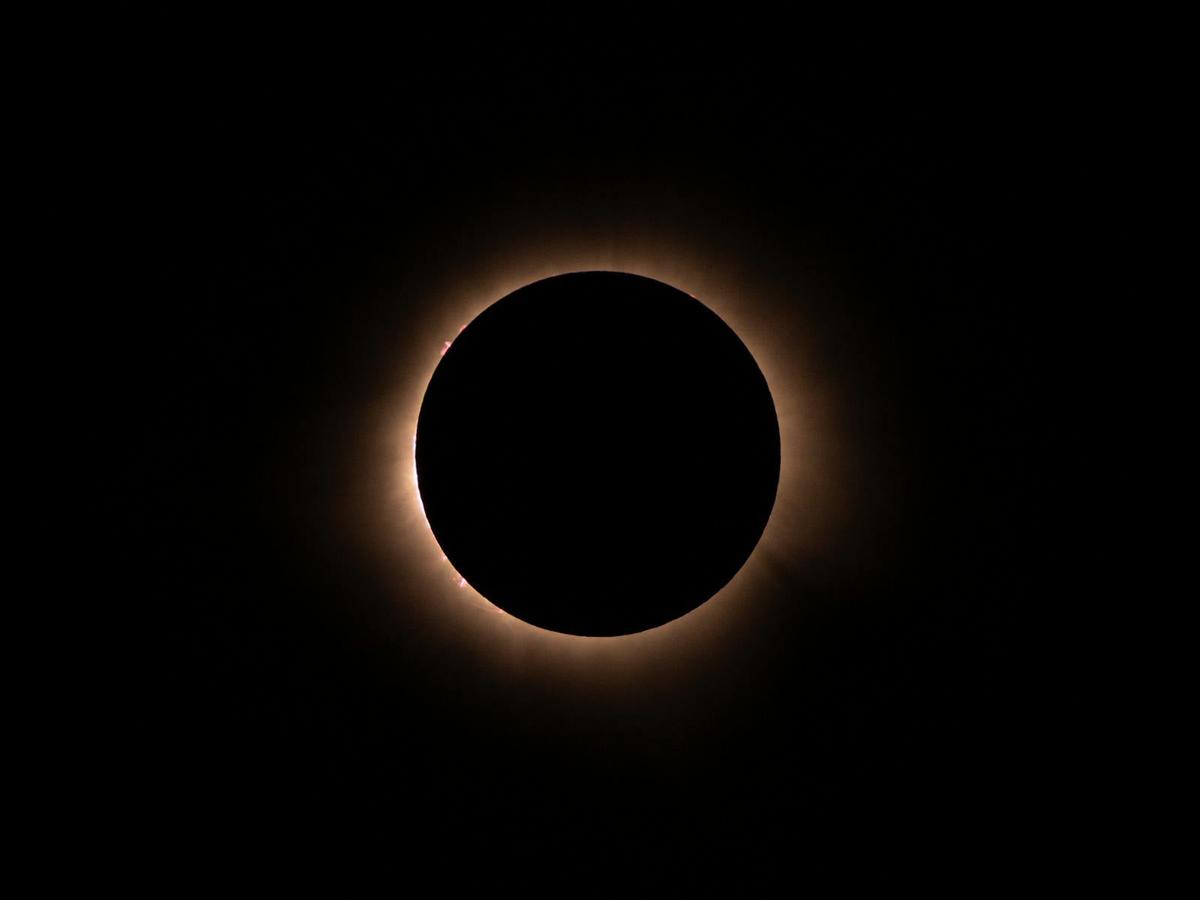
A Solar Radio Burst that Should Have Faded in Days Kept Screaming for Three Weeks — and the Structure Feeding It Rewrites What Counts as a Transient Event on the Sun
Why It Matters
The event proves magnetic structures can trap energetic electrons for weeks, reshaping space‑weather forecasts and informing models of stellar activity that affect exoplanet habitability.
Key Takeaways
- •19‑day Type IV burst shatters five‑day record
- •Helmet streamer acted as a corotating electron reservoir
- •Three CMEs repeatedly re‑energized trapped electrons
- •Multi‑probe fleet enabled continuous monitoring across rotation
Pulse Analysis
Type IV radio bursts are usually fleeting, fading within hours to a few days as electrons escape the Sun’s magnetic cages. The 19‑day signal documented in August 2025 upended that expectation, highlighting a gap in current heliophysics models that assume rapid electron loss. By persisting far beyond the established envelope, the burst signals that certain coronal magnetic configurations can sustain particle populations far longer than previously thought, prompting researchers to revisit the physics of magnetic confinement and energy transport in the solar corona.
The culprit behind the prolonged emission was a helmet streamer—a towering magnetic arch that delineates opposite polarity regions. Researchers describe it as a corotating electron reservoir, a magnetic bottle that rotated with the Sun while being periodically refilled by three successive coronal mass ejections. Each CME injected fresh electrons, keeping the radio signature alive. This mechanism blurs the line between a singular eruption and a persistent structure, suggesting that similar reservoirs could exist on other Sun‑like stars. If stellar magnetic bottles can trap electrons for weeks, the radio signatures of stellar CMEs may linger, altering assessments of stellar wind environments and the habitability of orbiting exoplanets.
Capturing the event required a coordinated fleet of spacecraft positioned around the inner solar system. STEREO, Parker Solar Probe, Wind and Solar Orbiter provided uninterrupted line‑of‑sight coverage as the streamer rotated out of Earth’s view, a feat impossible for any single observatory. With Solar Cycle 25 entering a high‑activity phase, the same network is poised to detect future long‑duration bursts, offering a real‑time laboratory to test revised magnetic‑field models. Continued observations will determine whether such reservoirs are rare anomalies or a hidden, recurring component of solar dynamics, ultimately improving space‑weather prediction capabilities.
A solar radio burst that should have faded in days kept screaming for three weeks — and the structure feeding it rewrites what counts as a transient event on the Sun
Comments
Want to join the conversation?
Loading comments...