Why It Matters
The detailed view of NGC 1333 provides astronomers with fresh data on how protostars interact with their natal clouds, informing models of star formation and planetary system origins. Such insights also guide future observations by larger telescopes and space missions.
Key Takeaways
- •NGC 1333 lies ~1,000 light‑years away in Perseus
- •Region is most active star‑forming area in Perseus complex
- •Young stars carve cavities in surrounding dust clouds
- •Image captured with 4‑inch f/5 refractor, eight‑hour exposure
- •Data aids studies of early stellar evolution
Pulse Analysis
NGC 1333 sits at the heart of the Perseus molecular cloud, a sprawling complex of gas and dust that has long attracted astronomers seeking to decode the earliest stages of star birth. Its proximity—roughly 1,000 light‑years—makes it an ideal laboratory for observing protostellar jets, outflows, and the turbulent filaments that channel material into nascent stars. By mapping the distribution of dense cores and the cavities they excavate, researchers can refine simulations of how gravity, magnetic fields, and radiation pressure cooperate to shape stellar populations across the galaxy.
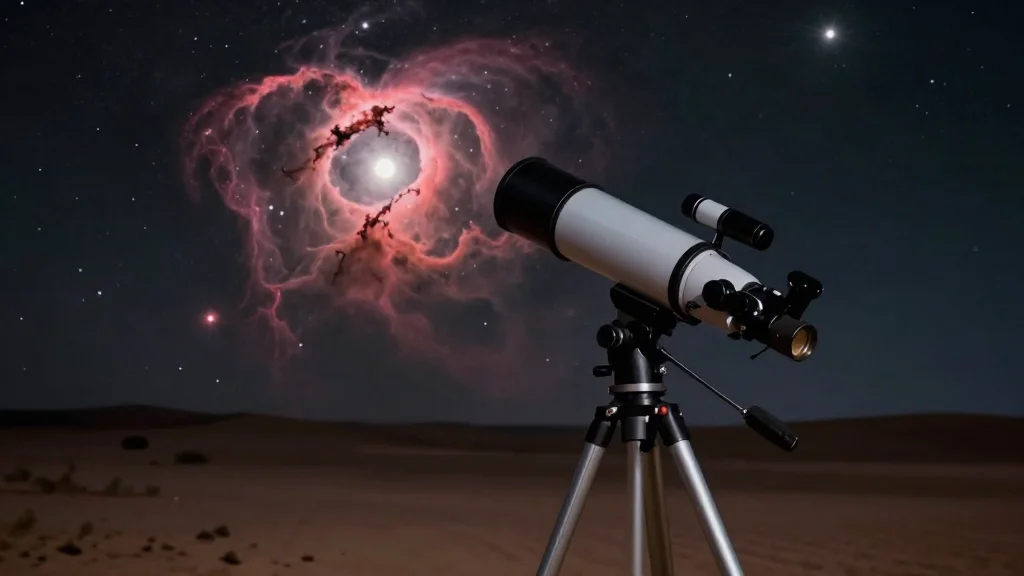
The image released by John Vermette demonstrates how a modest 4‑inch f/5 refractor, paired with a high‑sensitivity one‑shot color camera, can yield scientifically valuable data when paired with long integration times. An eight‑hour exposure captured subtle blue reflections from scattered starlight alongside the deep, mottled reds of dust, revealing structures that larger facilities often miss in broader surveys. This underscores a growing trend where skilled amateur astronomers and small observatories complement professional missions, filling temporal gaps and providing high‑resolution snapshots that feed into larger databases such as the Hubble and James Webb archives.
Beyond its visual appeal, the new data enriches our understanding of early stellar evolution, informing models that predict planet‑forming disk lifetimes and the chemical makeup of emerging planetary systems. As space agencies plan next‑generation infrared observatories, detailed ground‑based observations of regions like NGC 1333 will help prioritize targets and calibrate instruments. Ultimately, insights from this stellar nursery ripple through fields ranging from exoplanet research to galactic evolution, reinforcing the strategic importance of continued investment in both modest and flagship astrophysical assets.
A stellar nursery in Perseus
Comments
Want to join the conversation?
Loading comments...