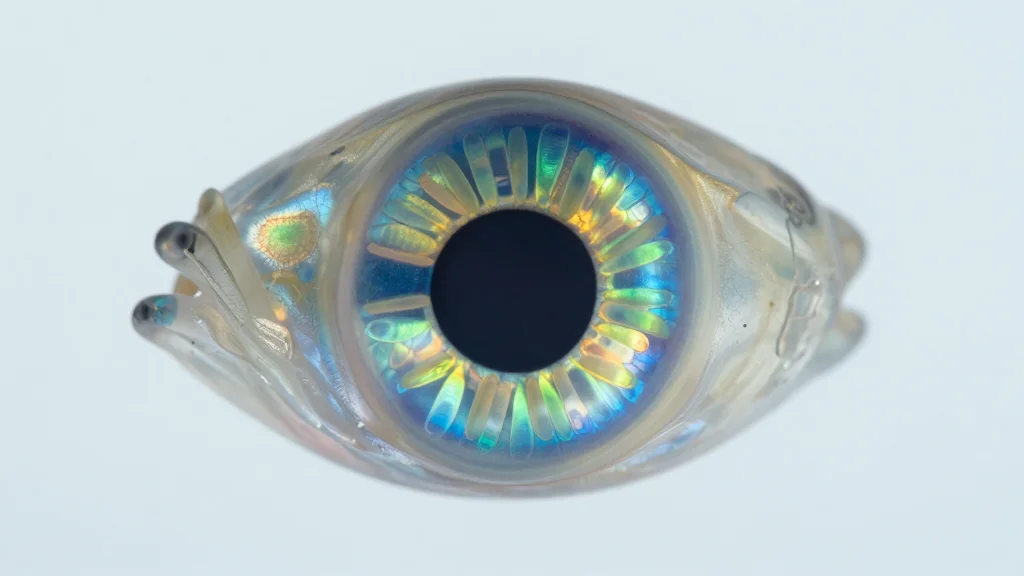
A Strange New Eye Cell Is Rewriting How Vision Works
Why It Matters
The discovery reveals that visual systems can structurally and molecularly re‑tool for low‑light habitats, reshaping our understanding of eye evolution and opening avenues for bio‑inspired imaging technologies.
Key Takeaways
- •Hybrid photoreceptors combine rod morphology with cone gene expression.
- •Found in larval stages of three deep‑sea fish species.
- •Provide rapid response in dim, twilight marine environments.
- •Some species retain hybrids into adulthood; others transition to rods.
- •Suggests broader vertebrate visual flexibility beyond traditional rod‑cone model.
Pulse Analysis
For more than a century, textbooks have taught that vertebrate eyes separate into rods for night vision and cones for daylight and color. The new study upends that binary view by showing that, in the early life stages of deep‑sea fish, cells can adopt a rod‑like shape while deploying the molecular machinery of cones. This hybrid design captures scarce photons like a rod but processes them with the speed of a cone, giving these larvae a decisive edge in the faint, filtered glow of the mesopelagic zone.
The researchers examined three unrelated species—Vinciguerria mabahiss, Maurolicus mucronatus and Benthosema pterotum—collected from 20 to 200 meters deep in the Red Sea. In each case, the retinal layer was dominated by the hybrid cells during the larval period, a stage when most vertebrates rely on cones before rods mature. Maurolicus mucronatus retains the hybrid phenotype into adulthood, whereas the other two species gradually replace them with true rods as they mature. This developmental flexibility suggests that visual strategy can be tuned to the specific light environment encountered at each life stage.
Beyond marine biology, the findings have broader implications. If vertebrate eyes can decouple form from function, evolutionary pathways may be more plastic, allowing rapid adaptation to niche lighting conditions. Engineers designing low‑light cameras or autonomous underwater vehicles could mimic this hybrid architecture to achieve both sensitivity and speed. Future work will need to determine whether these cells are transitional forms or a distinct photoreceptor class, potentially rewriting fundamental concepts of eye development across the animal kingdom.
A strange new eye cell is rewriting how vision works
Comments
Want to join the conversation?
Loading comments...