A Twinkling Pulsar Reveals Invisible Structures in Space
Why It Matters
The method provides a cost‑effective way to map fine‑scale interstellar structures, improving models of galactic turbulence and aiding precision pulsar timing for navigation and gravitational‑wave experiments.
Key Takeaways
- •Effelsberg and FAST jointly achieved sub‑milliarcsecond resolution via Earth‑motion synthesis
- •PSR B1508+55’s scintillation forms a linear image, implying ordered filaments
- •Scattering region estimated 430 light‑years from Earth, not previously mapped
- •Technique avoids complex global interferometry, using standard laptops for processing
- •Future pulsar observations could chart invisible interstellar clouds across the Milky Way
Pulse Analysis
Scintillation— the twinkling of compact radio sources—has long been a nuisance for astronomers, but it also encodes the density fluctuations of the interstellar medium (ISM). When a pulsar’s radio waves traverse the thin gas between stars, tiny variations in electron density bend the signal, creating a flickering effect. By interpreting this effect, scientists can infer the otherwise invisible structure of the ISM, a critical component for understanding star formation, cosmic ray propagation, and the overall dynamics of our galaxy.
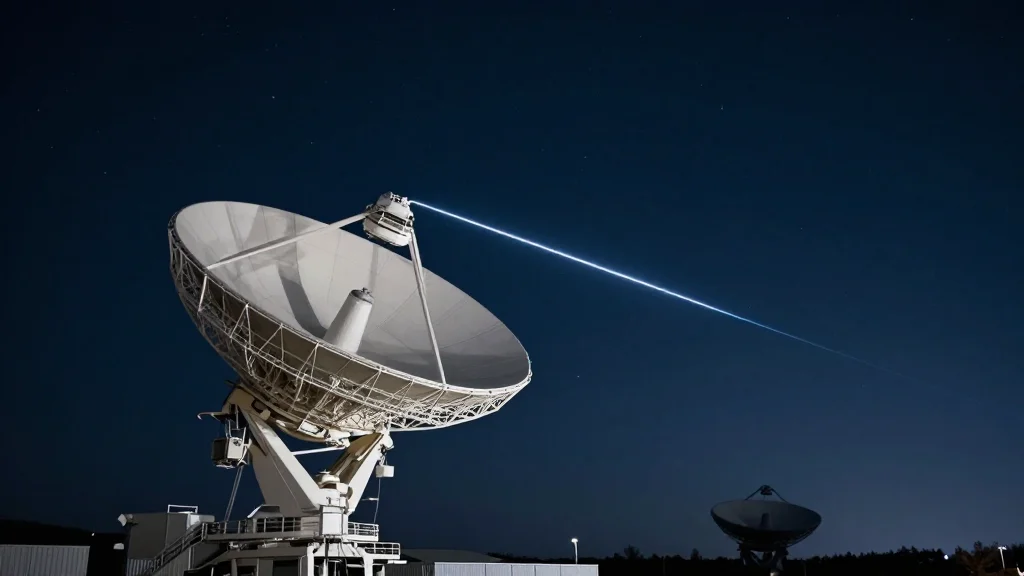
The breakthrough reported by Sprenger and colleagues hinges on a novel observational strategy that pairs two of the world’s most powerful single‑dish radio telescopes: Germany’s 100‑meter Effelsberg and China’s 500‑meter FAST. As Earth rotates, each telescope samples the pulsar’s scintillation pattern at slightly different times, allowing the team to reconstruct an image without the need for traditional interferometric visibilities. This approach delivered a resolution comparable to very long baseline arrays, yet required only locally processed data on standard laptops. The resulting image of PSR B1508+55 shows a straight, filament‑like scattering line, suggesting the presence of ordered plasma structures rather than random turbulence.
Beyond the immediate scientific insight, the technique promises a scalable path to map the fine‑scale architecture of the ISM across the Milky Way. High‑precision pulsar timing—essential for detecting nanohertz gravitational waves and for deep‑space navigation—relies on accurate models of interstellar dispersion. By revealing the hidden filaments that distort pulsar signals, this method can refine those models, reduce timing noise, and enhance the reliability of next‑generation astrophysical experiments. As more pulsars are surveyed, astronomers anticipate a detailed, three‑dimensional atlas of the galaxy’s invisible scaffolding.
A twinkling pulsar reveals invisible structures in space
Comments
Want to join the conversation?
Loading comments...