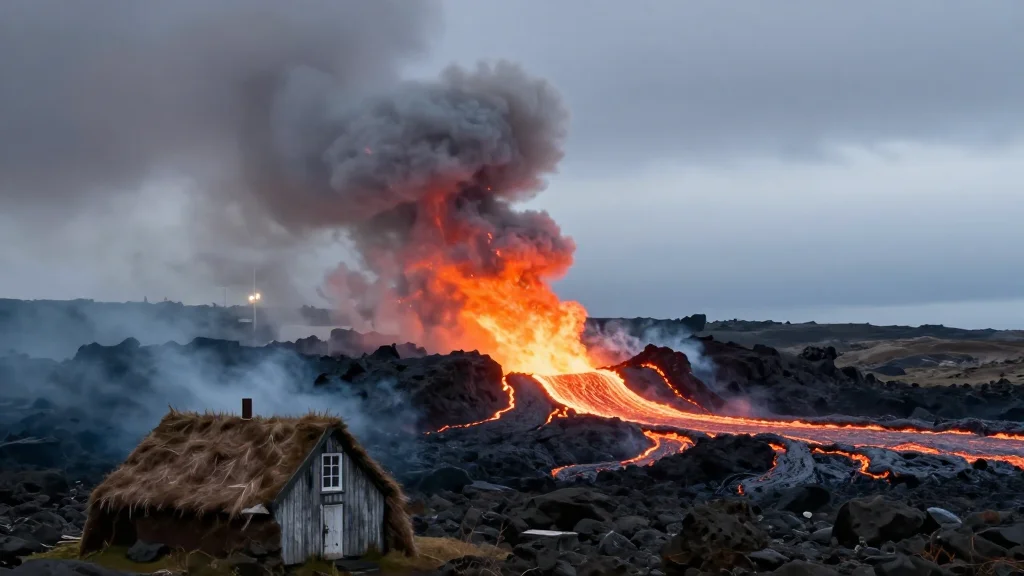
A Volcanic Eruption so Big, It Killed 20% of All People Living in Iceland
Key Takeaways
- •1783 Laki eruption released ~14 km³ basaltic lava.
- •Emitted ~120 million tons of sulfur dioxide, causing severe haze.
- •Crop failures led to famine, killing ~20% of Icelanders.
- •European winters cooled, disrupting trade and raising grain prices.
- •Event spurred early scientific study of volcanic climate impacts.
Pulse Analysis
The Laki fissure system erupted for eight months, spewing an estimated 14 cubic kilometers of basaltic lava and a plume of sulfur-rich gases that circled the Northern Hemisphere. Contemporary accounts describe a dense, yellow‑orange haze—later termed the "Laki haze"—that reduced sunlight, lowered temperatures, and acidified rain. Modern climate models calibrate their volcanic forcing parameters against Laki, using its sulfur dioxide output of roughly 120 million tons as a reference point for assessing future eruptions.
Beyond the atmospheric effects, the eruption devastated Iceland’s agrarian economy. Summer grazing lands were poisoned, livestock perished, and staple crops failed, precipitating a famine that claimed the lives of about 20% of the island’s 50,000 residents. The scarcity of food drove up grain prices across Europe, straining already fragile post‑war economies and prompting governments to import wheat at record costs. Merchants faced shipping delays as colder, stormier winters disrupted North Atlantic routes, highlighting the interconnectedness of climate and commerce.
Today, Laki serves as a cautionary case study for insurers, policymakers, and investors. The event underscores the need for robust volcanic risk assessments and climate‑resilient supply chains, especially as satellite monitoring improves early warning capabilities. Financial institutions incorporate Laki‑derived loss scenarios into catastrophe models, influencing reinsurance pricing and sovereign debt strategies. By understanding the historical economic ripple effects of volcanic eruptions, stakeholders can better prepare for similar low‑frequency, high‑impact events in a warming world.
A volcanic eruption so big, it killed 20% of all people living in Iceland
Comments
Want to join the conversation?