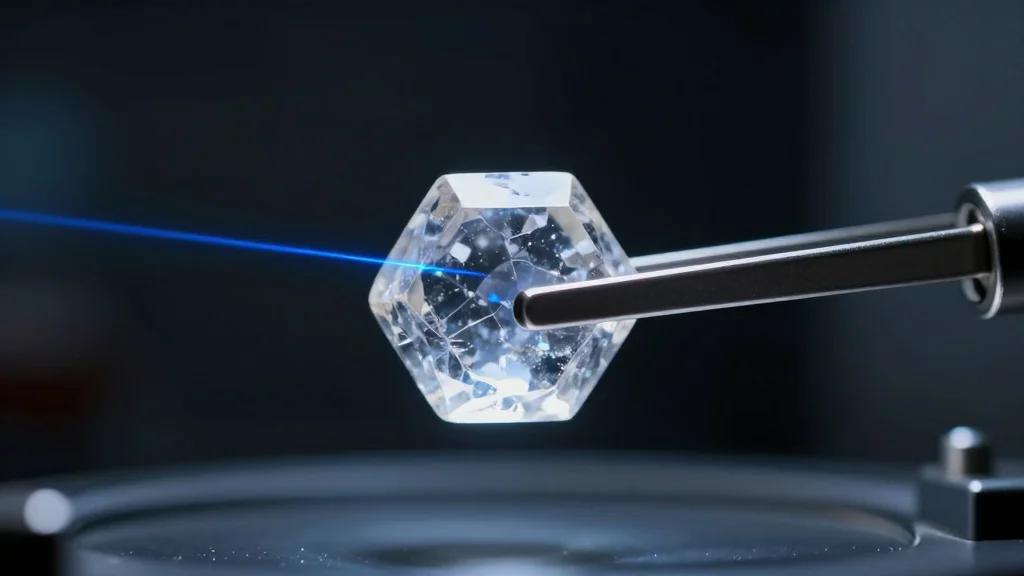
Aalto Physicists Link Time Crystal to External Device, Demonstrating Adjustable Quantum Motion

Why It Matters
Linking a time crystal to an external device transforms a theoretical curiosity into a controllable quantum resource. The demonstration proves that the crystal’s perpetual motion can be harnessed without external energy input, a prerequisite for any technology that relies on stable, low‑dissipation dynamics. Potential applications span quantum sensing—where the crystal’s regular oscillations could serve as a reference for detecting infinitesimal forces—to quantum memory, offering a platform for storing information with minimal decoherence. By bridging condensed‑matter physics and optomechanics, the work also provides a testbed for exploring fundamental questions about time‑translation symmetry breaking in real‑world systems. Beyond immediate applications, the breakthrough could catalyze a new class of quantum devices that operate near the thermodynamic limit. If researchers can scale the approach to higher temperatures or integrate it with existing superconducting circuits, time‑crystal‑based components might become building blocks for energy‑efficient quantum processors, precision navigation, and next‑generation metrology standards.
Key Takeaways
- •Aalto University researchers linked a time crystal to an external optomechanical system for the first time.
- •The crystal maintained coherent motion for several minutes after the magnon injector was turned off.
- •Radio‑wave‑driven magnons in superfluid helium‑3 near absolute zero were used to create the time crystal.
- •Team demonstrated adjustable crystal properties, enabling interaction with a mechanical oscillator.
- •Findings published in Nature Communications suggest new routes for quantum sensors and storage.
Pulse Analysis
The Aalto breakthrough arrives at a moment when the quantum technology sector is seeking scalable, low‑energy components to complement superconducting qubits and trapped‑ion platforms. Time crystals, by virtue of their ground‑state oscillations, offer a unique advantage: they can, in principle, provide a perpetual reference without continuous power draw. This contrasts sharply with conventional resonators that suffer from thermal noise and require active stabilization. If the coupling demonstrated by Mäkinen’s team can be engineered into chip‑scale architectures, it could supply a clock‑like backbone for quantum processors, reducing jitter and phase noise.
Historically, time‑crystalline phases were confined to isolated laboratory conditions, primarily as proof‑of‑concept experiments that validated Frank Wilczek’s 2012 proposal. The Aalto work pushes the field into the realm of functional engineering, echoing the trajectory of other exotic quantum states—such as topological insulators—that moved from curiosity to commercial relevance within a decade. The optomechanical analogy highlighted by the researchers suggests that existing infrastructure for cavity‑optomechanics could be repurposed to read out and control time crystals, accelerating integration.
Nevertheless, challenges remain. The reliance on helium‑3 superfluid and sub‑kelvin temperatures limits immediate deployment. Scaling up will require either new materials that support time‑crystalline order at higher temperatures or innovative cooling solutions compatible with existing quantum hardware. Moreover, the long‑term stability of the crystal under repeated coupling cycles must be quantified. If these hurdles are overcome, time crystals could become a cornerstone of quantum‑enhanced metrology, offering unprecedented precision in fields ranging from navigation to fundamental physics experiments.
Aalto Physicists Link Time Crystal to External Device, Demonstrating Adjustable Quantum Motion
Comments
Want to join the conversation?
Loading comments...