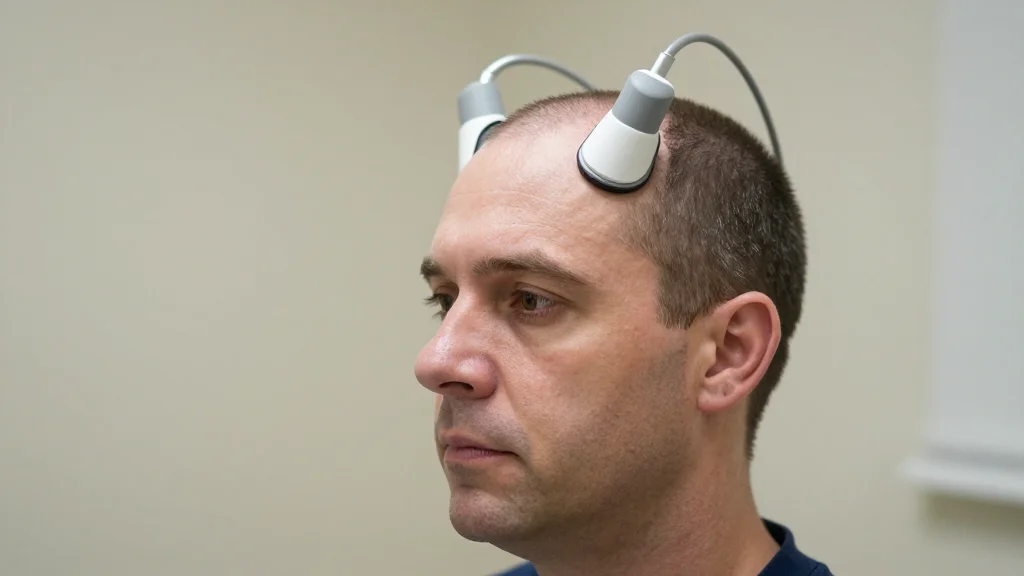
Accelerated Intermittent Theta Burst Stimulation Targeting Personalized Fronto-Parietal Control Network Improves Core Symptoms of Autism Spectrum Disorder: A Double-Blind, Randomized Controlled Trial
Why It Matters
The study demonstrates that precision‑targeted, high‑dose neuromodulation can safely improve core social communication deficits in autism, addressing a long‑standing therapeutic gap for severely affected patients.
Key Takeaways
- •55% response to iTBS vs 29% with sham after 12 weeks
- •Personalized fronto‑parietal targeting reduced ADOS‑2 social affect scores
- •Minimally verbal subgroup showed 67% response versus 26% sham
- •Protocol was well tolerated; severe adverse events unrelated to treatment
- •Three daily iTBS sessions (5400 pulses) may enhance cortical plasticity
Pulse Analysis
The emergence of precision neuromodulation marks a turning point for autism treatment, especially for individuals whose severe functional impairments have limited them to behavioral therapies with modest gains. By leveraging individual functional MRI to locate the most relevant node within the fronto‑parietal network, researchers sidestepped the variability that hampers conventional TMS approaches. This tailored targeting aligns stimulation with the circuitry that underlies goal‑directed behavior and cognitive flexibility—domains that are consistently disrupted in autism. The result is a more efficient engagement of neural pathways, translating into measurable improvements on the gold‑standard ADOS‑2 assessment.
Beyond the anatomical precision, the study’s accelerated iTBS schedule—three daily sessions delivering 5,400 pulses per day—mirrors protocols that have reshaped depression treatment. High‑dose, condensed stimulation is thought to amplify synaptic plasticity, fostering lasting network reorganization. In the autism cohort, the delayed onset of significant gains (only evident after the full 12‑week course) underscores the necessity of sustained exposure to drive durable neurobiological change. Importantly, the safety profile remained favorable; mild scalp discomfort was the most common complaint, and a single serious adverse event was unrelated to the intervention, reinforcing the feasibility of integrating such protocols into existing clinical pathways.
The implications extend to research and clinical practice. Demonstrating efficacy in a population with IQ < 70 and pervasive adaptive deficits suggests that neuromodulation can be adapted for those traditionally excluded from trials due to sedation requirements or severe symptomatology. Future investigations should explore longer follow‑up periods to assess durability, compare alternative network targets such as the default mode network, and evaluate dose‑response relationships across the autism severity spectrum. If replicated at scale, personalized accelerated iTBS could become a cornerstone adjunct to behavioral therapies, narrowing the treatment gap for a condition that has long lacked pharmacologic options for its core symptoms.
Accelerated intermittent theta burst stimulation targeting personalized fronto-parietal control network improves core symptoms of autism spectrum disorder: a double-blind, randomized controlled trial
Comments
Want to join the conversation?
Loading comments...