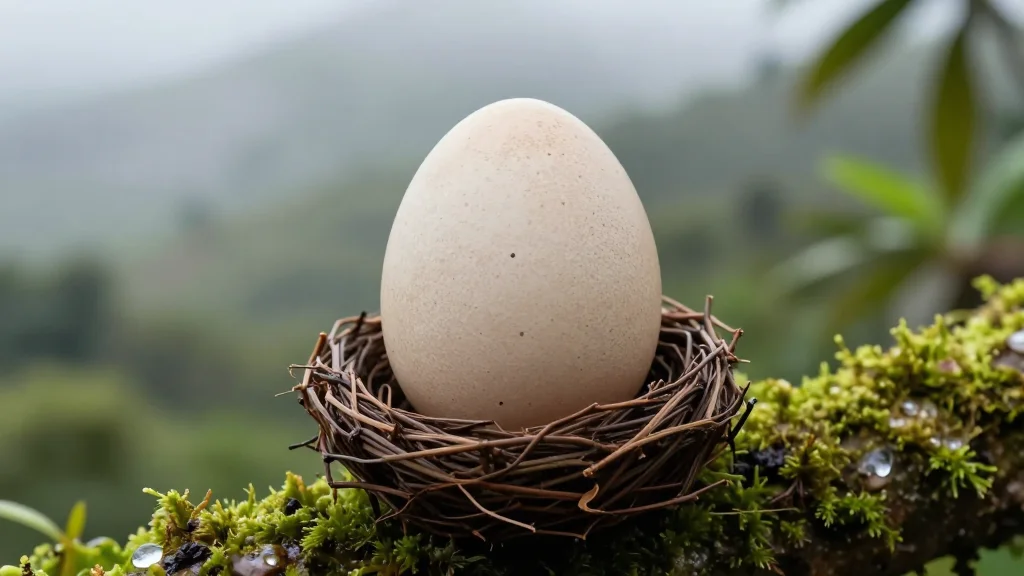
Adaptive Variation in Avian Eggshell Gas Conductance and Structure Across Elevational Gradients?
Why It Matters
Reduced eggshell conductance at high elevations highlights a physiological bottleneck that can limit bird distributions, informing conservation strategies under warming climates. The heterogeneous structural responses suggest multiple evolutionary pathways to cope with desiccation risk.
Key Takeaways
- •Water vapor conductance decreases with elevation across Andean bird species.
- •Shell thickness, pore size, and density show family‑specific patterns.
- •No uniform structural shift links eggshell traits to higher elevations.
- •Findings suggest diverse evolutionary routes to mitigate embryonic desiccation.
Pulse Analysis
The study tackles a niche yet critical aspect of avian ecology: how eggshell design regulates gas exchange for embryos in the thin, dry air of high mountains. By sampling nearly 200 species across the Andes, the researchers combined field measurements of water vapor conductance with high‑resolution scanning electron microscopy, offering a rare, large‑scale view of eggshell physiology. This methodological breadth bridges a gap left by prior work that focused mainly on adult bird physiology, underscoring the importance of early‑life stages in shaping species’ elevational limits.
Results reveal a clear trend: eggs at higher elevations lose water vapor more slowly, reflecting an adaptive reduction in conductance. Yet, the expected structural adjustments—thicker shells, fewer or smaller pores—did not follow a single pattern across taxa. Instead, each bird family displayed its own suite of modifications, suggesting that evolutionary solutions to desiccation risk are context‑dependent. This nuanced picture challenges the notion of a one‑size‑fits‑all adaptation and points to a complex interplay between phylogeny, nest microclimate, and local environmental pressures.
Understanding these physiological constraints is vital as climate change reshapes temperature and humidity gradients worldwide. Species already perched near their upper elevational limits may face heightened embryonic mortality if eggs cannot adequately regulate water loss. Conservation planners can use these insights to predict which taxa are most vulnerable and to prioritize habitats that buffer against extreme conditions. Moreover, the study sets a precedent for integrating functional morphology with climate modeling, paving the way for more accurate forecasts of biodiversity shifts in mountainous regions.
Adaptive variation in avian eggshell gas conductance and structure across elevational gradients?
Comments
Want to join the conversation?
Loading comments...