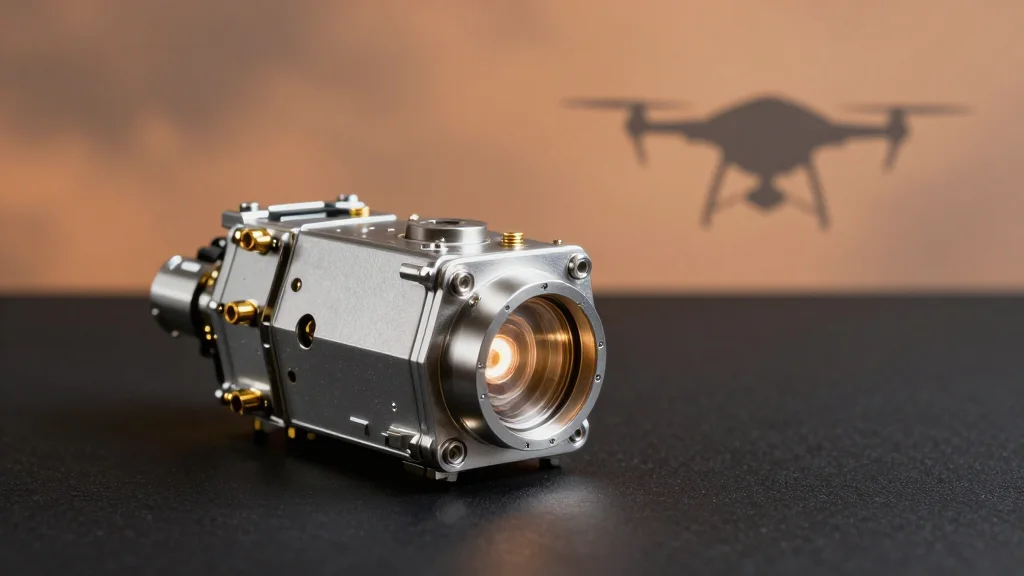
Advanced Gamma-Ray Spectrometer Delivered for NASA’s Dragonfly Mission to Explore Titan
Companies Mentioned

NASA
Why It Matters
The spectrometer gives Dragonfly a unique chemical‑mapping capability, sharpening our understanding of Titan’s prebiotic chemistry and informing future exploration strategies. Its successful integration also demonstrates the viability of lightweight, high‑sensitivity instruments for harsh extraterrestrial environments.
Key Takeaways
- •LLNL delivered the Advanced Gamma-Ray Spectrometer to NASA.
- •Spectrometer will map Titan’s surface composition during Dragonfly’s flight.
- •Instrument weighs under 5 kg and operates at –180 °C.
- •Enables detection of elements down to 1 ppm sensitivity.
- •Supports Dragonfly’s launch slated for 2027, arrival 2034.
Pulse Analysis
Titan, Saturn’s enigmatic moon, has long been a target for scientists seeking clues about organic chemistry beyond Earth. NASA’s Dragonfly mission, a battery‑powered rotorcraft, will perform a series of hops across Titan’s dunes, cryovolcanoes, and lakebeds. By equipping the craft with an Advanced Gamma‑Ray Spectrometer, researchers can directly measure the elemental makeup of surface materials, distinguishing between water‑ice, organics, and potential mineral deposits. This capability extends beyond visual imaging, offering a quantitative chemical fingerprint that can validate theories about Titan’s atmospheric evolution and its potential for harboring life‑like processes.
The spectrometer itself represents a leap in miniaturized space instrumentation. Built by LLNL, it combines a high‑purity germanium detector with a cryocooler system capable of maintaining –180 °C in Titan’s frigid environment, where surface temperatures hover around –179 °C. Weighing under 5 kg, the device meets Dragonfly’s strict mass budget while delivering sub‑ppm sensitivity for elements such as carbon, nitrogen, and sulfur. Its data acquisition system can operate during brief flight phases, capturing gamma‑ray signatures within seconds of landing, and transmit compressed spectra back to Earth for real‑time analysis.
Beyond Dragonfly, the successful deployment of this spectrometer signals a broader shift toward compact, high‑resolution analytical tools for planetary missions. Commercial lunar and Martian landers can adopt similar technology to assess resource potential, while future Europa or Enceladus probes could leverage gamma‑ray spectroscopy to probe subsurface oceans. The instrument’s performance on Titan will provide valuable flight heritage, reducing risk and development costs for the next generation of deep‑space explorers, and reinforcing the United States’ leadership in advanced space science instrumentation.
Advanced Gamma-Ray Spectrometer Delivered for NASA’s Dragonfly Mission to Explore Titan
Comments
Want to join the conversation?
Loading comments...