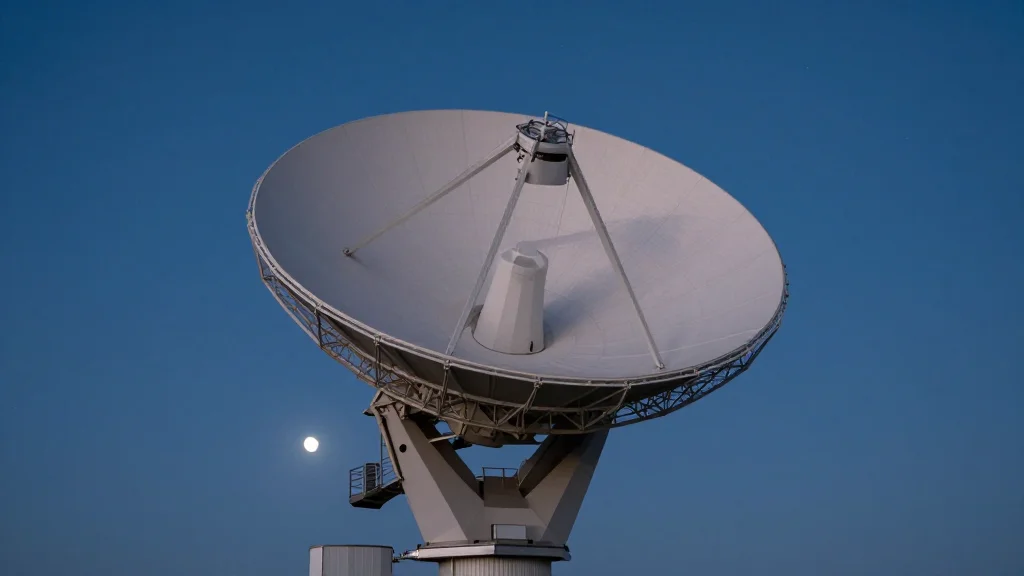
After 10 Years of Upgrades, This Legendary Telescope Has Returned to Chase Black Holes, Asteroids and Cosmic Chemistry
Why It Matters
Restoring the Haystack 37 m expands U.S. capability in black‑hole physics, planetary defense and astrochemistry while addressing the scarcity of large research telescopes for training the next generation of scientists.
Key Takeaways
- •Haystack 37 m joins VLBI network to map M87 jet
- •Upgrades enable asteroid radar studies for planetary defense
- •Telescope supports search for complex interstellar organic molecules
- •Provides rare hands‑on training on a world‑class radio instrument
Pulse Analysis
The Haystack 37 m Telescope, a historic 37‑meter radio dish first commissioned in 1964, has emerged from a ten‑year modernization campaign that upgraded its millimeter‑wave receivers, digital back‑end, and control software. Funded by the National Science Foundation, private donors and MIT’s Jarve Seed Fund, the overhaul restored the antenna’s sensitivity and added capabilities for space‑radar applications, positioning it as one of the few remaining high‑performance radio telescopes in the United States.
In December 2025 the telescope participated in a very long baseline interferometry (VLBI) campaign with the VLBA and Greenland Telescope to image the extended jet of M87’s supermassive black hole. By capturing faint, multi‑frequency emission far from the black‑hole shadow, the observations fill a critical gap left by the Event Horizon Telescope, advancing models of jet formation and energy transport. Simultaneously, the upgraded dish will support MIT’s Planetary Defense Project, measuring asteroid sizes and shapes, and enable chemists to hunt for complex organic molecules, linking astrophysics to questions about the origins of life.
Beyond its scientific payload, the Haystack 37 m serves as a hands‑on training platform for undergraduate and graduate students, offering rare access to a world‑class research instrument. This experiential learning pipeline helps address the national shortage of skilled radio‑astronomy engineers and data scientists. With ongoing federal and private funding pursuits, the telescope is poised to sustain a multi‑disciplinary research program that reinforces U.S. leadership in high‑resolution astronomy, planetary protection and astrochemical discovery.
After 10 years of upgrades, this legendary telescope has returned to chase black holes, asteroids and cosmic chemistry
Comments
Want to join the conversation?
Loading comments...