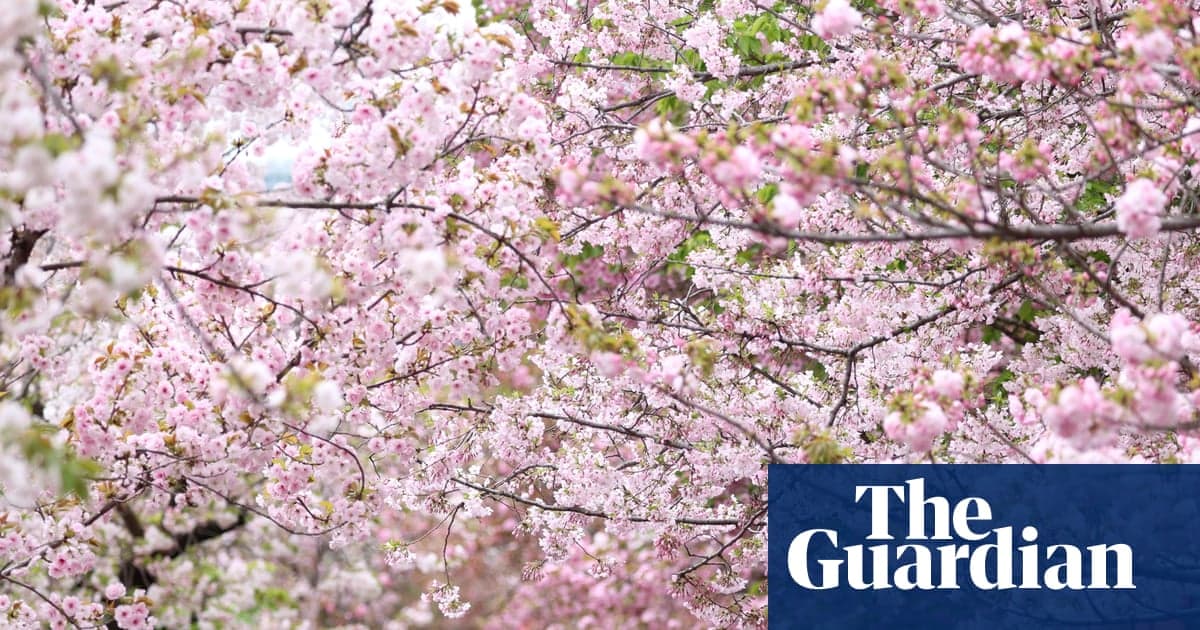
After 1,200 Years, Cherry Blossom Record to Live on Despite Japanese Scientist’s Death
Why It Matters
The record offers a rare, centuries‑long phenological proxy that strengthens climate‑model validation and informs adaptation policies. Preserving it also links Japan’s cultural cherry‑blossom heritage to rigorous scientific monitoring.
Key Takeaways
- •Aono’s 1,200‑year cherry‑bloom record shows accelerating spring onset
- •2021 and 2023 peaks were the earliest in the mountain‑cherry series
- •New researcher will continue observations at Arashiyama, preserving data continuity
- •Phenology data complements tree rings and other climate proxies for validation
- •Ongoing record supports tourism planning and climate‑impact assessments in Japan
Pulse Analysis
The mountain cherry dataset assembled by Prof. Yasuyuki Aono stands out for its depth: spanning from the 9th century to 2025, it provides a continuous phenological timeline rarely available in climate science. By painstakingly translating archaic Japanese records and cross‑referencing historic festival dates, Aono created a high‑resolution proxy that directly links flowering onset to temperature trends. Such long‑term observations are invaluable for calibrating climate models, offering a ground‑truth check that complements tree‑ring analyses, sediment cores, and even anecdotal notes from organ tuners in Europe.
Beyond its scientific merit, the cherry‑blossom record carries cultural and economic weight. Japan’s spring festivals attract millions of tourists, and shifts in bloom timing affect travel planning, local businesses, and municipal budgeting for events. The early peaks recorded in 2021 and 2023—both the earliest in the 1,200‑year series—signal not only warming winters but also potential stress on the trees, as noted by researchers observing bud drop in related species. Policymakers can use this data to anticipate tourism fluctuations and to design adaptive strategies for preserving the iconic sakura experience.
The recent recruitment of a new observer ensures the continuity of this unique dataset. By leveraging platforms like Our World in Data, the successor can publish real‑time updates, encouraging citizen‑science contributions and fostering transparency. This handover illustrates how individual dedication can evolve into collaborative, open‑access science, reinforcing the role of long‑term phenology in global climate discourse. As more regions adopt similar monitoring schemes, the collective insight will sharpen predictions of ecosystem responses to a warming world.
After 1,200 years, cherry blossom record to live on despite Japanese scientist’s death
Comments
Want to join the conversation?
Loading comments...