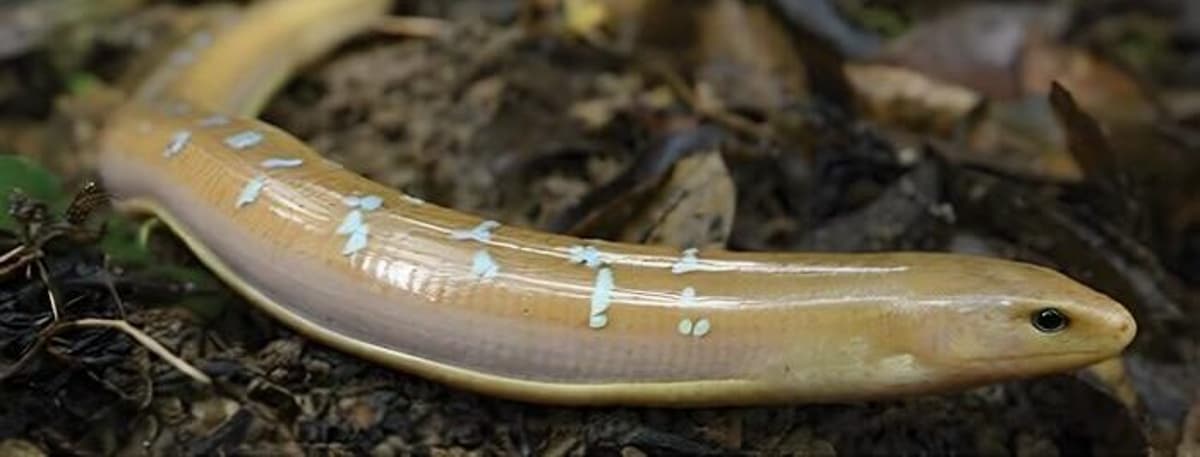
After Nearly a Century, Taiwan’s Legless Lizard Gets Its Own Identity
Why It Matters
Clear species delineation enables targeted conservation measures and strengthens Taiwan’s biodiversity inventory, while showcasing the power of citizen‑science data in resolving long‑standing scientific debates.
Key Takeaways
- •Researchers designate neotype for Formosan legless lizard
- •Male lizards display blue spots as sexual signal
- •Roadkill citizen‑science data revealed distribution patterns
- •Study ends century‑long taxonomic debate in Taiwan
- •Endemic species distinct from Hart’s glass lizard
Pulse Analysis
The Formosan legless lizard has long been shrouded in taxonomic ambiguity, with scientists oscillating between treating it as a unique species and lumping it with the more widespread Hart’s glass lizard. By re‑examining historic museum collections and integrating modern genetic analyses, the research team established a definitive neotype, anchoring Dopasia formosensis in the scientific record. This resolution not only settles a debate dating back to Kyukichi Kishida’s 1930 description but also provides a concrete reference for future ecological and evolutionary studies across East Asia.
A standout feature of the study is its reliance on citizen‑science contributions, particularly roadkill observations gathered through the Taiwan Roadkill Observation Network. Because these lizards surface above ground only briefly each year, traditional field surveys often miss them. The influx of opportunistic sightings allowed researchers to map precise distribution hotspots and seasonal activity windows, illustrating how public participation can fill critical data gaps for elusive taxa. This approach underscores a growing trend in biodiversity monitoring where crowdsourced records complement formal scientific efforts.
With its identity now firmly established, conservation planners can more accurately assess the species’ status and habitat requirements. Although the lizard appears rare, its scarcity may stem from cryptic behavior rather than low population numbers, suggesting that preserving leaf‑litter and humus‑rich forest floors is essential. Recognizing Dopasia formosensis as an endemic species also elevates its priority under Taiwan’s wildlife protection statutes, potentially unlocking funding for habitat preservation and public education campaigns. The case exemplifies how taxonomic clarity, bolstered by innovative data sources, can directly inform policy and safeguard biodiversity.
After nearly a century, Taiwan’s legless lizard gets its own identity
Comments
Want to join the conversation?
Loading comments...