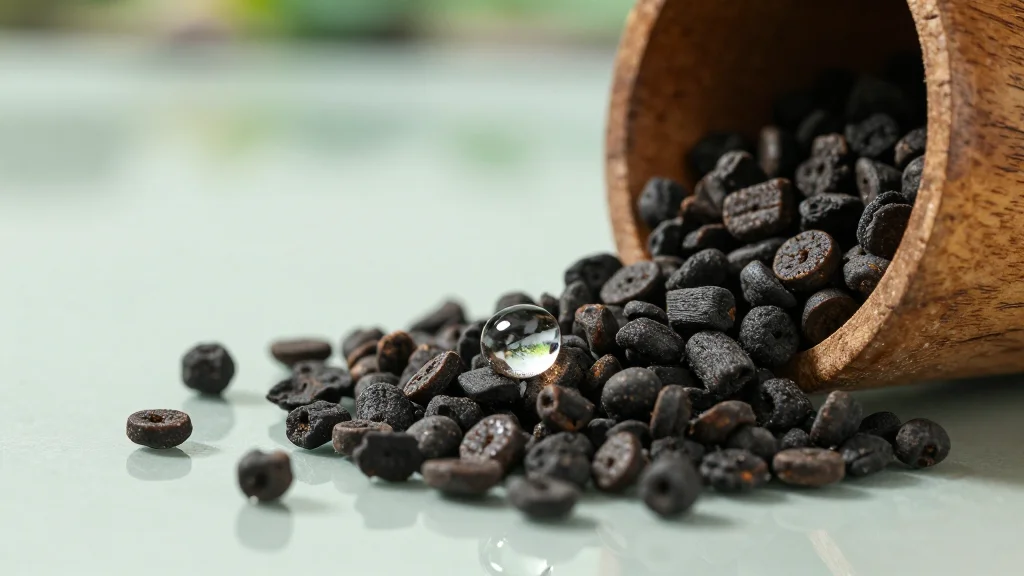
Agricultural Waste Can Be Used to Clean Wastewater
Why It Matters
Transforming locally sourced agricultural waste into effective adsorbents offers affordable, scalable water‑purification options for regions lacking centralized treatment, directly improving public health and environmental resilience.
Key Takeaways
- •Biochars from coffee husks remove up to 66% of pharmaceuticals
- •Hydrochars achieve over 90% removal of select polyphenols
- •Materials cut pesticide levels by roughly 75% in field tests
- •Process uses low‑energy pyrolysis and hydrothermal carbonisation
- •Circular model lowers treatment costs and reduces agricultural waste
Pulse Analysis
Water quality challenges are intensifying worldwide as pharmaceuticals, pesticides and other organic compounds infiltrate rivers and treatment plants, especially in low‑resource settings. Conventional centralized facilities are capital‑intensive and often absent in rapidly urbanising regions like Rwanda. By converting abundant agricultural by‑products into carbon‑rich adsorbents, the Umeå University study taps into a circular‑economy solution that aligns waste reduction with water safety, offering a pragmatic alternative for communities that cannot afford high‑tech infrastructure.
The research demonstrates that biochars and hydrochars derived from coffee pulp, wood chips and sugarcane residues can capture a broad spectrum of contaminants. Laboratory experiments recorded removal efficiencies ranging from 14% to 66% for pharmaceuticals and about 75% for pesticides, with some hydrochars exceeding 90% for targeted polyphenols. These performance gains stem from a synergy of surface chemistry, pore structure and hydrophobic interactions, rather than a single material property. Field trials in Rwanda’s hospitals and rivers confirmed that locally produced adsorbents can meaningfully lower contaminant loads, validating the technology under real‑world conditions.
If scaled, this approach could reshape the economics of wastewater treatment in developing markets. Small‑scale producers could manufacture adsorbents on‑site, cutting transport costs and creating new revenue streams for agricultural communities. Policymakers may view the technology as a low‑carbon, cost‑effective complement to existing treatment trains, encouraging investment in decentralized water infrastructure. Ongoing work on pilot‑scale production and integration with conventional processes will determine how quickly the sector adopts these sustainable materials, potentially setting a new standard for resource‑efficient water management.
Agricultural waste can be used to clean wastewater
Comments
Want to join the conversation?
Loading comments...