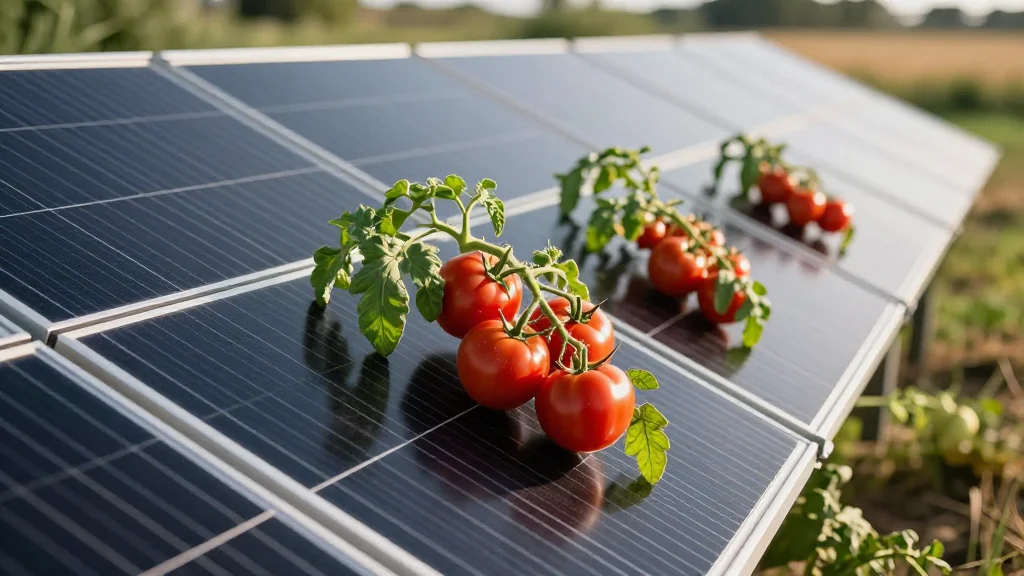
Agrovoltaic Systems Can Save Water, Generating Energy and Making Tomato Cultivation More Sustainable at the Same Time
Why It Matters
Agrovoltaic farms boost land productivity and cut water use, offering a scalable solution for agriculture facing climate‑driven scarcity while adding renewable‑energy revenue streams.
Key Takeaways
- •Deficit irrigation cuts water use by ~50% but lowers yield 20%
- •Agrovoltaic plots achieve LER of 1.54–1.67, surpassing separate land use
- •Solar panel shade reduces radiation yet maintains plant development most stages
- •Combined energy and tomato output improves overall profitability despite lower harvest
- •Precision sensors recommended to fine‑tune irrigation and avoid stress
Pulse Analysis
The convergence of renewable energy and agriculture is reshaping how growers address mounting water scarcity. Agrovoltaic installations—solar panels mounted above crops—create micro‑climates that lower evaporative demand, allowing farmers to apply regulated deficit irrigation without compromising plant health. This approach not only conserves a critical resource but also monetizes otherwise idle land through clean electricity generation, aligning with corporate sustainability goals and the broader energy transition.
The recent Spanish field trials quantified these benefits, revealing a 50% reduction in irrigation water while accepting a modest 20% yield penalty. More compelling is the Land Equivalent Ratio (LER) exceeding 1.5, meaning that each hectare produces more combined output than two separate plots would. For agribusinesses, this translates into higher overall revenue per acre, lower operating costs, and eligibility for green financing or carbon‑credit schemes. The trade‑off between water savings and yield can be mitigated by integrating soil‑moisture sensors and real‑time plant stress monitoring, enabling precise water delivery during critical growth stages.
Looking ahead, scaling agrovoltaics will depend on policy incentives, grid integration, and advances in panel design that maximize light transmission. As climate models predict intensified droughts, the dual‑use model offers a resilient pathway for high‑value crops like tomatoes, which dominate global fresh‑produce markets. Stakeholders—from farm owners to renewable‑energy investors—should monitor emerging standards and pilot programs that refine irrigation algorithms, ensuring that the synergy between food and power generation delivers both economic and environmental returns.
Agrovoltaic systems can save water, generating energy and making tomato cultivation more sustainable at the same time
Comments
Want to join the conversation?
Loading comments...