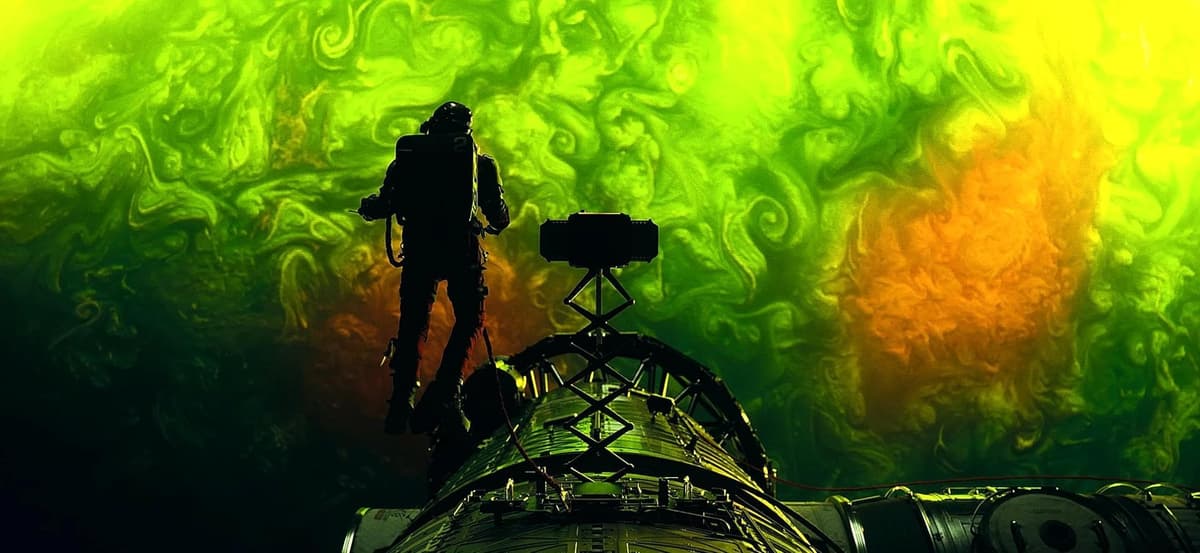
AI Could Make Alien Contact More Likely for SETI's 'Project Hail Mary'
•March 11, 2026
0
Why It Matters
AI accelerates signal discovery, increasing the odds of a breakthrough detection that could redefine humanity’s place in the cosmos. The technology also sets a precedent for cross‑disciplinary AI applications in astronomy and beyond.
Key Takeaways
- •AI processes SETI data 600× faster than traditional pipelines.
- •Detection accuracy up by 7%, false positives drop tenfold.
- •Machine learning can spot unknown signal morphologies.
- •Shostan predicts future alien contact will be machine‑based.
- •AI aids decoding but humans remain essential for meaning.
Pulse Analysis
The integration of artificial intelligence into SETI research marks a pivotal shift from manual signal inspection to high‑throughput, pattern‑recognizing pipelines. Leveraging Moore’s Law, modern AI models can ingest millions of radio channels in real time, identifying subtle anomalies that would elude human analysts. Breakthrough Listen’s recent collaboration with NVIDIA demonstrated a 600‑fold speed increase and a measurable boost in detection fidelity, illustrating how deep‑learning architectures can transform raw telescope data into actionable candidates with unprecedented efficiency.
Beyond raw speed, AI introduces a qualitative leap in the types of signals researchers can recognize. Traditional searches target narrowband beacons, but machine‑learning classifiers are now adept at spotting burst‑like or modulated transmissions that defy conventional expectations. This capability aligns with Seth Shostak’s forecast that any initial extraterrestrial contact may be AI‑to‑AI, as advanced civilizations are likely to employ autonomous machines for interstellar communication. The prospect of machine‑based contact reshapes funding priorities, encouraging investment in scalable compute infrastructure and cross‑industry partnerships that blend astrophysics, computer science, and aerospace engineering.
Nevertheless, detection is only half the equation; interpretation remains a fundamentally human challenge. While AI can flag candidate patterns, deciphering intent, language, or cultural context demands interdisciplinary expertise—from linguistics to cognitive science. Researchers like Douglas Vakoch stress that AI will clarify methodological blind spots, yet human insight will be indispensable for translating alien messages into meaning. As the field advances, ethical frameworks and collaborative platforms will be essential to ensure that the pursuit of extraterrestrial intelligence benefits both scientific discovery and broader societal understanding.
AI Could Make Alien Contact More Likely for SETI's 'Project Hail Mary'
0
Comments
Want to join the conversation?
Loading comments...