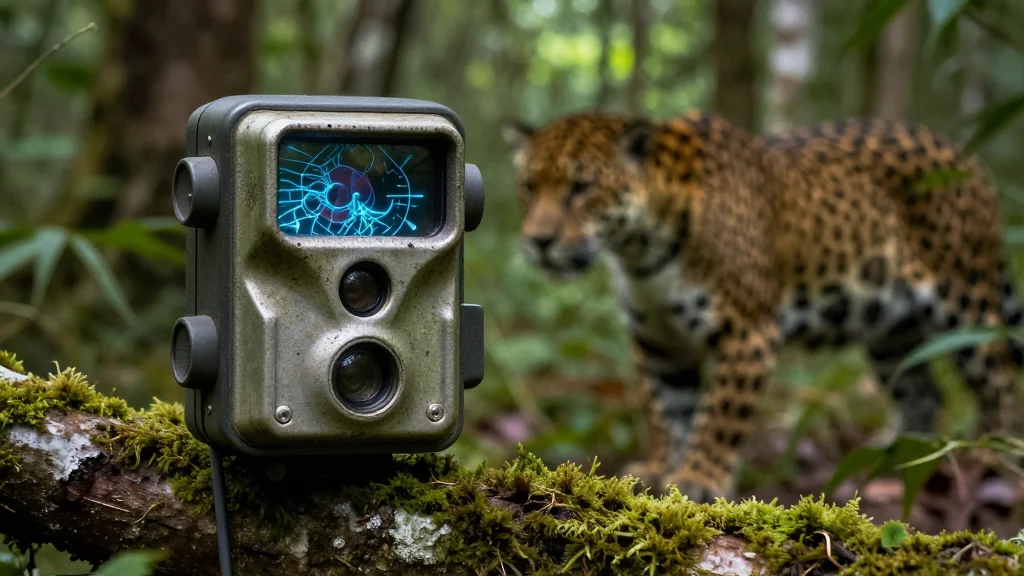
AI Cuts Wildlife Tracking Time From Months to Days
Companies Mentioned
Why It Matters
Accelerating image analysis shortens the data‑to‑decision cycle, allowing managers to act faster on conservation threats. The breakthrough lowers barriers for smaller organizations that lack extensive staffing for manual review.
Key Takeaways
- •AI reduces camera‑trap image processing from months to days
- •SpeciesNet matches human occupancy models 85‑90% of the time
- •Near‑real‑time data enables faster wildlife management decisions
- •Small NGOs gain access to high‑speed analysis without extra staff
- •Rare species still challenge AI accuracy, requiring human review
Pulse Analysis
Camera traps have become a cornerstone of modern wildlife monitoring, but the sheer volume of images—often millions per study—has turned data processing into a costly bottleneck. Traditional workflows rely on teams of technicians to sort, label, and verify each frame, a task that can stretch six months to a year before any ecological insight emerges. Recent advances in deep‑learning image classification have begun to automate the most labor‑intensive steps, yet many projects still require human oversight to ensure accuracy, especially for rare or cryptic species.
The new research, published in the Journal of Applied Ecology, puts the latest generation of AI to the test by deploying Google’s SpeciesNet across diverse ecosystems in the United States and Central America. The model achieved 85‑90% concordance with expert‑derived occupancy models, demonstrating that for the majority of common species, automated pipelines can produce scientifically robust conclusions. By compressing the analysis window to a few days, researchers can now generate near‑real‑time distribution maps, informing rapid response measures such as anti‑poaching patrols or habitat restoration efforts. This speed advantage is especially valuable for species with fast‑changing population dynamics, where delayed data can translate into missed conservation windows.
Beyond the immediate efficiency gains, the study signals a broader shift toward open, AI‑enabled conservation tools. By releasing a portion of their labeled dataset, the authors empower the community to refine models and expand coverage to understudied taxa. However, the technology is not a panacea; rare species with limited training examples still suffer misclassification rates that necessitate expert validation. Future work will likely focus on hybrid workflows that combine AI’s speed with targeted human review, democratizing high‑quality ecological monitoring for NGOs and government agencies alike. As AI models mature, the bottleneck may move from data processing to data interpretation, reshaping how conservation science translates observations into policy.
AI cuts wildlife tracking time from months to days
Comments
Want to join the conversation?
Loading comments...