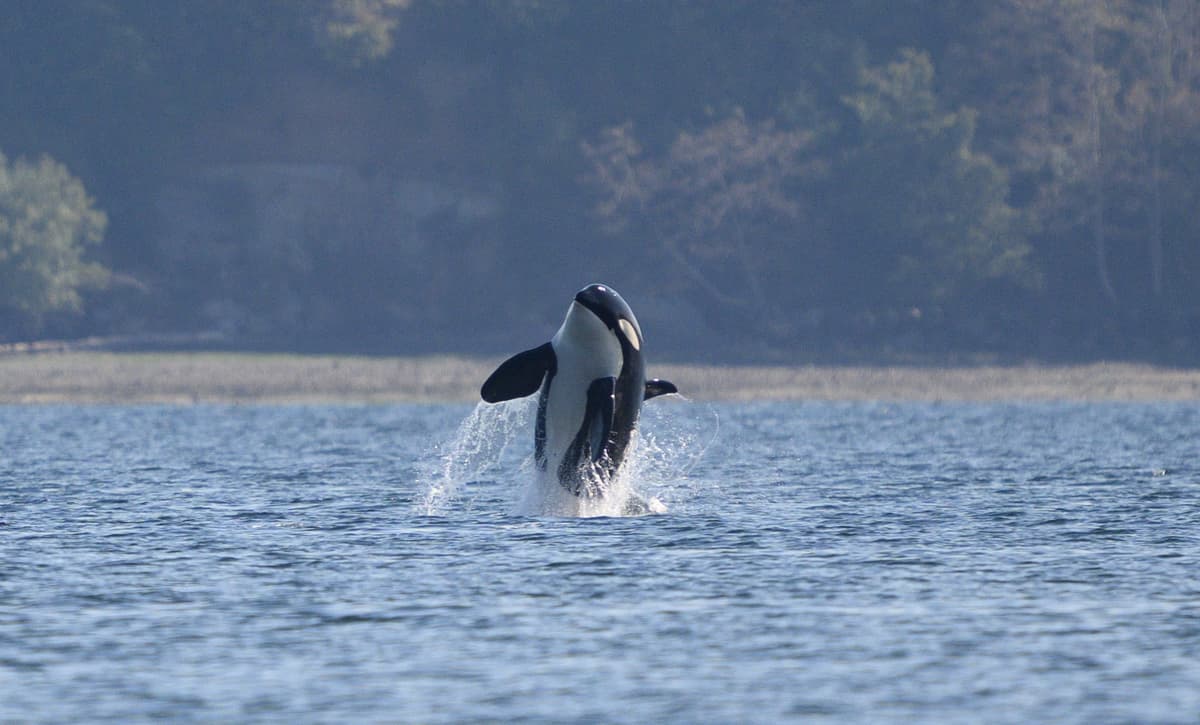
AI Listens for Endangered Orcas to Help Reduce Underwater Noise Exposure
Why It Matters
Real‑time acoustic alerts enable immediate mitigation of harmful noise, directly supporting the survival of a population of only 76 whales and setting a precedent for AI‑driven marine protection.
Key Takeaways
- •OrcaHello detects southern resident orca calls in real time.
- •12‑17 dB ship noise can cut orca prey capture odds by 12.5 %.
- •Port of Seattle uses alerts to slow vessels and pause pile‑driving.
- •In 2026, orca calls were recorded on 19 separate days.
Pulse Analysis
The southern resident orcas, a critically endangered sub‑species with just 76 individuals left, rely on precise echolocation to hunt and navigate the complex acoustic landscape of the Salish Sea. Traditional threats such as vessel traffic and construction‑related pile‑driving inject low‑frequency noise that can exceed natural ambient levels by up to 17 decibels, a magnitude that dramatically impairs communication and reduces hunting efficiency. Scientific studies show a 12.5 % drop in prey‑capture success for each additional decibel, underscoring the urgency of noise mitigation for this fragile population.
Enter OrcaHello, an AI‑powered listening system born from a 2019 hackathon. By training a machine‑learning model on the unique acoustic signatures of the southern resident pods, the platform streams underwater audio 24/7, flagging whale presence the moment a call is heard. The system’s real‑time alerts are fed directly to port authorities and ferry operators, who can then enact vessel speed reductions or halt noisy construction activities. In its first year of operation, OrcaHello identified orca vocalizations on 19 separate days, providing actionable data that transforms passive observation into proactive protection.
The broader implication of this technology extends beyond the Pacific Northwest. As global shipping volumes rise, similar AI‑driven acoustic monitoring could become a standard tool for marine wildlife management, offering regulators a scalable method to enforce noise‑abatement zones. By integrating real‑time data with operational decision‑making, ports can balance economic activity with ecological stewardship, setting a benchmark for how artificial intelligence can safeguard vulnerable species in increasingly noisy oceans.
AI listens for endangered orcas to help reduce underwater noise exposure
Comments
Want to join the conversation?
Loading comments...