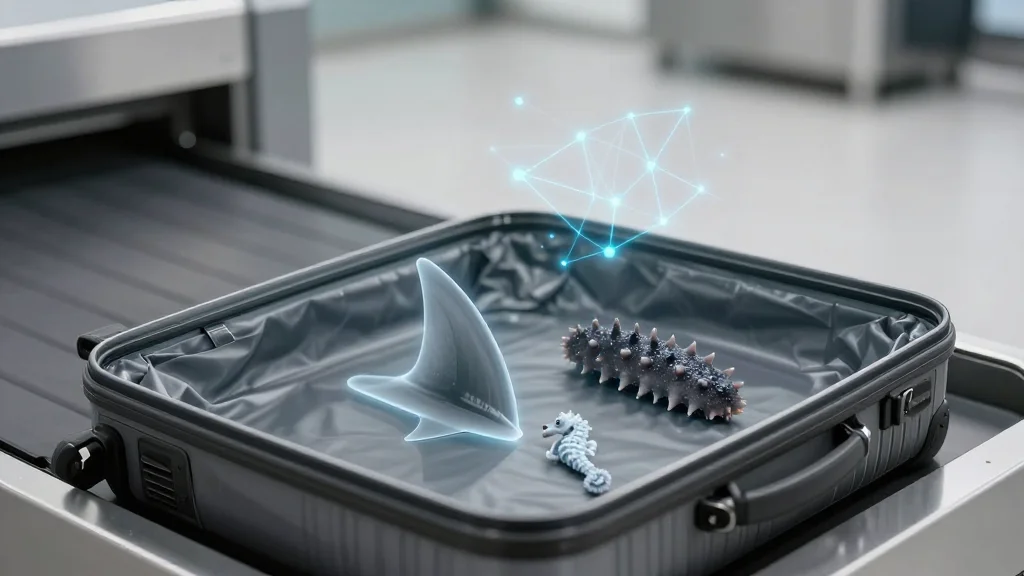
AI Spots Smuggled Seahorses, Shark Fins and Sea Cucumbers with 92% Accuracy
Why It Matters
The tool gives customs officials a high‑tech edge against a multi‑billion‑dollar marine trafficking market, potentially reducing illegal shipments and protecting vulnerable ocean species. Its adoption could reshape enforcement protocols at airports worldwide.
Key Takeaways
- •AI algorithm detects shark fins with 95% accuracy
- •Seahorse detection accuracy reaches 96% using 3‑D CT scans
- •Sea cucumber identification correct 86% of the time
- •False‑positive rate averages 13%, highest for seahorses
- •System leverages existing airport X‑ray CT scanners
Pulse Analysis
Marine wildlife trafficking, a multi‑billion‑dollar black market, has long evaded traditional customs controls because many products—shark fins, dried seahorses, sea cucumbers—are small, easily concealed, and often disguised as harmless goods. The ecological cost is severe: over‑exploitation threatens apex predators, disrupts reef ecosystems, and can introduce invasive species when live animals escape. As governments intensify enforcement on terrestrial wildlife, the maritime segment remains under‑detected, prompting researchers to explore technology‑driven solutions that can operate at the point of entry.
The research team at Macquarie University repurposed airport‑grade 3‑D X‑ray computed tomography (CT) scanners, pairing them with a convolutional neural network trained on 298 scans of shark fins, seahorses and sea cucumbers. By simulating smuggling tactics—wrapping specimens in tin, embedding them in toys—the algorithm learned to recognize characteristic density patterns, achieving an overall 92% detection rate (95% for shark fins, 96% for seahorses, 86% for sea cucumbers). A 13% false‑positive rate, skewed toward seahorses, remains manageable through secondary human review, making the system a viable augmentation to existing inspection protocols.
Despite its promise, deployment faces hurdles: 3‑D CT units are costly and not universally installed, and the model currently covers only three species. Expanding the training set to include turtles, corals and other high‑value marine commodities will improve coverage, while integration with 2‑D scanners could broaden reach. Policymakers and customs agencies can leverage this proof‑of‑concept to justify investment in advanced imaging, and to develop standardized data‑sharing frameworks that accelerate AI‑driven interdiction across borders. In the longer term, such tools could become a cornerstone of global marine conservation enforcement.
AI spots smuggled seahorses, shark fins and sea cucumbers with 92% accuracy
Comments
Want to join the conversation?
Loading comments...