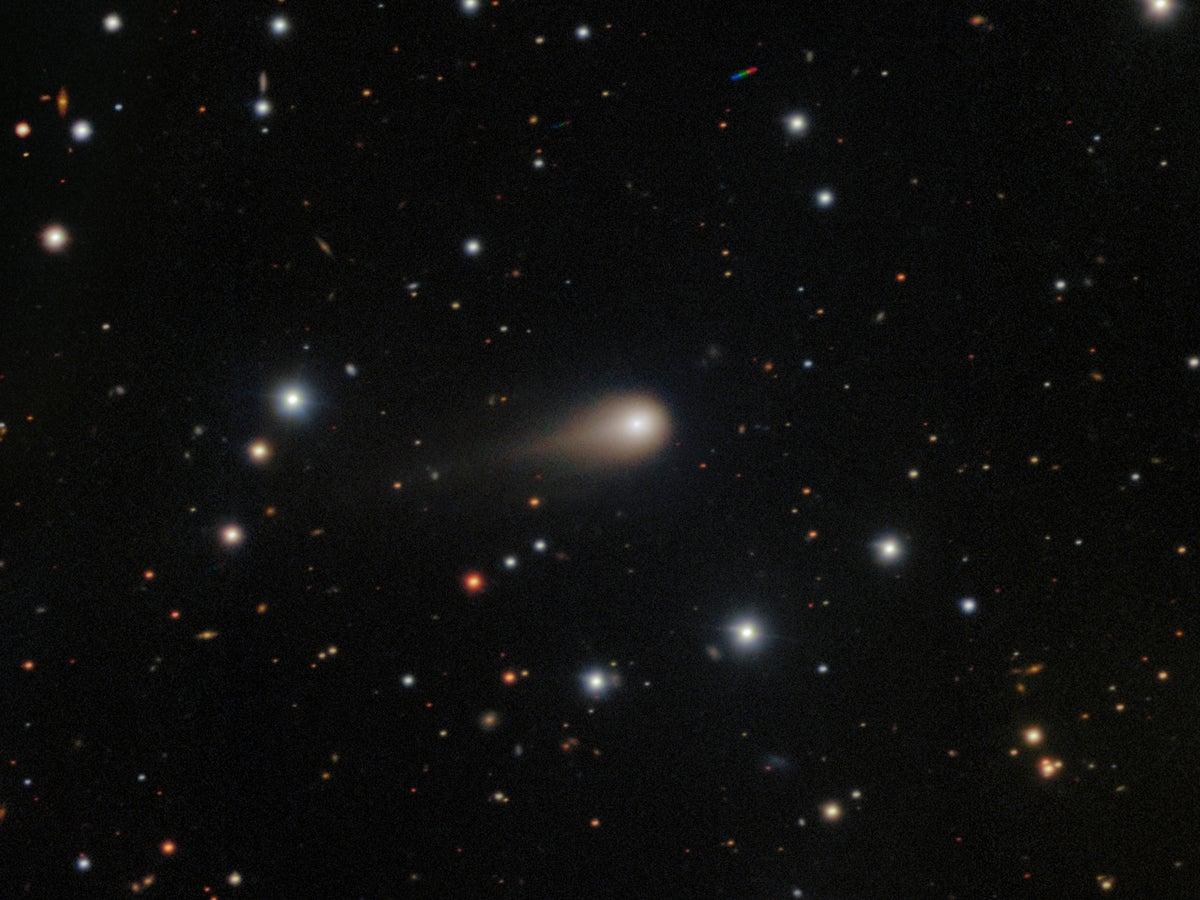
Alien Comet Reveals Our Solar System Is the Oddball
Why It Matters
The extreme deuterium enrichment challenges assumptions about the universality of cometary formation conditions, implying that planet‑forming disks can vary dramatically. Understanding these differences could reshape models of water delivery and habitability across exoplanetary systems.
Key Takeaways
- •3I/ATLAS heavy‑water ratio 30× solar‑system comets.
- •ALMA and JWST both detected deuterium enrichment.
- •Findings imply comet formed in extremely cold, minimally processed environment.
- •Interstellar comets may reveal solar system’s uniqueness, boosting future telescope studies.
Pulse Analysis
The detection of a dramatically elevated deuterium‑to‑hydrogen (D/H) ratio in comet 3I/ATLAS represents a technical milestone for radio and infrared astronomy. Using ALMA’s millimeter‑wave spectroscopy, researchers isolated faint heavy‑water signatures in the comet’s coma, a measurement previously limited to a handful of solar‑system comets. JWST’s infrared spectra later corroborated the finding, confirming that the comet’s D/H ratio is roughly thirty times higher than that of familiar icy bodies. This dual‑instrument validation underscores the power of coordinated, multi‑wavelength observations for probing the chemistry of fleeting interstellar visitors.
Beyond the observational feat, the result forces a reassessment of how and where water forms in planetary systems. Heavy‑water enrichment is a temperature‑sensitive tracer; such a high D/H ratio points to formation in an ultra‑cold prestellar cloud or a protoplanetary disk that experienced minimal heating. Compared with the modest D/H values of comets from our own Sun’s family, 3I/ATLAS suggests that other stellar nurseries can produce markedly different icy reservoirs. The finding adds to the growing catalog of oddball interstellar objects—ʻOumuamua’s mysterious acceleration and Borisov’s relatively ordinary composition—highlighting that our solar system’s water inventory may be more of an outlier than previously thought.
Looking ahead, the Vera C. Rubin Observatory’s wide‑field surveys are expected to increase the detection rate of interstellar interlopers, providing a larger sample for chemical comparison. Continued ALMA upgrades and JWST’s extended mission will enable routine D/H measurements, turning what was once a rare laboratory into a standard diagnostic tool. As astronomers build a statistical picture of cometary chemistry across the galaxy, they will refine models of water delivery to terrestrial planets, informing the broader quest to understand the distribution of habitable worlds.
Alien comet reveals our solar system is the oddball
Comments
Want to join the conversation?
Loading comments...